January Kids’ Corner
from the Gale River Cooperative Preschool
A Blanket of Snow
In this Kids Corner you’ll:
- Learn what the term “A Blanket of Snow” means, and how snow keeps plants and animals warm during the winter months.
- Learn how to make snow from common household items.
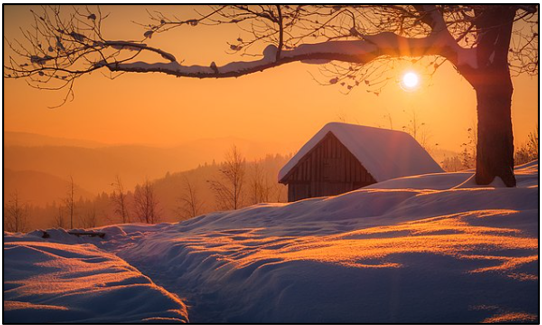
You may have heard people use the term “a blanket of snow” before. Usually people say this when enough snow falls to cover everything, and it looks like the ground is hiding under a fluffy white blanket. But did you know that a blanket of snow actually keeps plants and animals warm?
It might sound crazy that snow can actually keep plants and creatures warm, but it’s true! A blanket of snow is important for the survival of many creatures over the winter. Keep reading to find out how being covered in snow is actually warmer than the winter air.
How does snow work as a blanket?
You probably already know that snowflakes are made of frozen water. When you pick up a handful of snow most of what you are holding is actually air! Snow is fluffy because of all of the air space between the snow crystals. Because of this air space, warmth gets trapped between the snow crystals. Just like your jacket holds warm air close to your body, snow holds warm air close to the ground. A foot of fluffy snow can insulate the ground the same amount that the wall of your house insulates you! Snow also keeps temperatures near the ground more stable by protecting the soil, plants, and animals from cold winter winds.
The fluffier the snow, the more it keeps the ground beneath it warm. Less than a foot of snow (that’s just under one ruler’s length) can make a difference of up to 40 degrees Fahrenheit! Picture the difference between a 90 degree day (you’d want to be at the pool or the beach to beat the heat!) and a 50 degree day (you’d want a jacket and long pants on and would be chilly playing outside.) That’s the difference a nice layer of snow can make for plants and critters during the winter!
How does a blanket of snow help creatures?
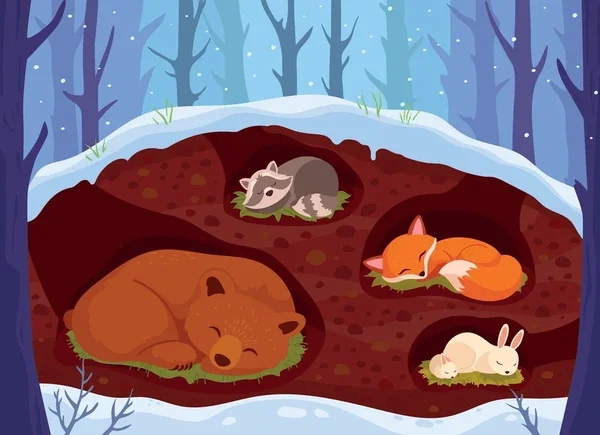
Snow helps animals that stay awake all winter like shrews, moles, voles, weasels, and mice have a warm(er) place to live. They make burrows under the snow; both to stay warm and to hide from predators.
Snow helps hibernating/sleeping animals save energy. Animals that hibernate or sleep for most of the winter use their stored fat to keep their bodies warm. A blanket of snow helps keep them warmer than they would be in the winter air; so they don’t have to use as much of their bodies’ own energy. This allows them to stretch their fat reserves all the way through the winter.
Snow helps insects that spend the winter in the soil and leaf litter stay warm. It also protects roots from freezing, which can damage them and hurt the plants the next year.
Snow also helps plants by keeping temperatures in the soil more constant. Big changes in temperature, like you feel in the air during many winter days, can damage plants.
Your Turn
Even though snow helps keep plants and animals warm, it’s still cold compared to our bodies! Did you know that you can make cold snow with common household items?
For this experiment you’ll need shaving cream (NOT GEL) and baking soda.
With your grownup’s help, spoon out a small pile of baking soda into a bowl.
Slowly add shaving cream until you get a consistency where you can start to mold the mixture like a snowball.
Once you have a consistency that you can use like snow or playdough, squeeze it in your hands. Your snow will feel cold!
SSSSSTTTRRREEETTTCCCHHHH Your Knowledge
The reason your homemade snow is cold is because mixing the shaving cream and baking soda creates an endothermic reaction. An endothermic reaction is a chemical reaction that takes energy in the form of heat from its environment. While the baking soda and cream mix, their reaction is pulling heat from the air and from your hands! The energy that is taken from your hands and from the air is used in the reaction.