
Phenological Phacts and Photos with Carl Martland: Just Before the Snow November 2026
Phenology – a branch of science concerned with the relationship between climate and periodic biological phenomena (such as the migration of birds or the flowering and fruiting of plants)
Damp, Drizzly November
“Call me Ishmael.” So begins Moby Dick, the great American novel about obsession, revenge, and doom. Most of us say we have read it. After all, it was generally required reading back in high school. We all know about the great white whale that snacked on Captain Ahab’s leg; we all know that Ahab spent the rest of his life searching the seas to take revenge on the leviathan; and we all know that Ahab and his crew, except for Ishmael, lost in their long-sought-for encounter with Moby Dick.
Why does an essay supposedly dealing with phenology in the North County begin with reference to a tome that spends more than 600 pages with deep insights into the intricacies of whaling and human madness? Well, I have long remembered a simple phrase from the first paragraph of the novel:
“My soul is drizzly November.”
Those of us fortunate enough to have grown up in New England understand this reference to the darkening days of November. The summer is long gone, the leaves that brightened the fall now litter our lawns and roadsides, and the mists and drizzles that cooled us in August and enhanced the fluorescent reds and yellow of October are now depressing our spirits. And that is what bothered Ishmael when he explained why he went to sea:
“Whenever I find myself growing grim about the mouth; whenever it is a damp, drizzly November in my soul, … I account it high time to get to sea as soon as I can.”
Just Before the Snow
In the North Country, we don’t have a nearby sea to escape to, but we do have woods, rivers and mountains. And, while November will certainly have some damp, drizzly, depressing days, there is still some beauty and solace to be found just before the snow blankets the land for a long winter’s sleep. But you may have to look closely.
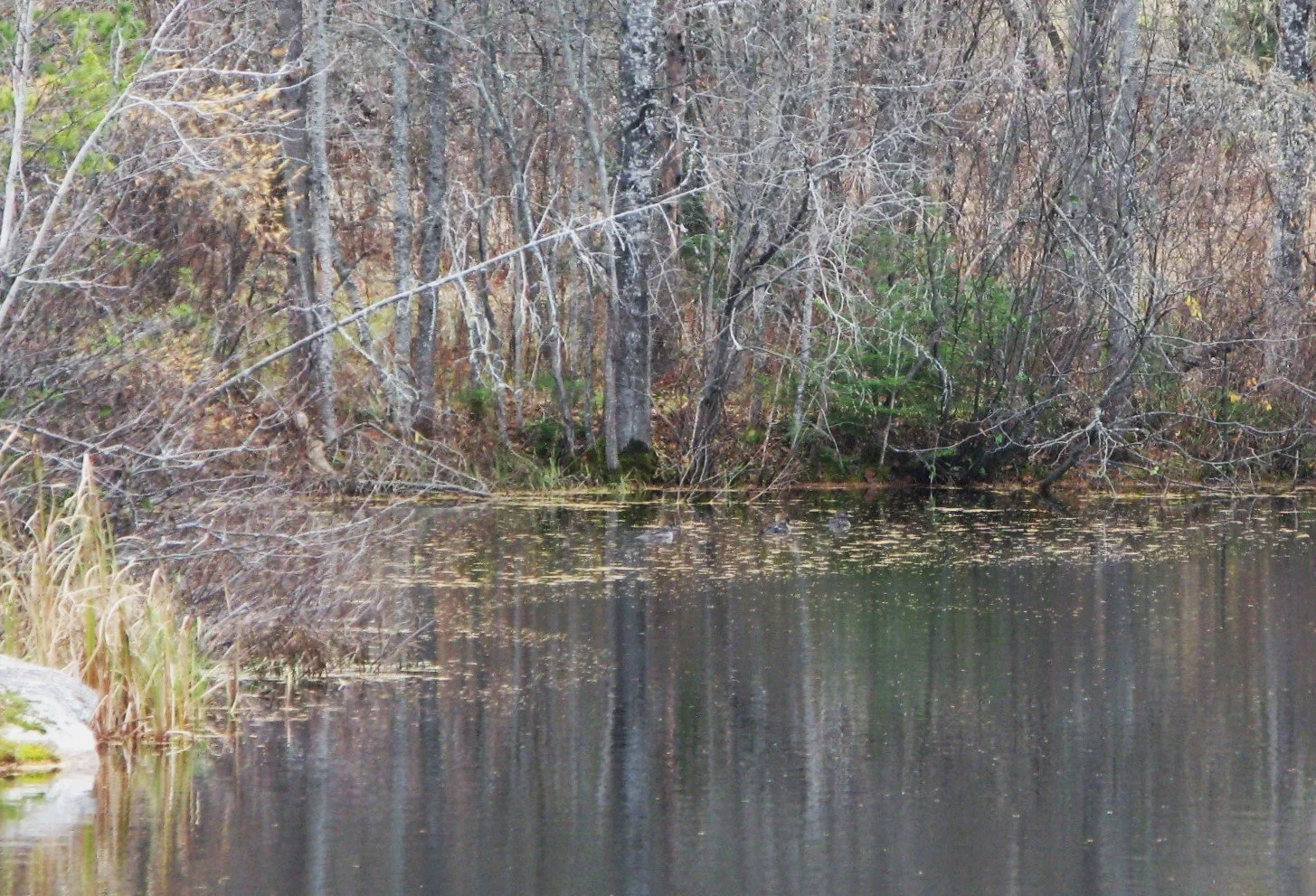
The photo at the top of this essay seems to capture the drab, dispiriting grayness of a typical mid-November view across a small pond. The trees are light gray, the reflections are various tones of grey, and the only bright spot is a clump of decaying grasses. This could be a “before” photo to accompany one taken at the same spot when the sun is reflecting off the snow and ice on a glorious afternoon in January. But take a closer look at the photo. Do you see the three hooded mergansers that have stopped by on their long-delayed trip to the south? Seeing these birds was a bonus on a day when we were out looking for bird nests in the Back 4. Another bonus was finding a couple of wasp nests.
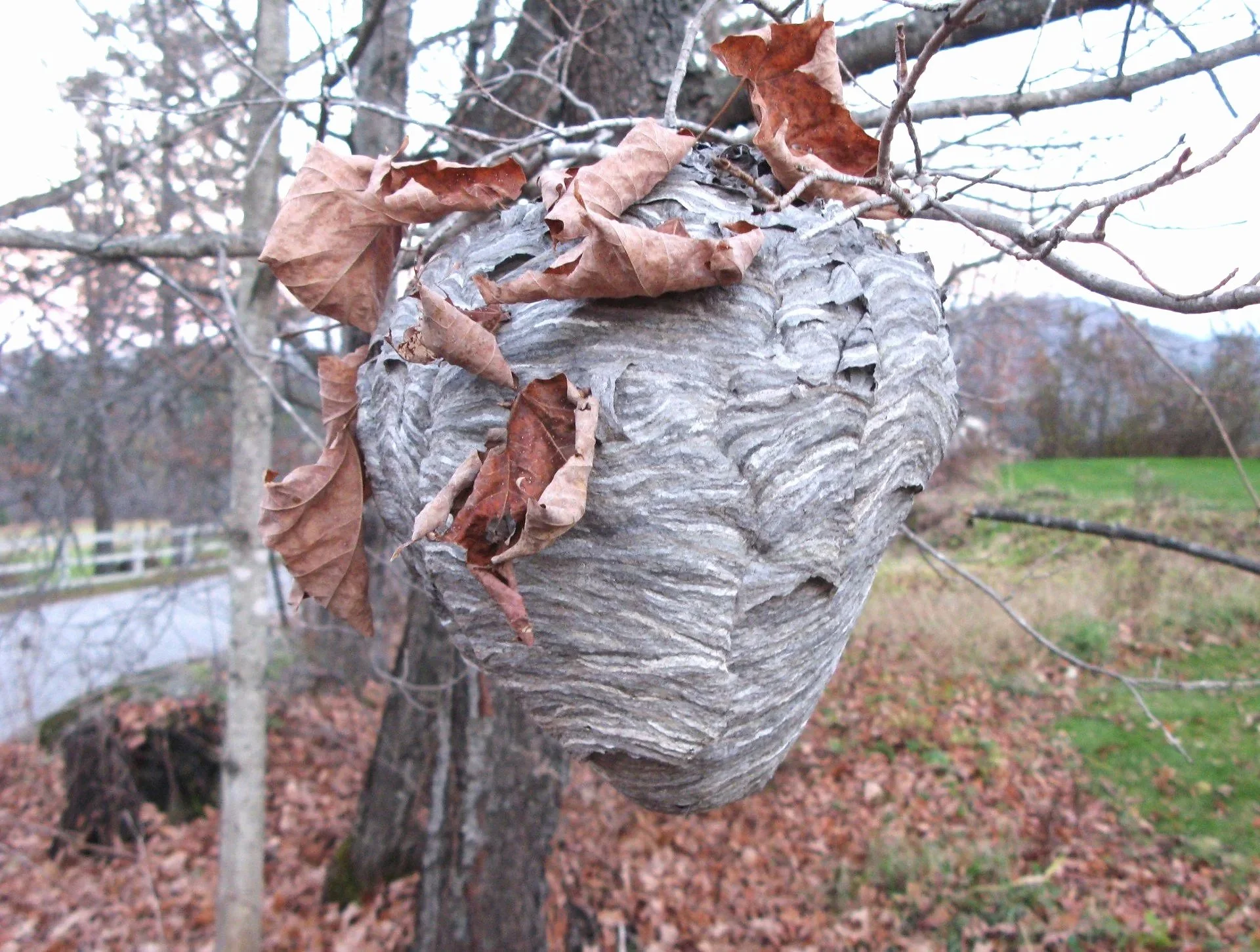
November 11, 2014. In addition to finding 16 bird nests in our annual survey, we found two wasp nests. One was hanging from a maple branch, at eyelevel, about a foot high, and in perfect conditions. The mergansers were in the pond again, probably the same ones that were there yesterday.
I admit, back when I was working, I did often feel oppressed by “drizzly November”, especially after a second or third straight weekend ruined by rain. Now, all days are the same, and there are sure to be many nice days in November offering a last chance to look for the lovely things that can be seen just before the snow.
Final Bursts of Color
It’s not all gray, at least if you know where to look. There will still be a few clumps of yellow highlighted by sunlight on the mountain slopes when you drive through Franconia Notch. Closer to home, larch trees, which often grow by rivers and ponds, will have the last brilliant colors.
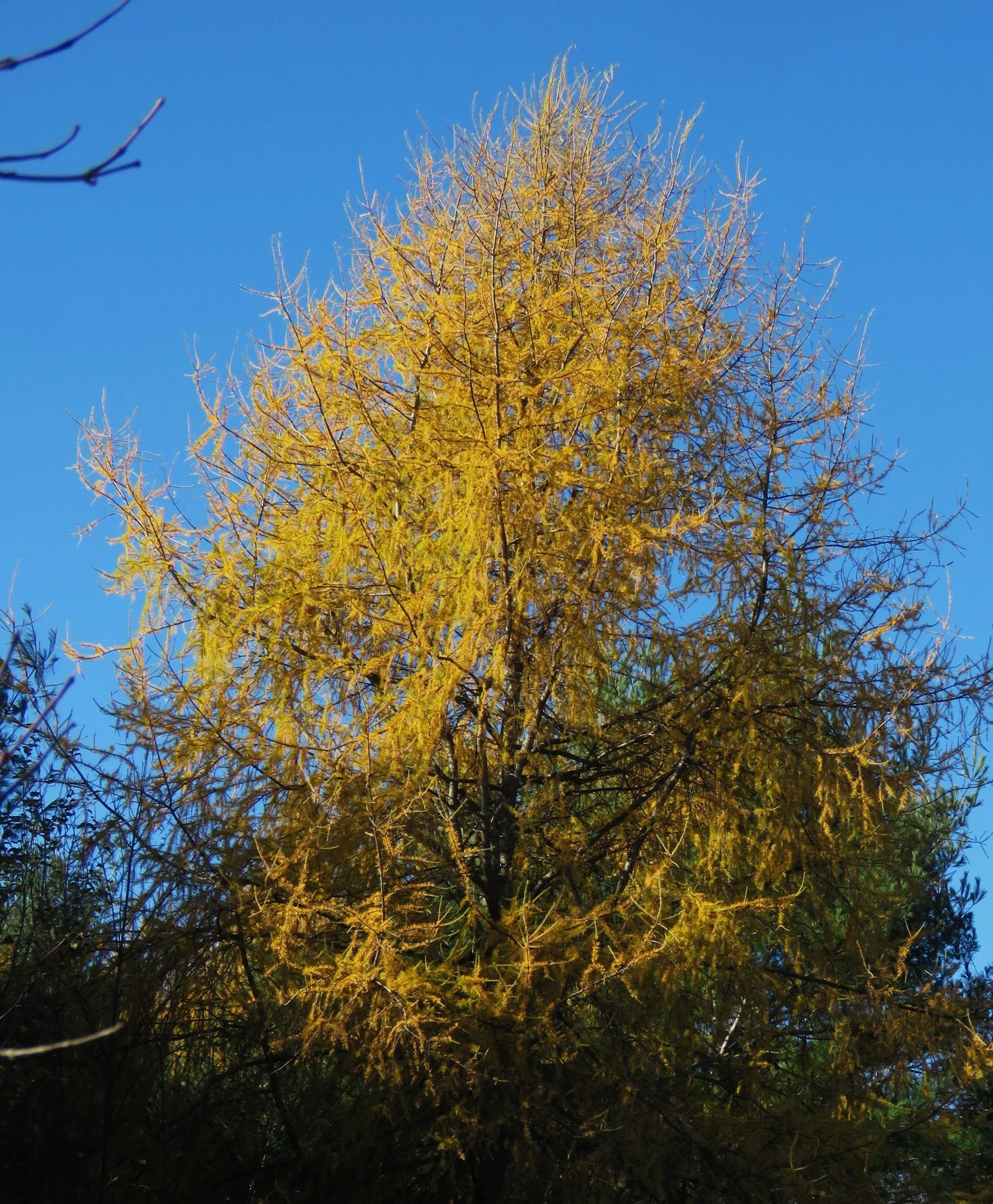
November 1, 2016. A larch tree sparkled in the sunlight on the other side of the Pond.
The mists that made Ishmael so determined to escape to sea also provide great conditions for vivid sunrises and sunsets.
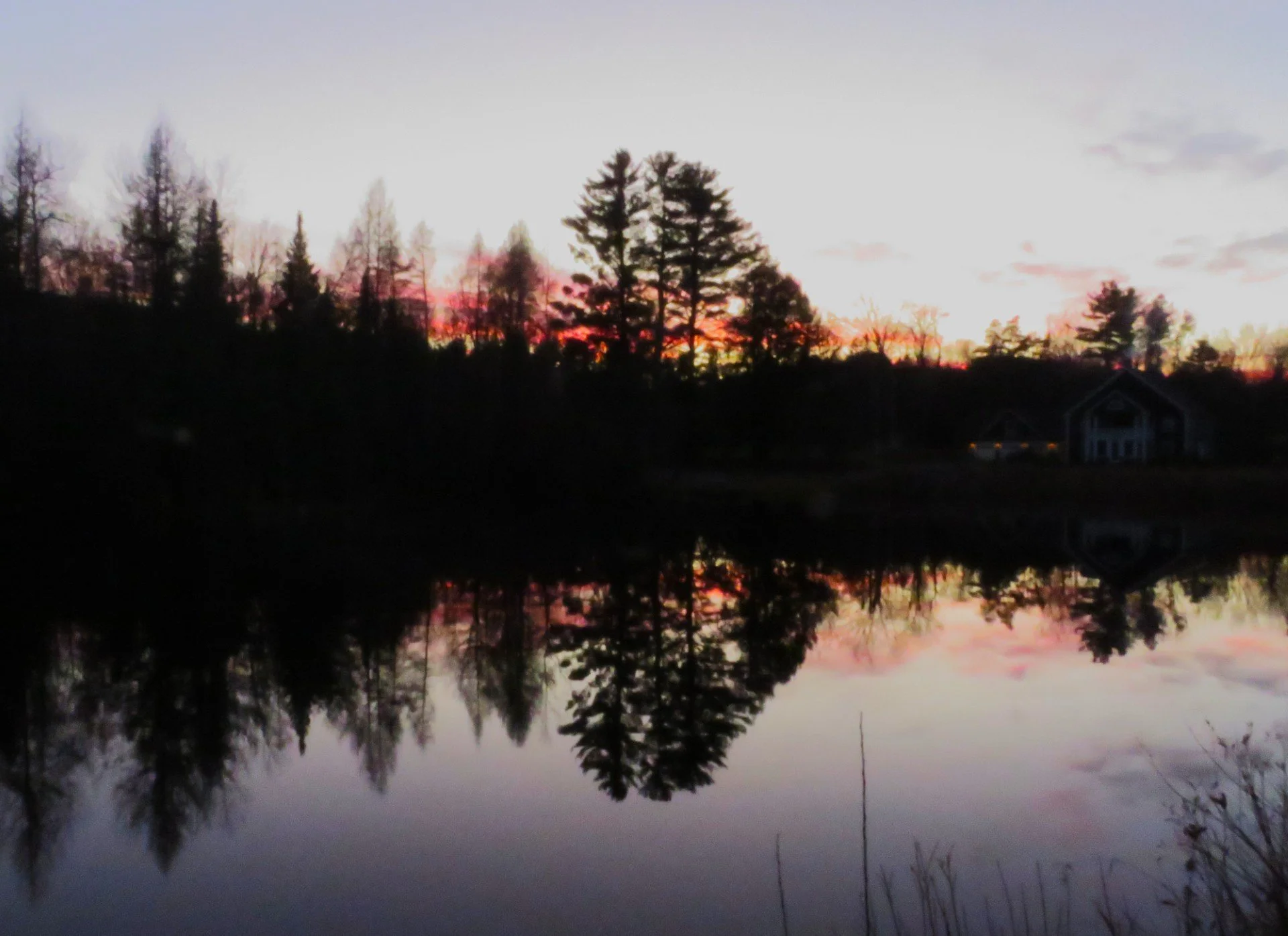
November 5, 2024. Sunset over the pond. Enjoy the view, because the reflections won’t survive the ice and snow.
Birds Abound
The summer residents have disappeared along with the leaf-peepers. The bears are about to retreat to their dens, so it will soon be OK to put out your feeders, and then the winter birds will show up.
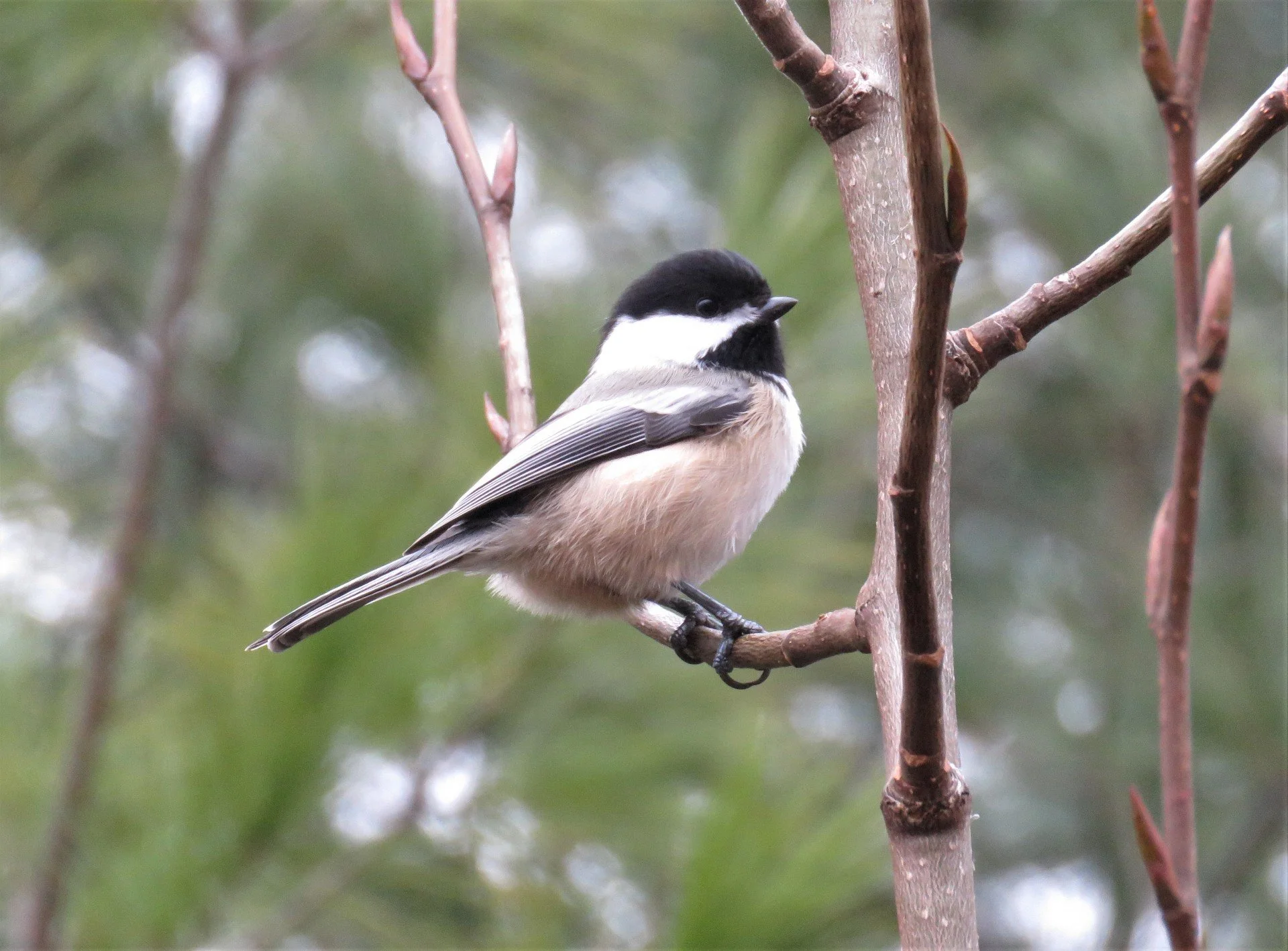
December 1, 2020. Chickadees usually show up right after the feeder is filled.
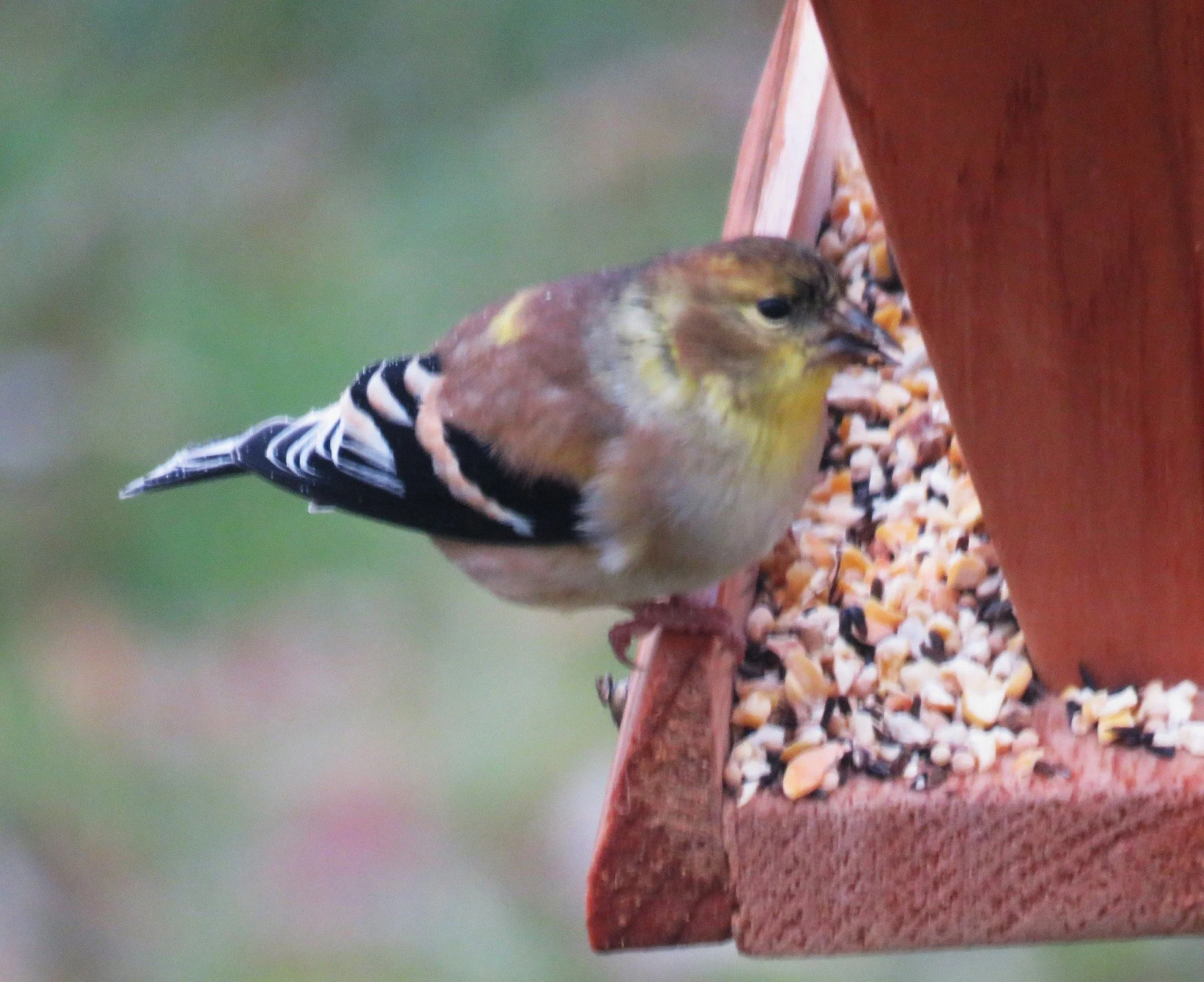
November 27, 2020. Goldfinches are among the usual suspects at the feeder.
As you drive the backroads, you’re likely to see turkeys. A couple of females with a half-dozen or more of their nearly full-grown youngsters may be seen out foraging in a recently cut field. A couple of males, known as jakes, may be loitering at the edge of the woods or waiting to cross the street.
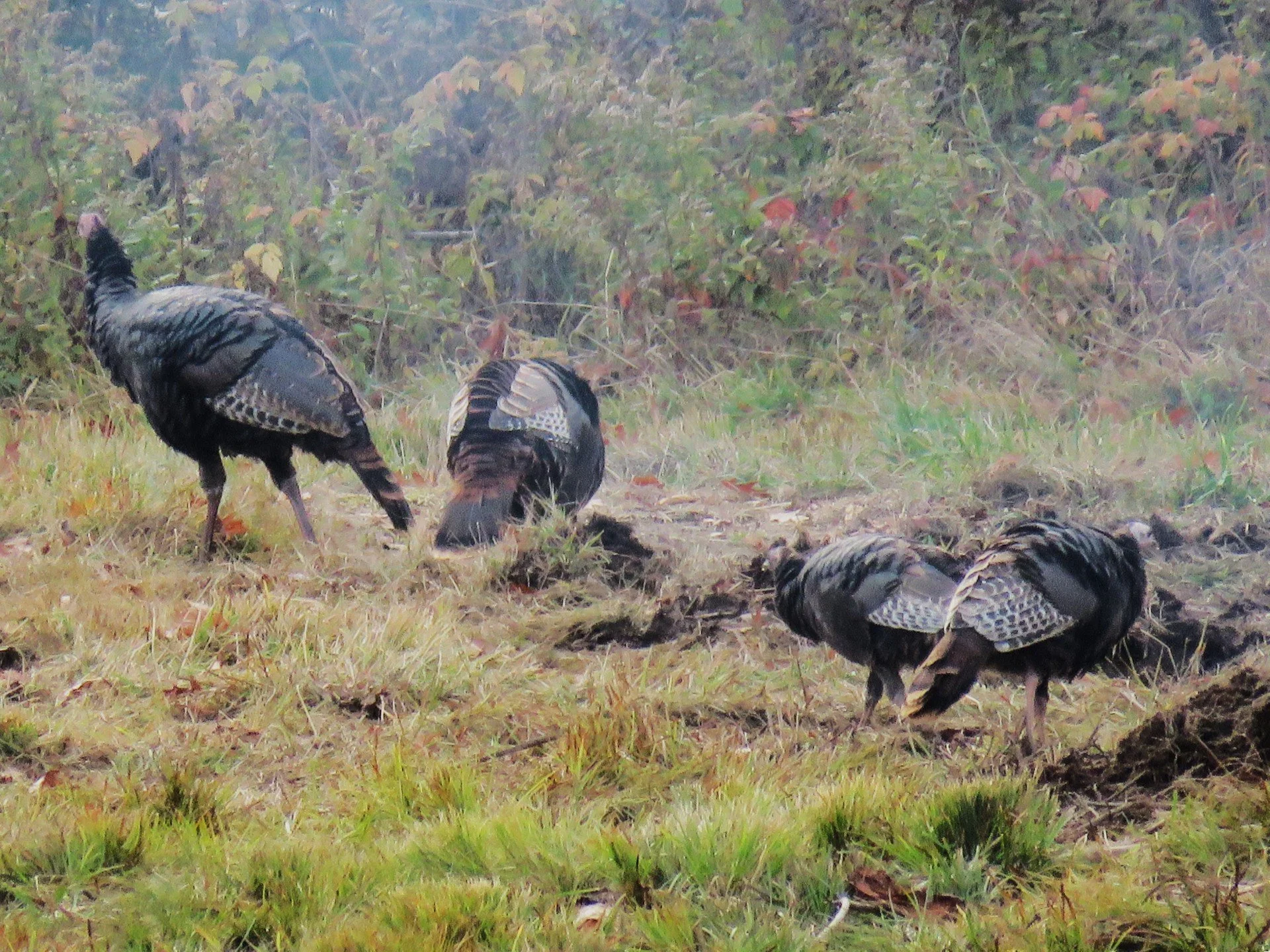
October 27, 2020. A half dozen or so turkeys were
foraging in a field at the side of Center District Road.
First Signs of Winter
We know that winter is on the way, so we keep an eye out for the first ice on the ponds and the first snows on the ridges. The first delicate ice might only last a few hours after the first really cold light, and the freezing and refreezing of the thin ice often creates a lovely pattern.
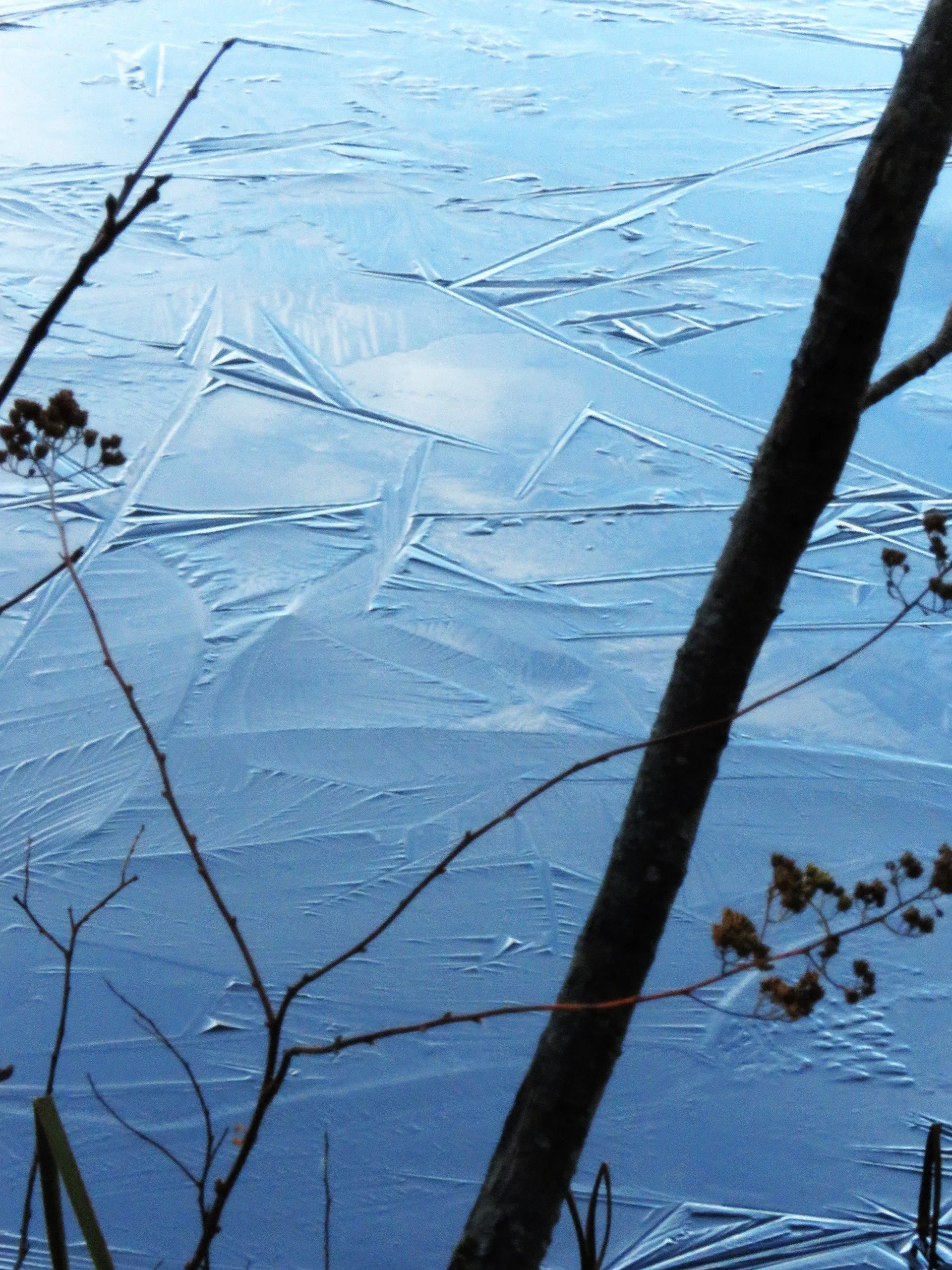
November 14, 2024. Repeated cycles of freezing, cracking, and thawing has created an intricate pattern in the first thin ice that is clear enough to reflect the sparkling blue sky.
The last fruits and berries may last long enough to be covered with ice after a night of sleet and freezing rain. Go ahead, go out for a close-up view, take a photo. This will likely be one of the last bits of color before everything turns white.
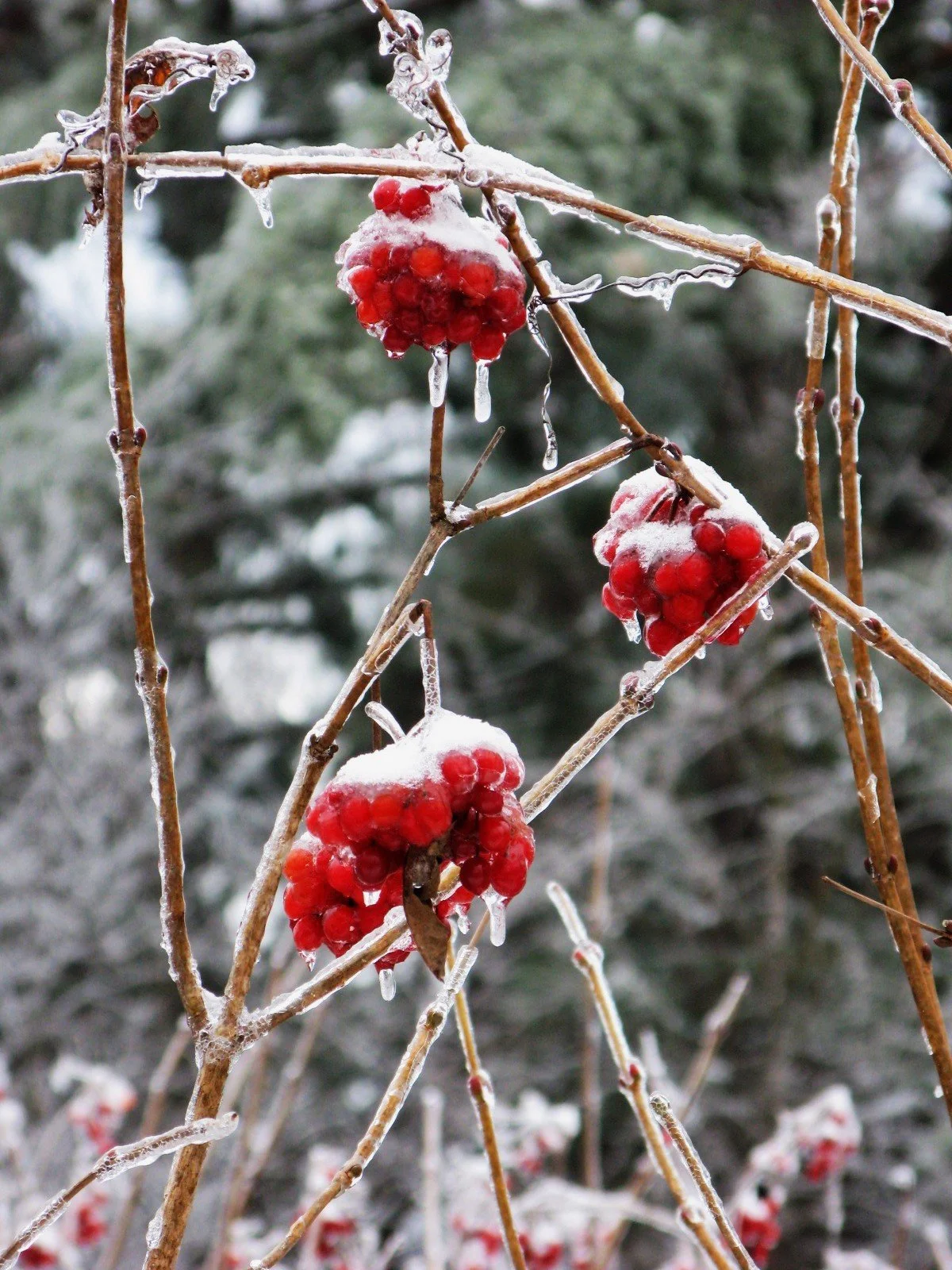
December 14, 2008. Last night’s sleet has left lovely ice-encrusted berries at the edge of the Upper Meadow
However much we dread the heating bills, snow storms, and icy roads of winter, we still love the first sunny day when the distant ridges are covered with snow.
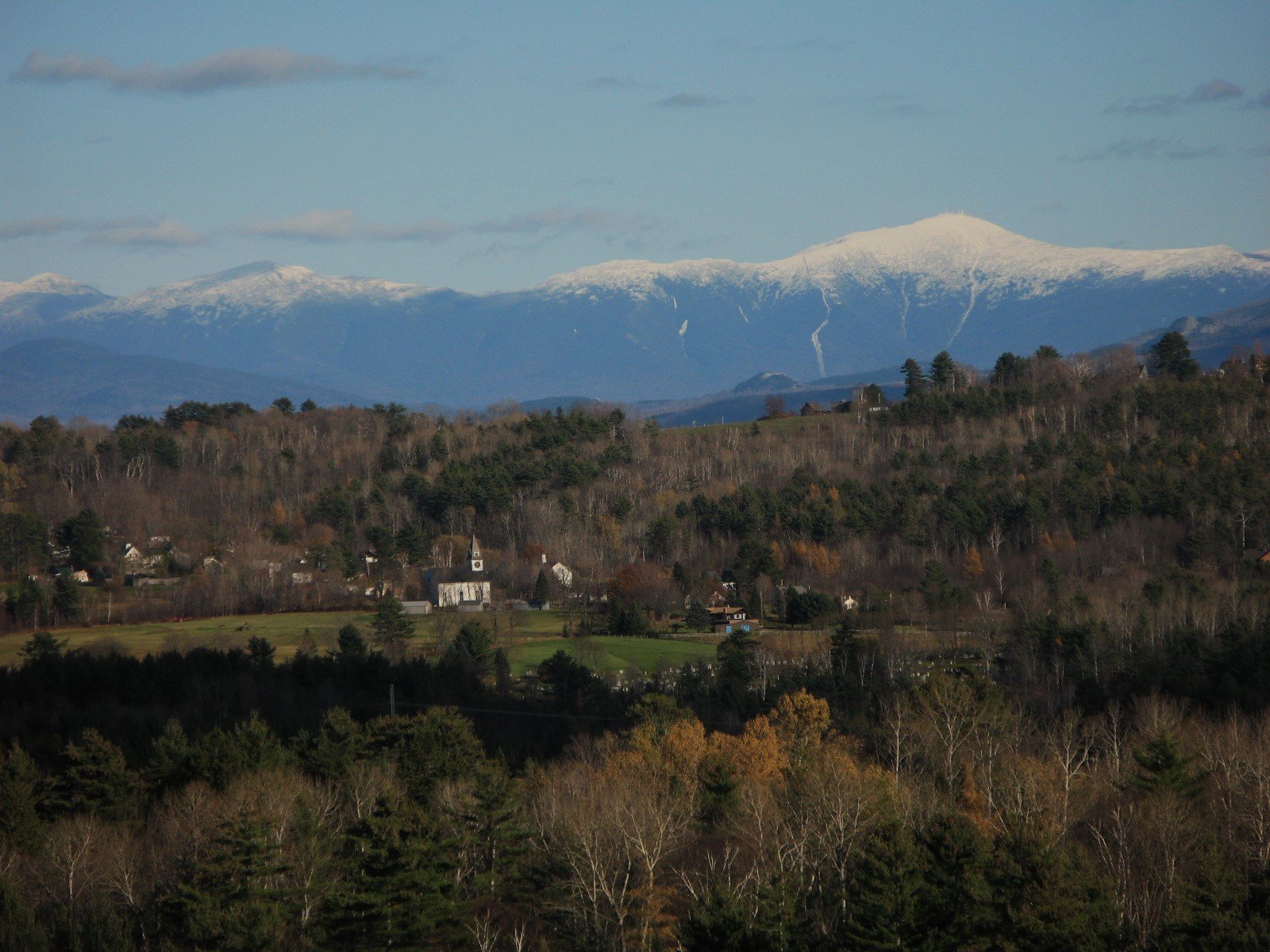
November 1, 2008. The first snows have highlighted
the tops of the Presidential Range that rise far
beyond the little village of Sugar Hill.
Once the mountains are truly snow-capped, the long winter cannot be far away. If you’re living in the North Country, you’re probably happy with the cold and the snow and the ice. You know what to expect, and you’re prepared. Skiers and snowshoers, of course, welcome the snow, while many of the rest of us look forward to many an hour sitting in the cozy warmth of the wood stove. We put out the feeders, welcome the company of the birds, and enjoy the clarity of the mountain vistas.
I like to snowshoe through the Back 4 and out to the old logging roads in Foss Woods. Once, like Robert Frost, I came to a spot where I had to decide which road to take. Unlike Frost, I did not wonder whether, years later, I might look back to ponder how my choice had affected my life. No, I simply took the following photo. Today, nearly six years later, I have no idea which road I took, but I do remember the two yellow birches that have the conflicting trail signs. Retaining memories of such a moment? That makes all the difference.
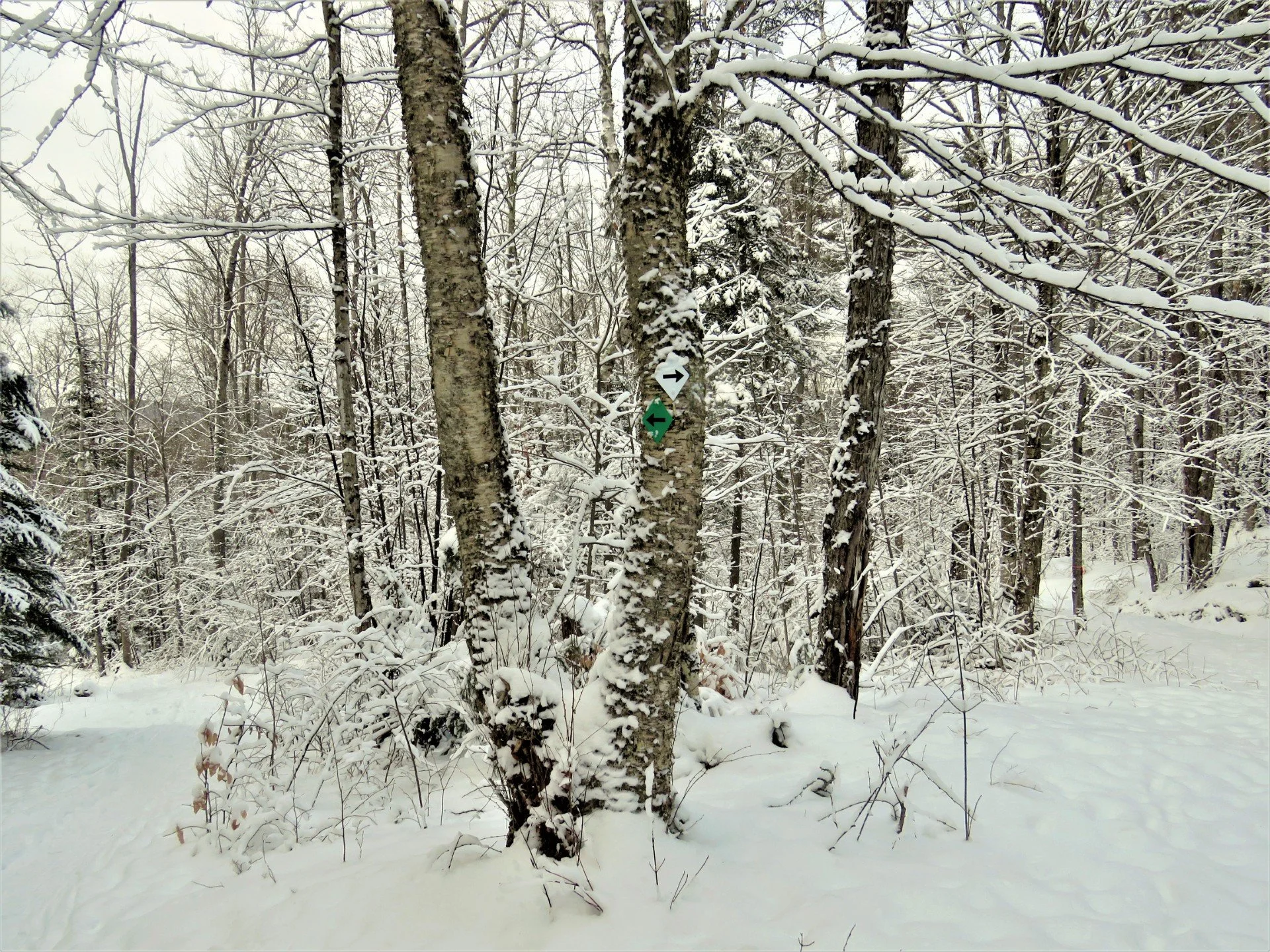
January 19, 2021. Two roads diverged in the snow-bound,
no longer yellow Foss Woods.