
Phenological Phacts and Photos: Coolest Dragonflies by Carl D. Martland
Phenology – “a branch of science concerned with the relationship between climate and periodic biological phenomena (such as the migration of birds or the flowering and fruiting of plants)
Some Like it Cool
It’s October. The mountainsides are glorious with color. Hikers are happy for the cool clear days, and gardeners are happy that the no-see’ums and mosquitos have disappeared. Skiers are hoping for an early snowfall. Fall is always welcome, not only because of the foliage.
Some like it cool. Not the birds. We see a lot of birds in the fall, but not because they are trying to cool off. No, most of them are migrating toward warmer climes, while others decide to spend the winter here rather than in the frozen forests of Canada. But there are a few critters who actually are most active during the wonderful days of early autumn. In turns out that September and early October are the best times for seeing a half dozen of our most common dragonflies. The abundant emeralds and white-faces prefer the long days and warm nights of June and July. The beautiful blue dashers, widow skimmers, and 12-spotted skimmers that proliferate in Augst are seldom seen after Labor Day. Green darners, some of whom were here in May, are active all summer, but I’ve never seen one in October. The only ones who really like it cool are meadowhawks and mosaic skimmers. And a few of them will even make it to Halloween.
Meadowhawks
Meadowhawks are the small, red dragonflies that are commonly seen along by ponds or in fields. White-faced meadowhawks first show up in mid-July, and they are quite active for through mid-September. However, I have never seen one in October.
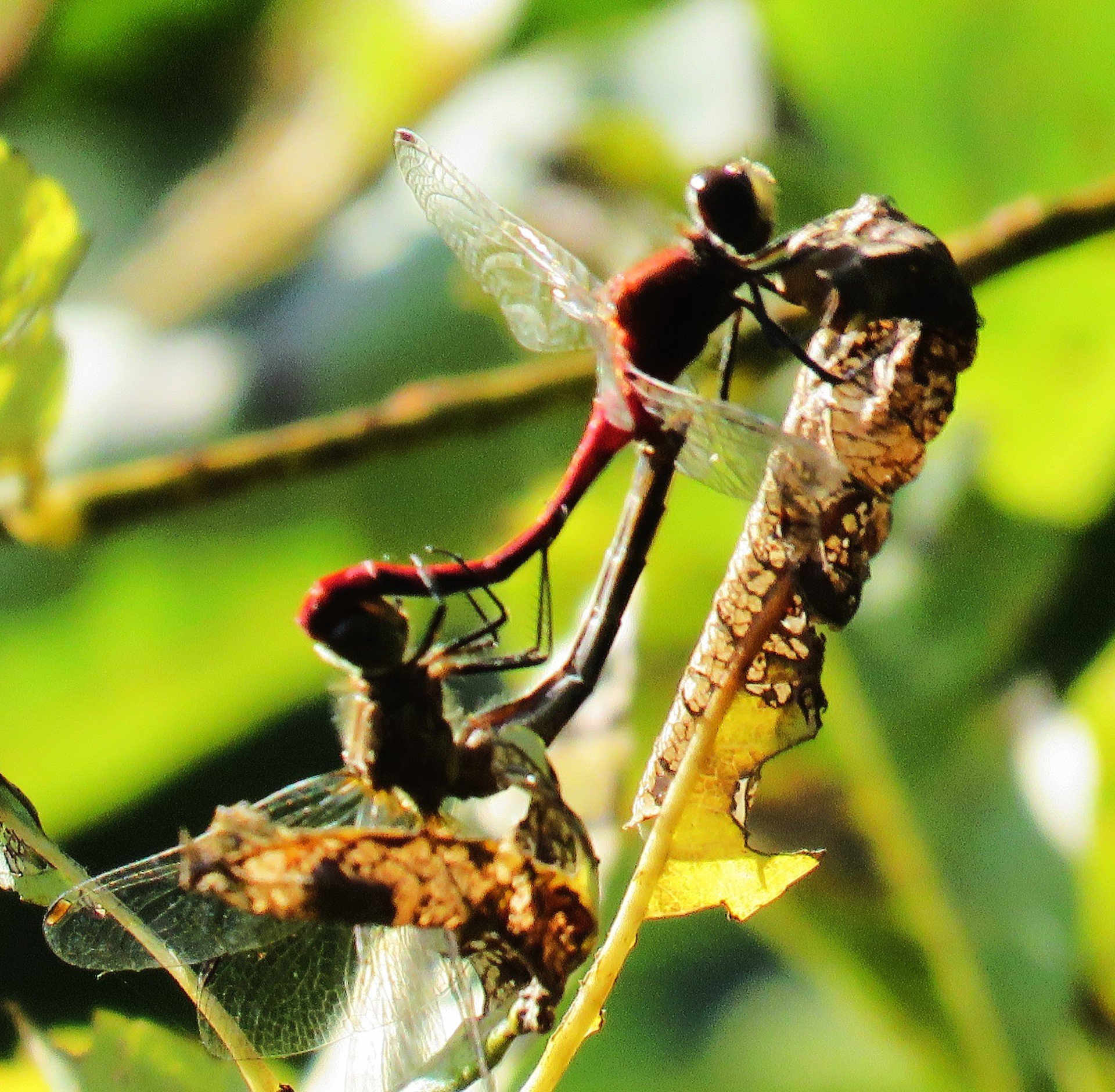
September 20, 2019, 70 degrees, beautiful, 4pm. Three white-faced meadowhawks, including a pair in a wheel (photo). A dozen or more mosaic darners hunting over the dam, plus another half dozen over the pond.
Yellow-legged meadowhawks show up in early August, and they are the most common meadowhawk to be seen for most of September. I have photographed one of them as late as October 5th by our pond and a week later at Coffin Pond.
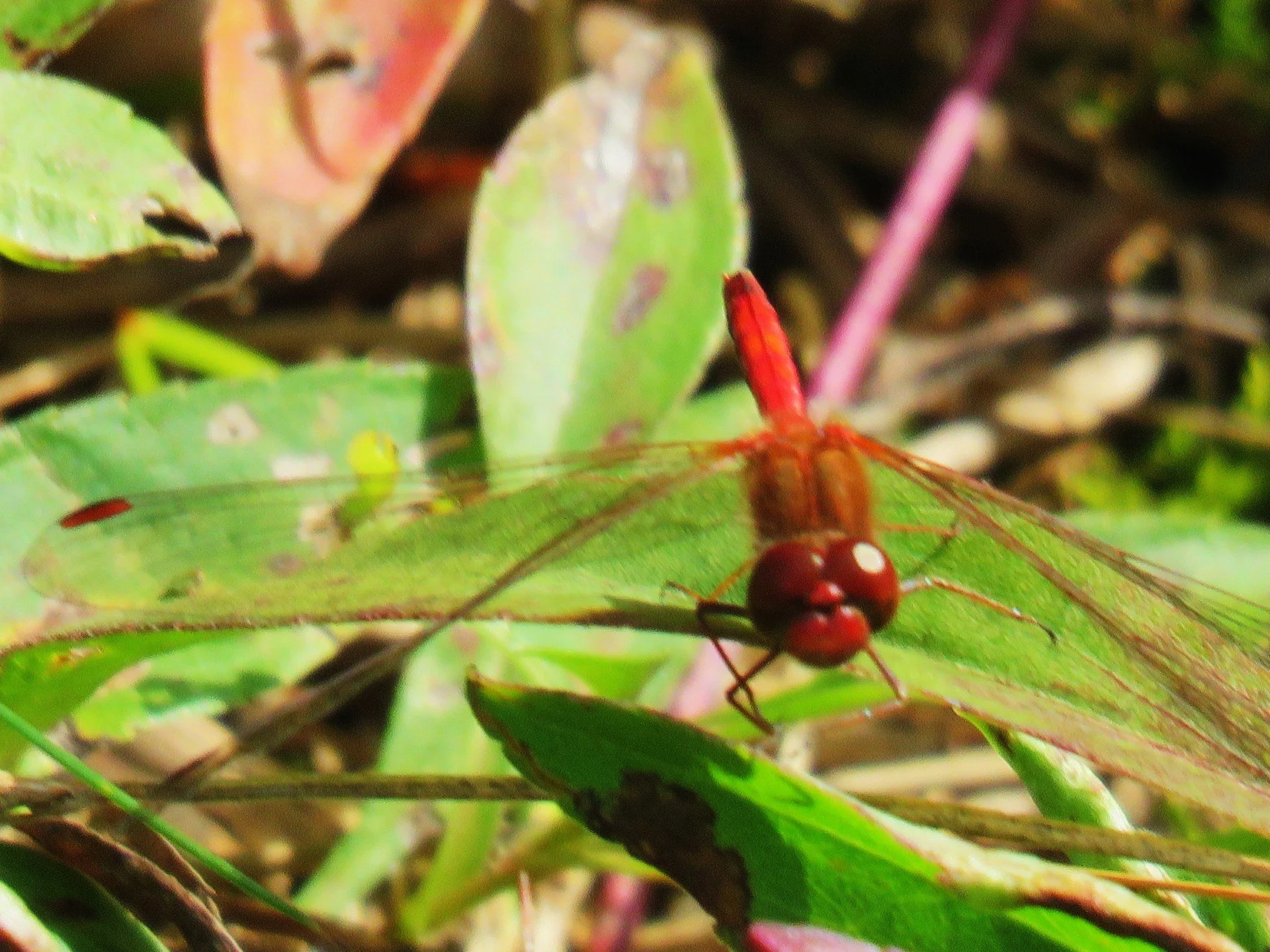
October 5, 2020. A yellow-legged meadowhawk posed near the pond.
The latest entry in my journals is for October 12th:
October 12, 2016, 70 degrees, gorgeous! The dragonflies have not all died or departed. Black-tipped darners, yellow-legged meadowhawks, and large damselflies were by the patio and the southeast corner of the pond.
Two other species of meadowhawks, saffron-winged and cherry-faced, start to show up in late August, and they are the ones that sometimes make it to Halloween. Even with a pretty good photo, it is hard to tell them apart. Both have red faces and some orange veins on their wings. Saffron-winged have more orange, and their legs have less black, but these distinctions require an excellent photo.
August 22, 2021, 84 degrees, HHH, mostly cloudy. Photo of the first mature yellow-legged meadowhawk on a lupine stem near our end of the dam. Earlier photos likely were juveniles. A little later, I saw the first of the cherry-faced or saffron-winged meadowhawks by the drain)
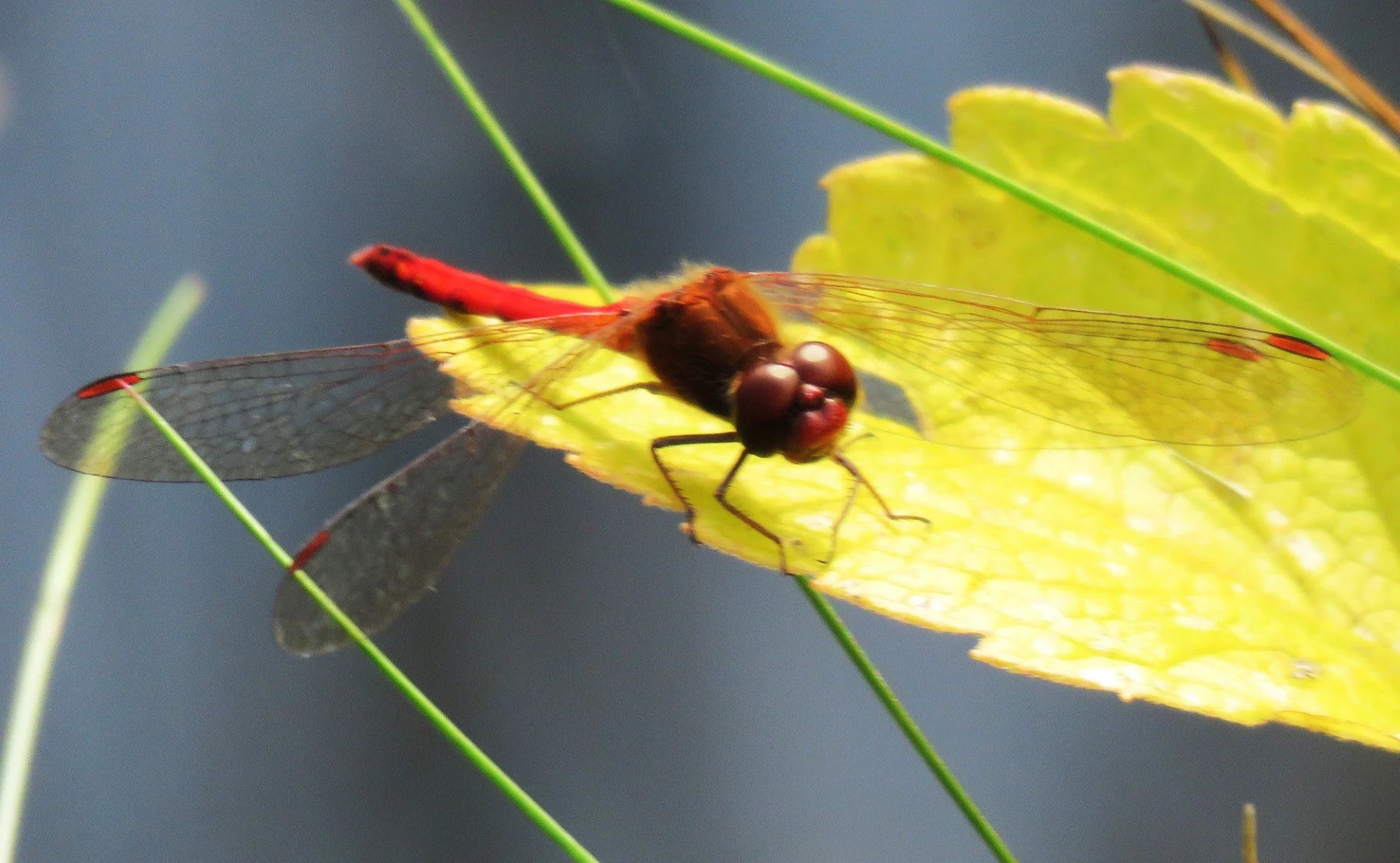
The photo at the beginning of this essay shows a saffron-winged meadowhawk sitting near the pond on a yellow leaf on October 9, 2018.
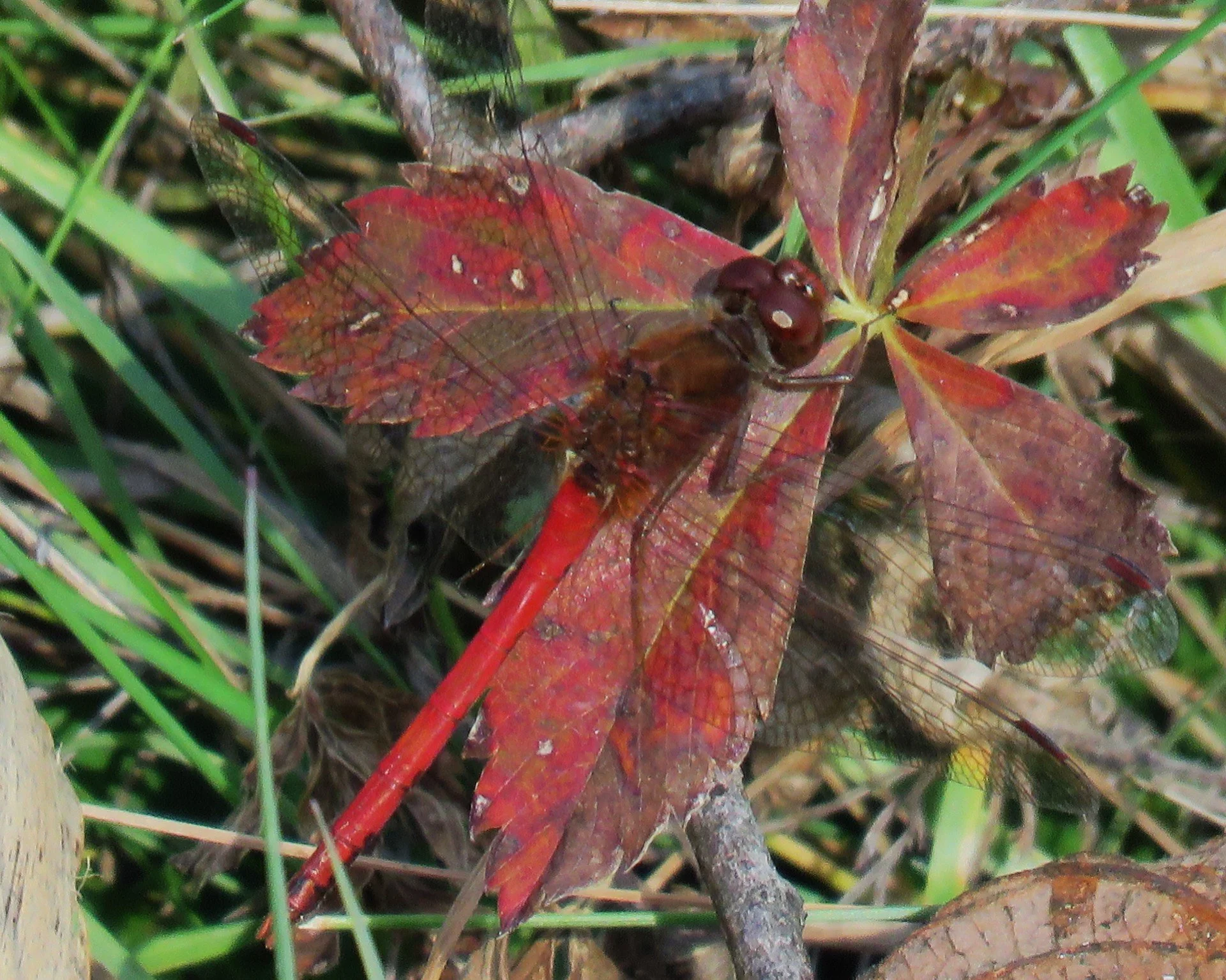
October 20, 2018. A saffron-winged meadowhawk camouflaged against the fading colors of a vine by the dam.
Mosaic Darners
Mosaic darners are large dragonflies with blue spots creating a mosaic pattern along their abdomens. The species common to the North Country all look about the same, until a close look reveals the shape of their yellow thoracic stripes.
Variable darners have thoracic stripes that are thin, sometimes so thin that they break into a pair of spots. This species is easily identified when a pair gets together, because the female is mostly yellow, contrasting with the male who is mostly blue. They are most likely to be seen from early August to the end of September.
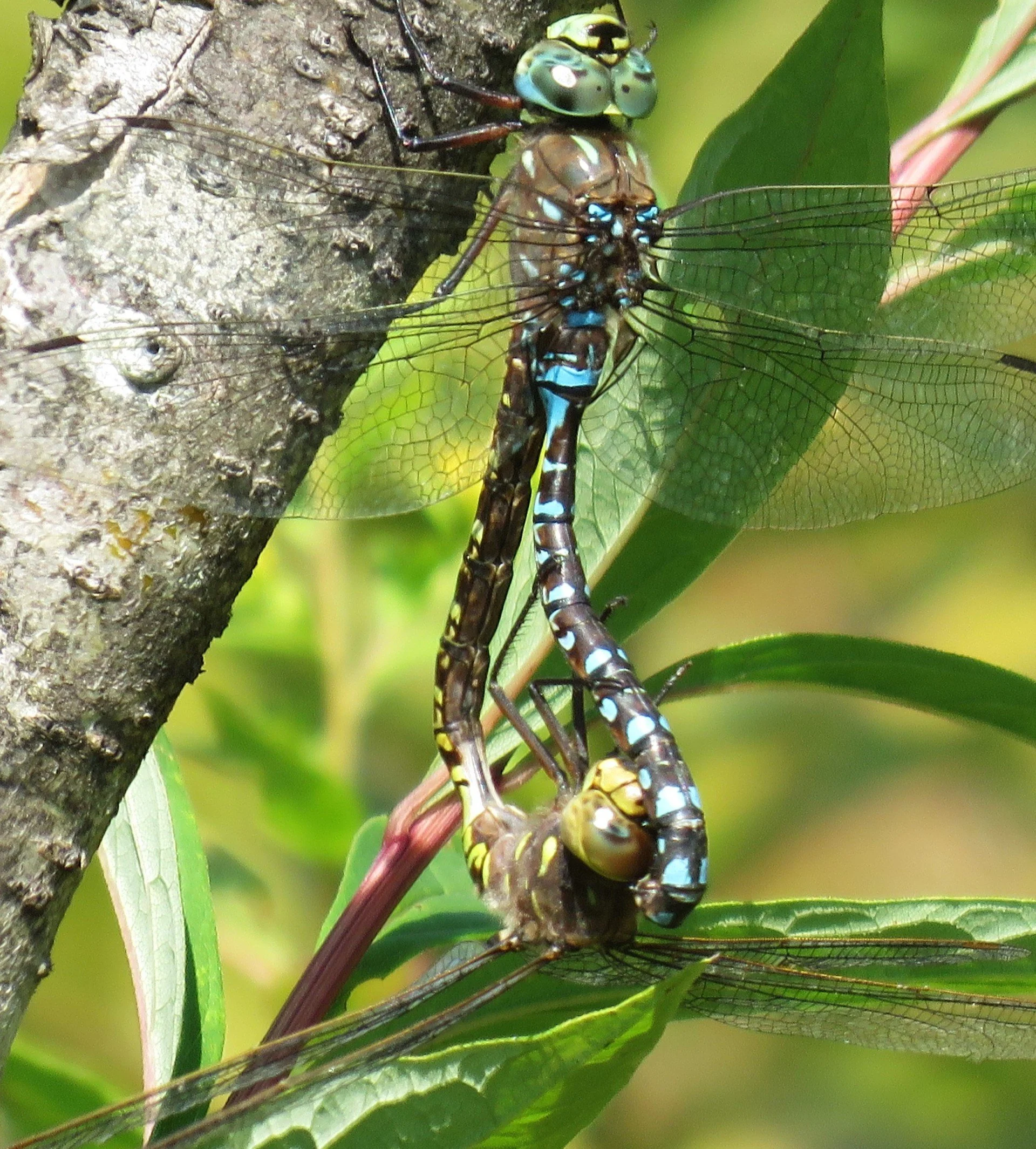
September 4, 2016, 75 degrees, sun! I was able to photograph a wheel of variabled darners near the hedge entrance into the Upper Meadow. They were perched about three feet off the ground in an apple tree. I watched for ten minutes, and they moved together to at least four different perches.
For many years, they were the most common mosaic darners in the Upper Meadow and around the pond, but they have largely been displaced by the larger and more aggressive Black-Tipped Darners.
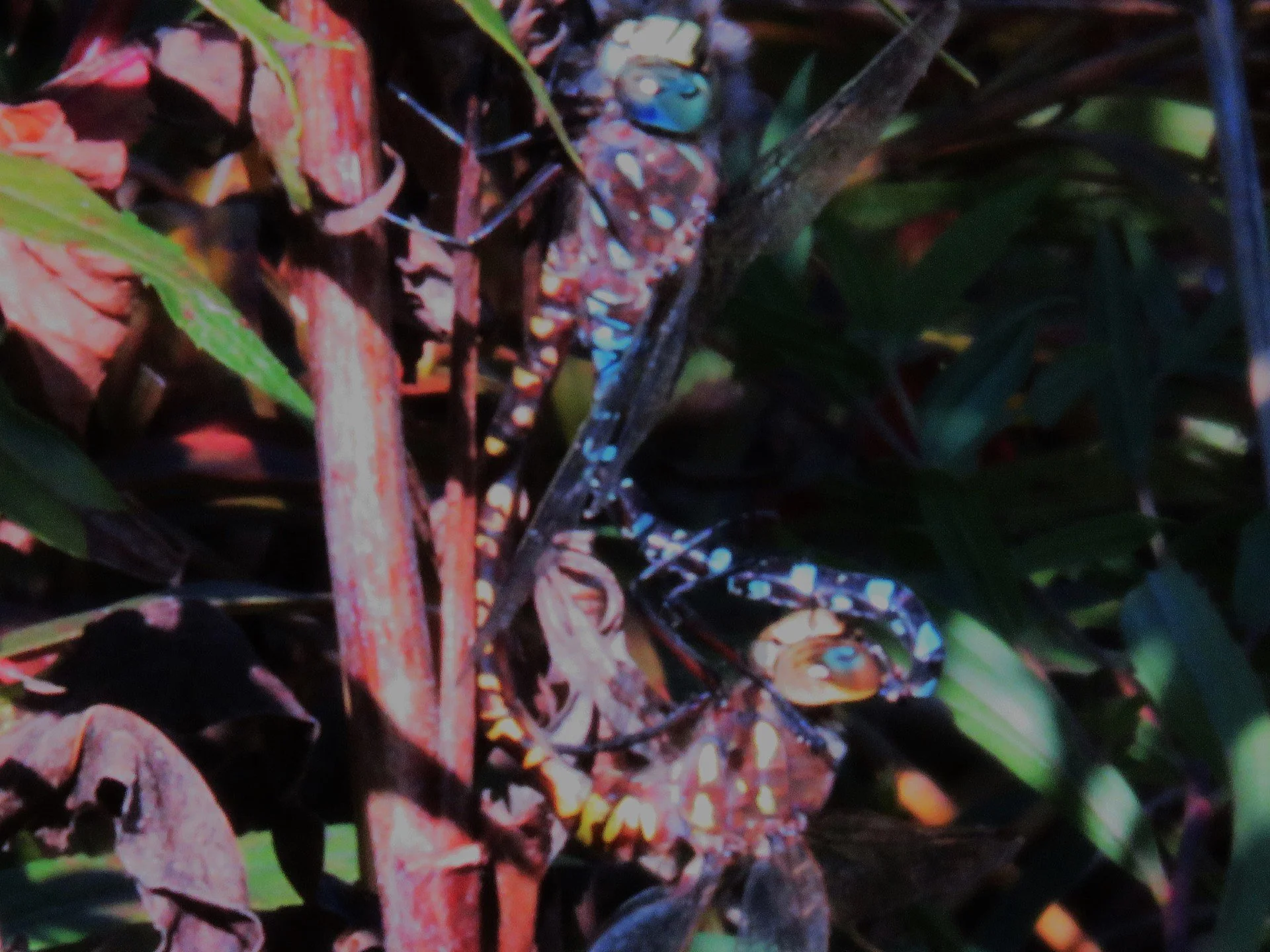
September 29, 2024. 68 degrees, only a few clouds, breezy, a gorgeous day! More dragonfly and damselfly activity today. Highlight was photographing the first variable darner that I have seen in a long time. I followed a pair flying linked together to the place where they settled down on the top of the dam.
Black-tipped darners are three inches long, slightly larger than variable darners. They have become the most common darner around the pond in August and early September. The males seldom land, but the females are frequently seen ooching down a cattail to lay eggs in the pond.
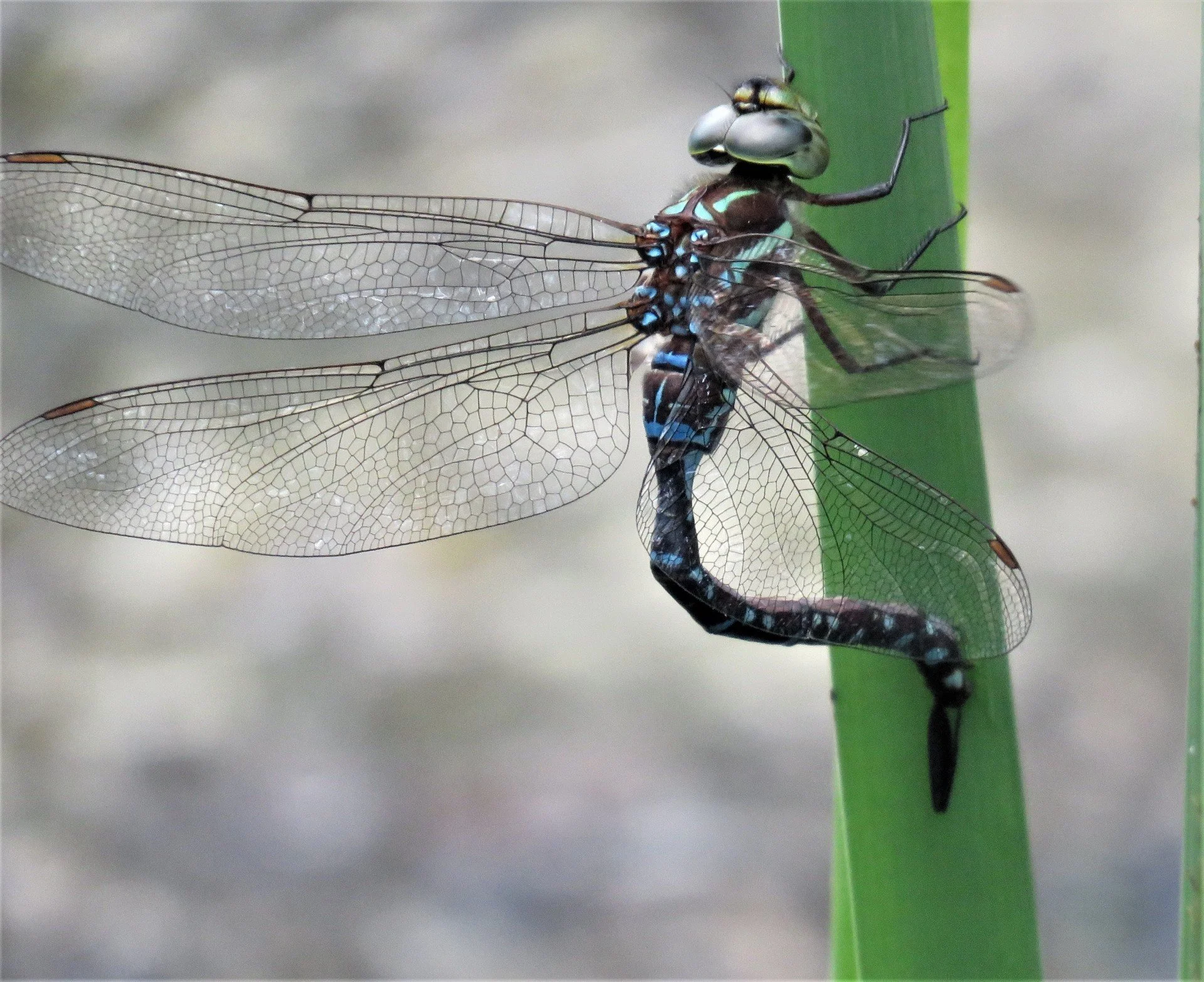
September 23, 2021. A female black-tipped darner moves slowly down a cattail to lay eggs in the pond.
Black-tipped darners can still be active in October. With the cooler weather, they need more time to warm-up, so they are much more willing to pose for a photo than they were back in the summer.
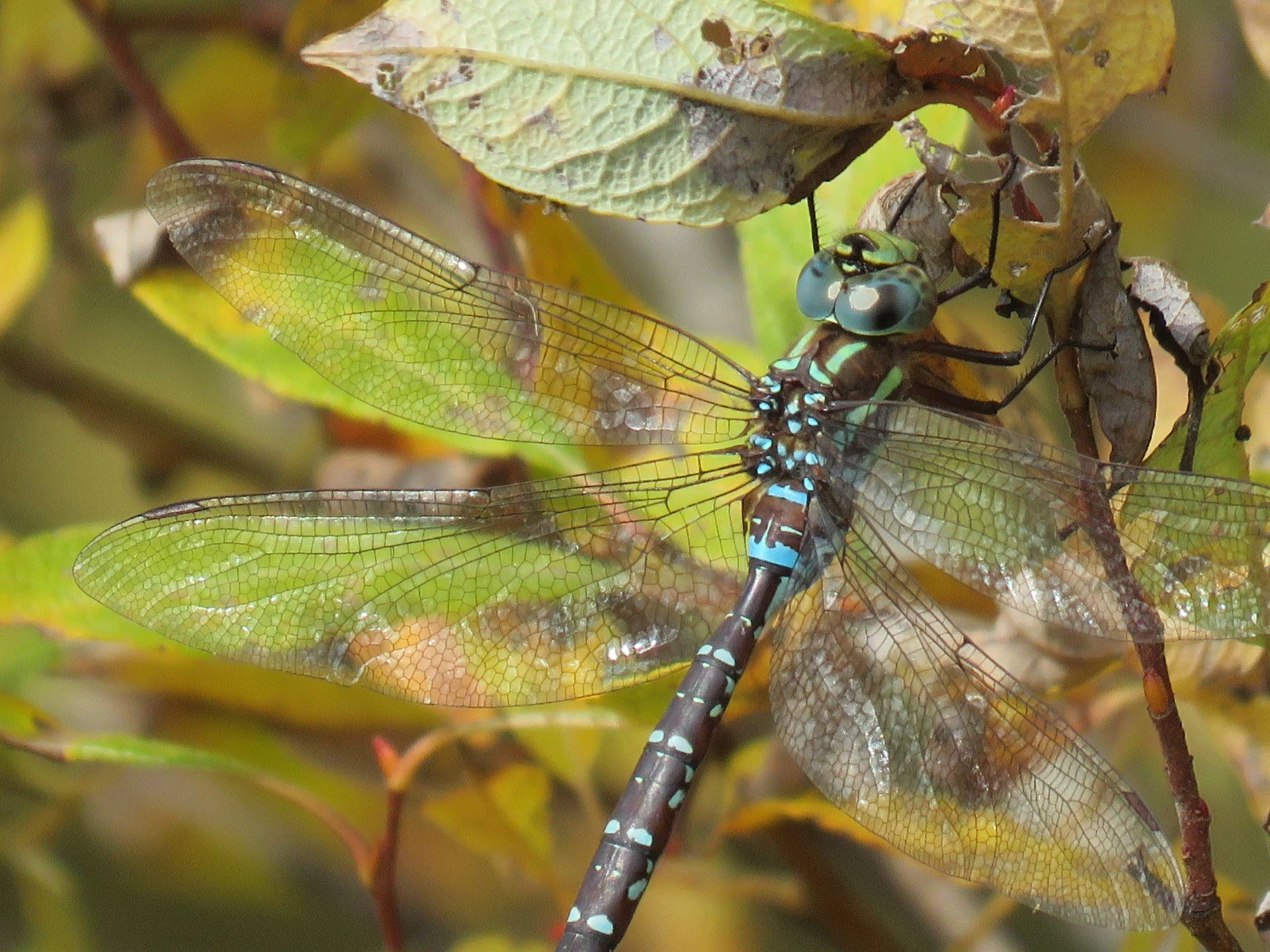
October 10, 2019. A black-tipped darner rests on a sunlit perch near the pond.
Canada darners are a little smaller than the other two darners, and they have quite distinctive behavior. Around the pond, the patrol from one open spot in the reeds to the next. At each opening, they fly in, hover for several second, move a few feet, hover some more, then off to the next opening. Don’t worry, they be back in a couple of minutes doing the same thing. In the Upper Meadow, they love to perch on the side of our screen house,
soaking up the afternoon sun for a half-minute or more before flying out again around the meadow hoping to catch another tiny insect. They will be seen in early October, by which time they are more sluggish and therefore likely to pose on colorful foliage.
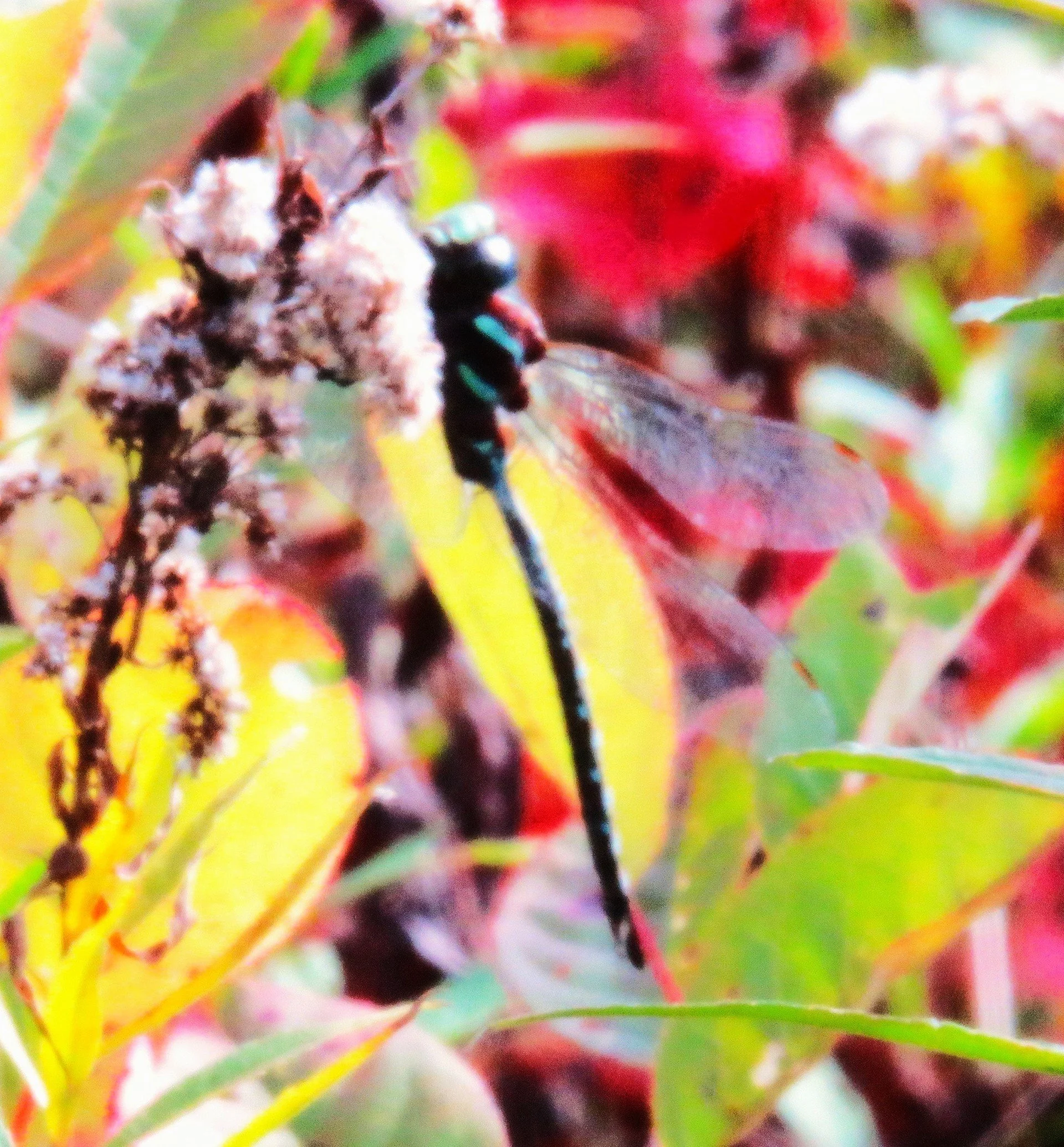
October 1, 2022. A Canada darner rests on brilliant foliage by the pond.
Last Chance
In the North Country, few dragonflies make it to Halloween. Here are my latest journal entries that mention dragonflies.
October 30-31, 2019, 64 degrees, partly cloudy, the first really nice day with temperature above the fifties in a week or more. A dozen or more cherry-faced meadowhawks along the dam, at our end and near the screen house. Many in tandem, including one pair laying eggs in the SE corner. Only one mosaic darner. The 31st was a little warmer, but cloudy, so I only saw one darner and no meadowhawks.
November 5, 2014. A meadowhawk landed on the chair I was sitting in. I think it was a saffron-winged meadowhawk, as it had saffron blotches in the bases of its wings.
November 8, 2020, 67 degrees, 2pm. I saw meadowhawks in three locations around the pond: two by the drain and one by our end (as I approached in the rowboat). A close look at the latter one indicated it was probably a cherry-faced meadowhawk.
My latest photo of a dragonfly shows a saffron-winged meadowhawk that managed to hang on until November 10th. In short, don’t think the dragonflies are gone just because it’s October. There are sure to be a couple more sunny days in the high 60s or low 70s, and that will be a good time to go out to a nearby meadow or pond to look for the last lingering meadowhawks and mosaic darners. Don’t spend a lot of time worrying about which ones you’re seeing. Just notice where one leaves from its resting place, move to a spot with the sun over your shoulder, wait for the dragonfly to return, and snap the photo!
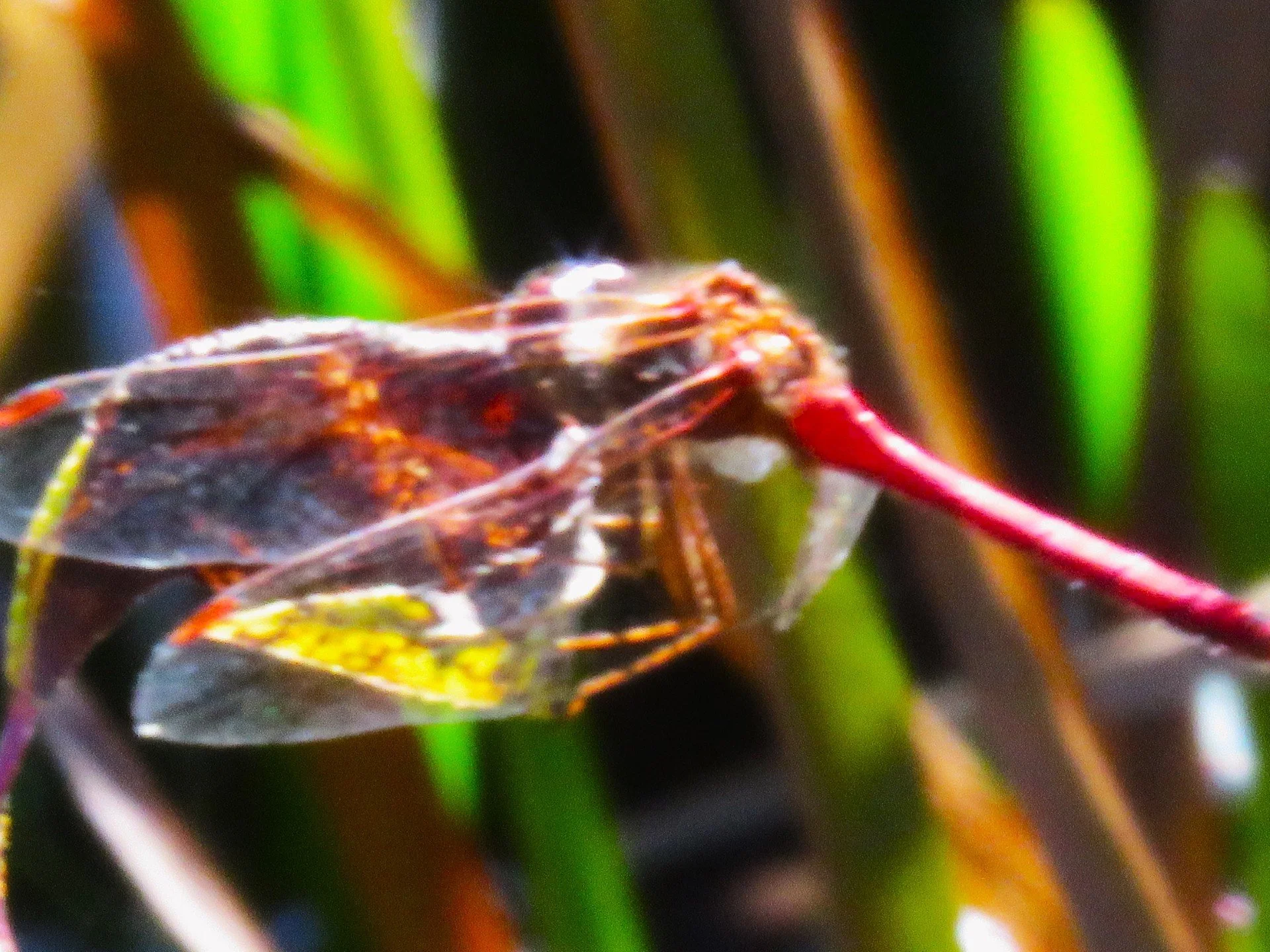
October 6, 2022. A meadowhawk warms up in the October sunshine. Is it a yellow-legged, a cherry-faced, or maybe a saffron-winged? I don’t know and who cares! It is certainly a meadowhawk, and I really do like the photo!