
Phenological Phacts and Photos with Carl Martland / January 2026
Oak Diversity
Phenology – “a branch of science concerned with the relationship between climate and periodic biological phenomena (as the migration of birds or the flowering and fruiting of plants).”
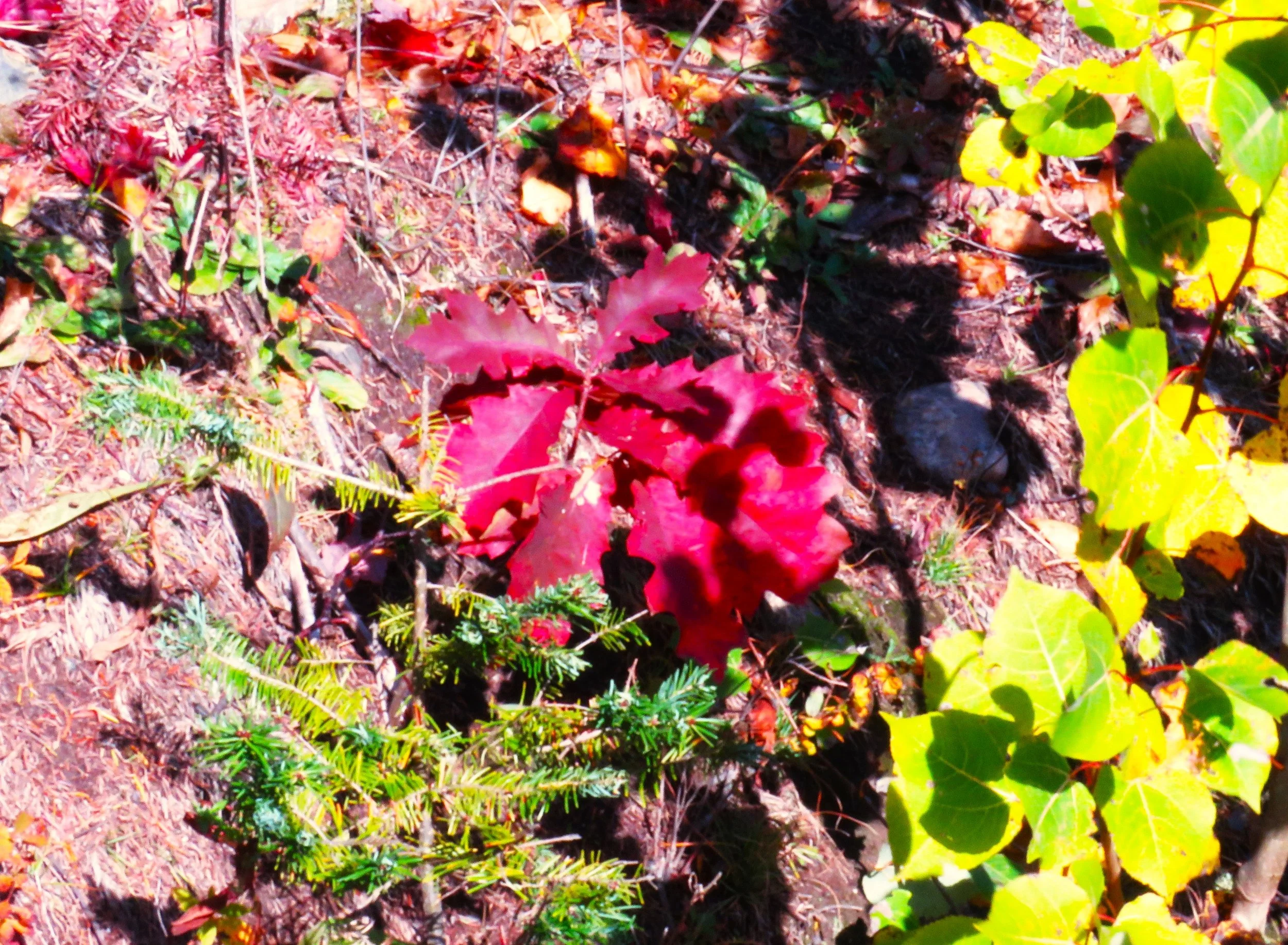
The Oaks Are Coming
In the North Country, we are close to the northern edge of the range of oak trees. While we find a few oaks along our highways and isolated in the woods, we seldom find a place where we can splash through several inches of oak leaves in a forest dominated by oaks. A couple of years ago, I wrote about finding a couple of hundred northern red oaks in Foss Woods, but only a dozen or two were mature enough to produce acorns, and a majority were less than 30 inches tall. The concluding paragraph of that essay noted that:
I now recognize that the tiny oaks I come across are much more than an inconsequential few of the thousands of small trees found in the woods. They are young pioneers pushing northward, and I am happy whenever I across one, no matter how small. Oaks are not known for their colors or their beauty, but in early spring or late fall, if the sun is right, you may get a chance to take a fine “baby picture” for what will become, long after we’re all gone, a mature grove of northern red oaks.
The final photo of that essay about northern red oaks is reproduced above to introduce this essay on oak diversity. The photo was taken in October 2022 in what I call the Lower 40, and, in my journal, I pondered the northward movement of northern red oaks in response to climate change:
I came across this lovely, tiny oak while walking along one of my trails in the Lower 40.
Will this tree mature as part of a majestic grove of northern red oaks?
I certainly won’t live long enough to find out the answer to this question, but I can perhaps get a glimpse of that future by looking more carefully at what can already be found a little further south.
“Autumn Leaves Must Fall”
Oaks hold on to their leaves much longer than most trees, and these leaves decay very slowly in the crisp autumn air. But, as the song reminds us, “Autumn leaves must fall,” and the oak leaves eventually fall atop a layer of already faded maple and birch leaves.
Last October, we took one of our favorite walks along the boardwalk at the edge of the salt marshes at Great Bay Nature Center in southern New Hampshire. I was happy to find leaves from two species of white oaks that cannot be found in the North Country. All oaks in the white oak family have rounded rather than pointed lobes. The classic white oak typically has five to nine lobes with deep valleys between them. Swamp white oaks have many more, but much tinier lobes.
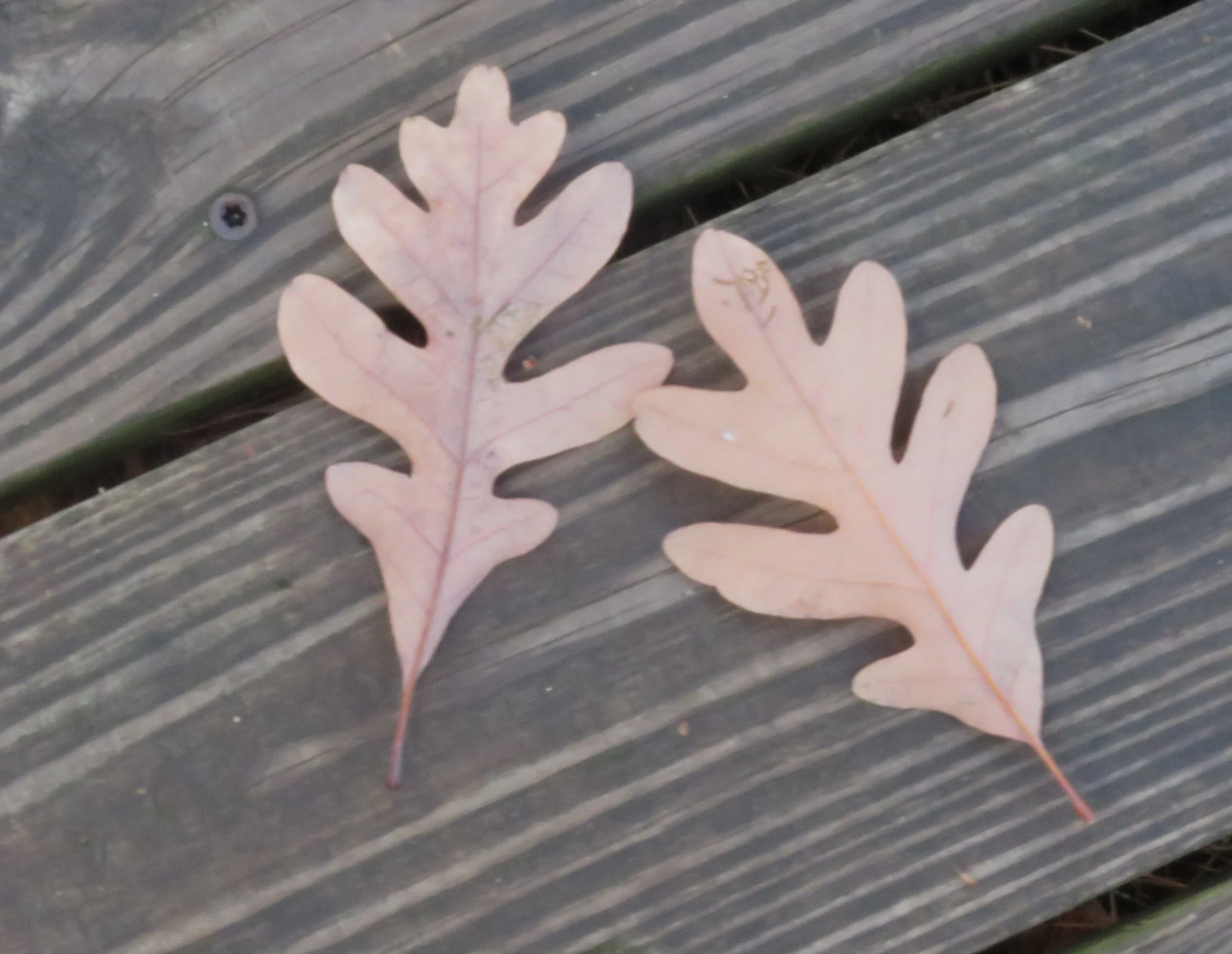
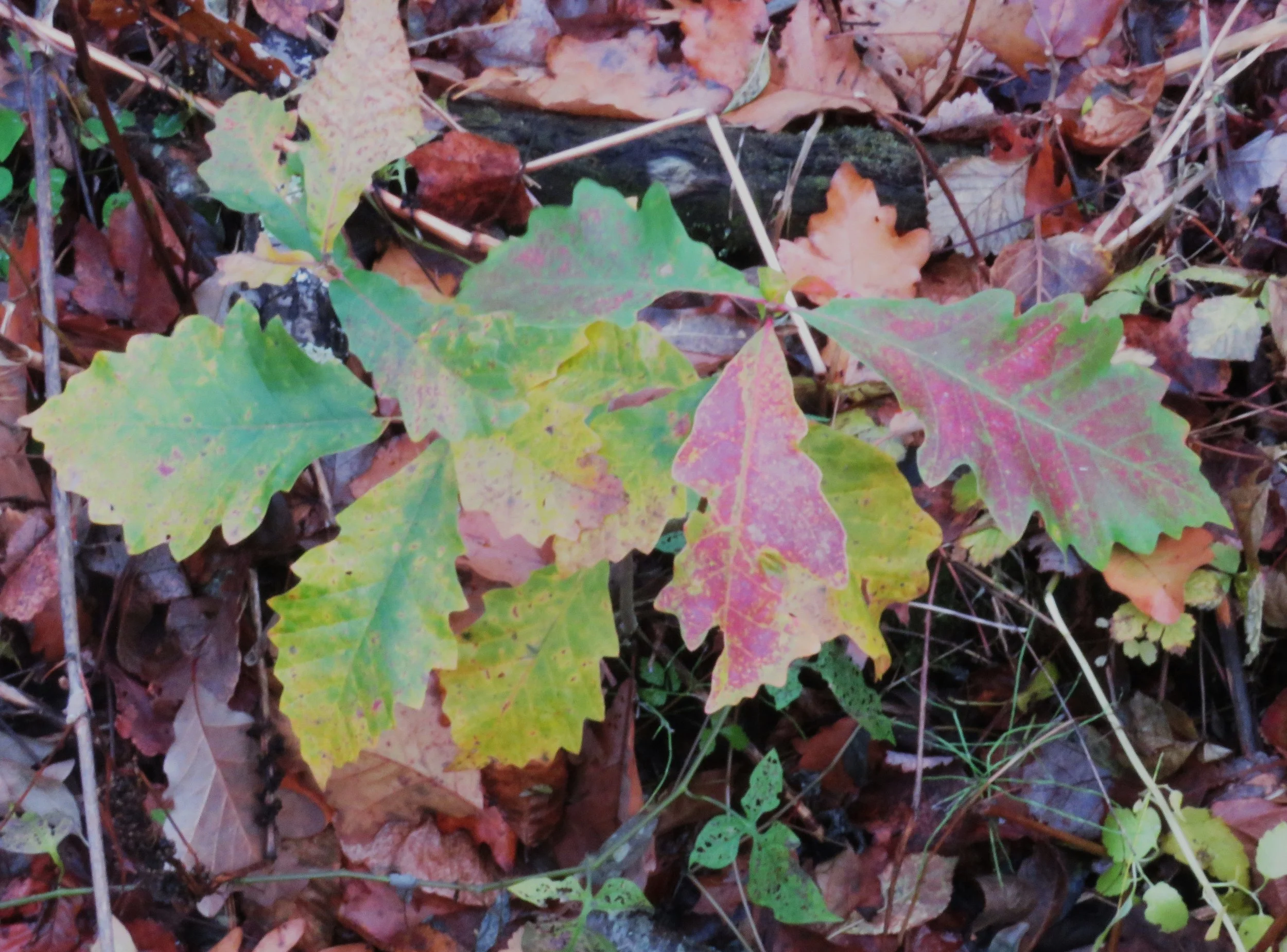
October 31, 2025: white oak leaves posing on the boardwalk at Great Bay Nature Center (left) and a tiny swamp white oak growing next to the boardwalk.
I was equally happy to find several species of the red oak family in addition to the northern red oak, which was the only species I had ever noticed in the North Country. In one spot along the boardwalk, I found leaves from four different species of the red oak family, sometimes lying atop one another (see photo below), which I tentatively identified as red, black, pin, and scarlet oak. I say “tentatively,” because leaf shapes can be quite variable, and it is necessary to see acorns, leaf buds, and perhaps other factors to make an accurate identification.

October 31, 2025
Leaves from four species of red oaks that I found right next to each other on the boardwalk at Great Bay Nature Center. They all have pointed lobes, but they can be distinguished by the depth of the spaces between the lobes. Northern red oak (upper right) has the shallowest spaces, followed by black oak (upper left) and pin oak (bottom). The scarlet oak (upper middle) has spaces between the lobes that reach nearly to the center vein.
Back Home, With My Eyes Wide Open
Our visit to the Great Bay Nature Center jump-started a new interest in oak trees. Although we had lived full time in Sugar Hill for nearly twenty years, I had never noticed any leaves from white oaks or black oaks – only ones from northern red oaks. But now, with my eyes open and a curiosity buttressed by our walk by the Great Bay, I started to find leaves from other oaks no matter where I looked, including just outside our back door. Along Pearl Lake Road, along the trails at the Rocks, and in the middle of a field in Foss Woods, I found many leaves much more deeply lobed than northern red oaks. So, the northern red oaks are not alone. In addition to black oaks, there may be pin oaks and even scarlet oaks in our region
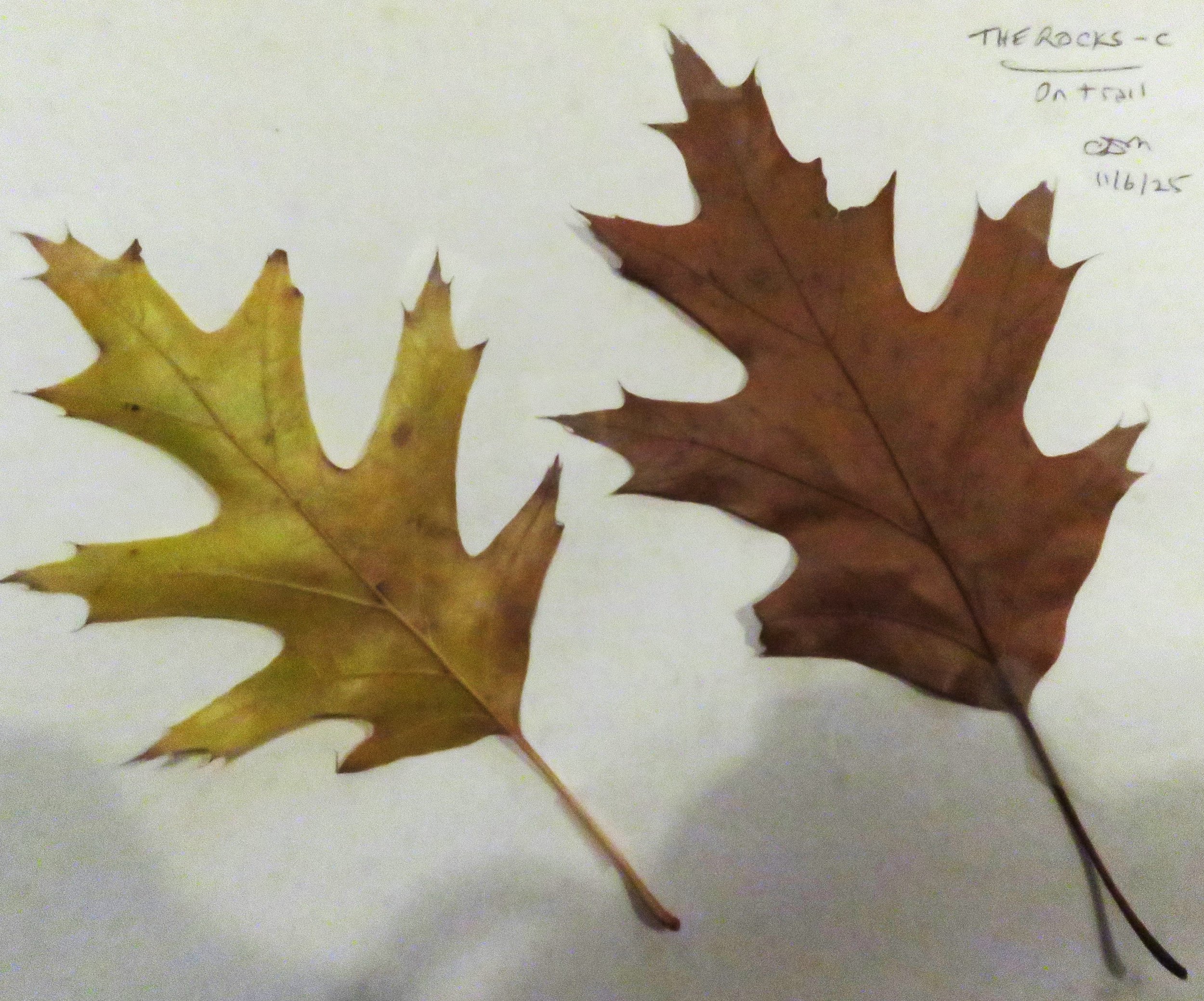
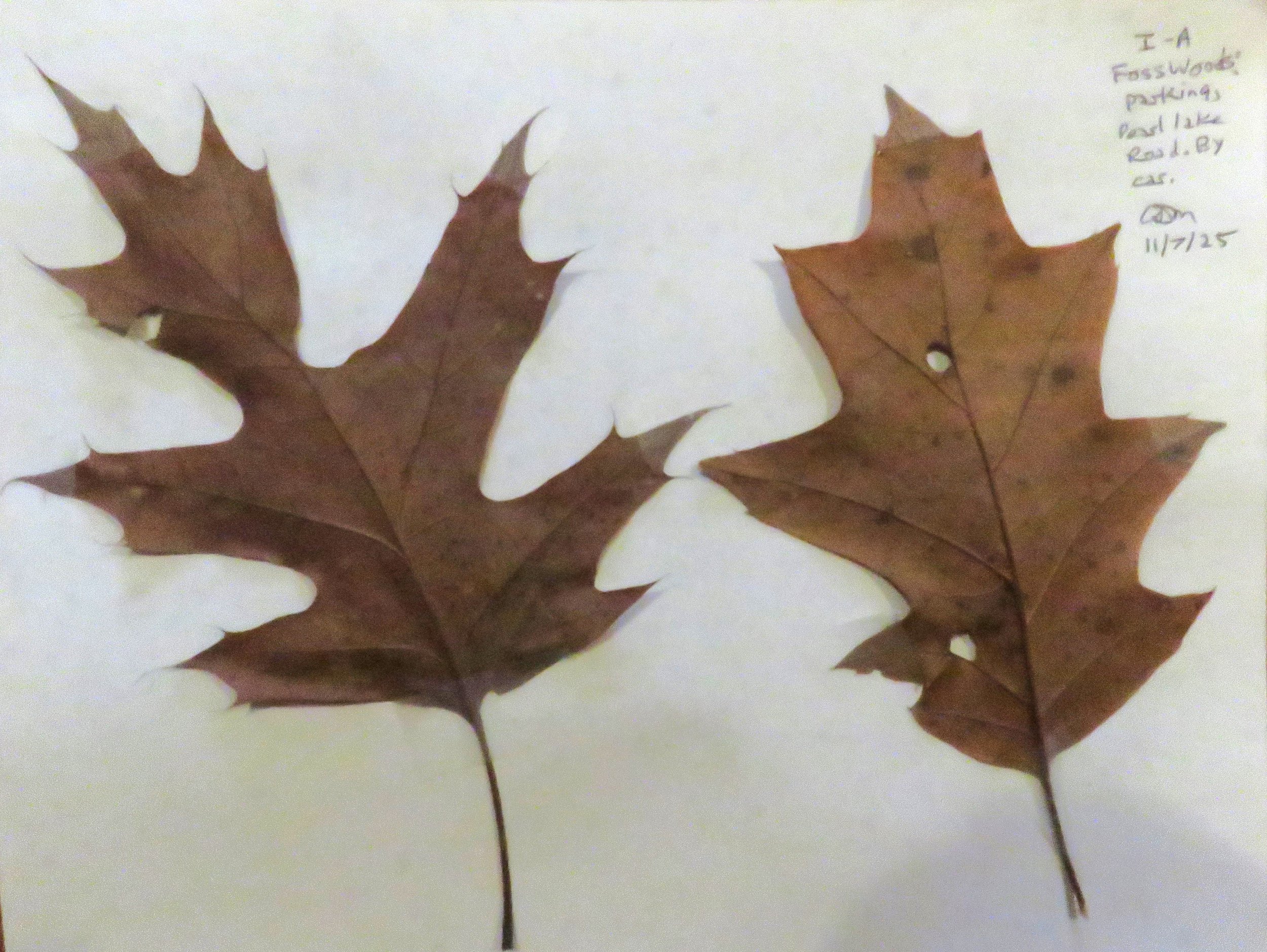
November 6, 2025 Black oak, pin oak, and/or scarlet oak leaves found at the Rocks Estate (left) and in
Foss Woods (right). These leaves all have deeper lobes than found on northern red oak leaves.
In Search of Scarlet Oak
Soon after finding the unexpected variety of oak leaves in Sugar Hill, we departed for our annual visit to our son and his family in Terre Haute. Along the way, I kept looking along the roadside for some of the scarlet oak trees that, according to my guidebook, really do turn scarlet in the fall. No luck driving through any small towns in New Hampshire, Vermont or New York. No luck at roadside rest areas in Pennsylvania or Ohio, although I did find some deeply lobed leaves that could have fallen from a scarlet oak and turned brown.
In Terre Haute, I continued my search in one of our favorite local parks, much to the chagrin of my family when I stopped again and again to take photos of oak leaves. Plenty of different oak leaves, but no scarlet oaks. The next day, we visited another local park, and there we hit the jackpot! A row of scarlet oaks fully justified their name by displaying their foliage against a snow-covered parkland. It was worth waiting for!
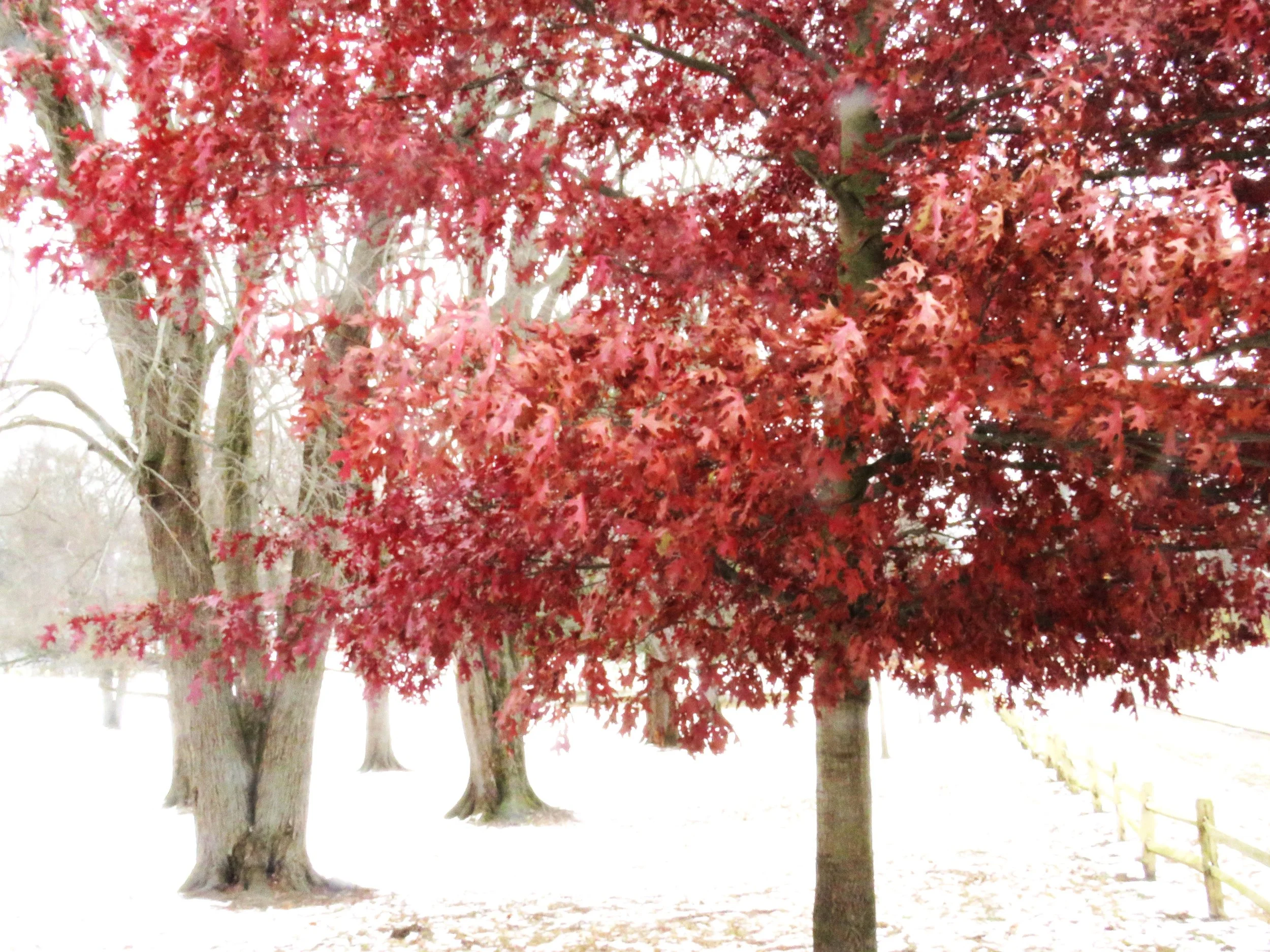
December 1, 2025
A row of scarlet oaks in Demining Park demonstrates the truthfulness of its name.
More and More Oaks
Indiana has no shortage of oak trees and no lack of diversity in oak species. After satisfying my desire to see scarlet oaks in full fall foliage, I continued to pick up many interesting oak leaves as I wandered through a half dozen other parks near Terre Haute. I mounted specimens on copy paper, took photos of them, and, eventually, sought to identify them using an immediately useful Christmas gift from my family: Marion Jackson’s field guide to the “101 Trees of Indiana”. To my surprise, this comprehensive list of Indiana trees included twenty species of oak – twenty percent of the total number of tree species found in the state! The range of leaf shapes is astounding, ranging from the bloated, top-heavy leaves of the black-jack oak to the skeletal lobes of the southern red oak.
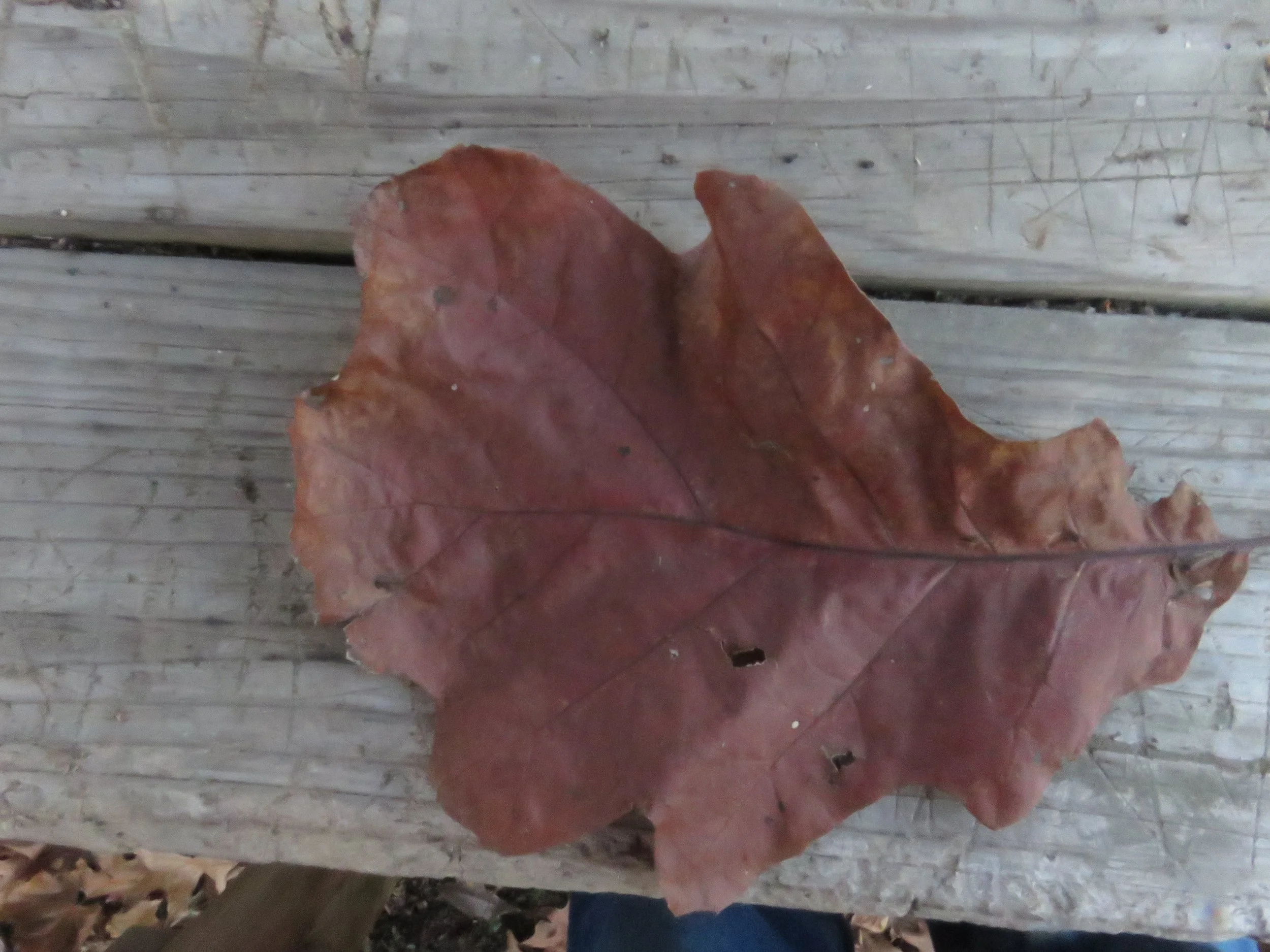
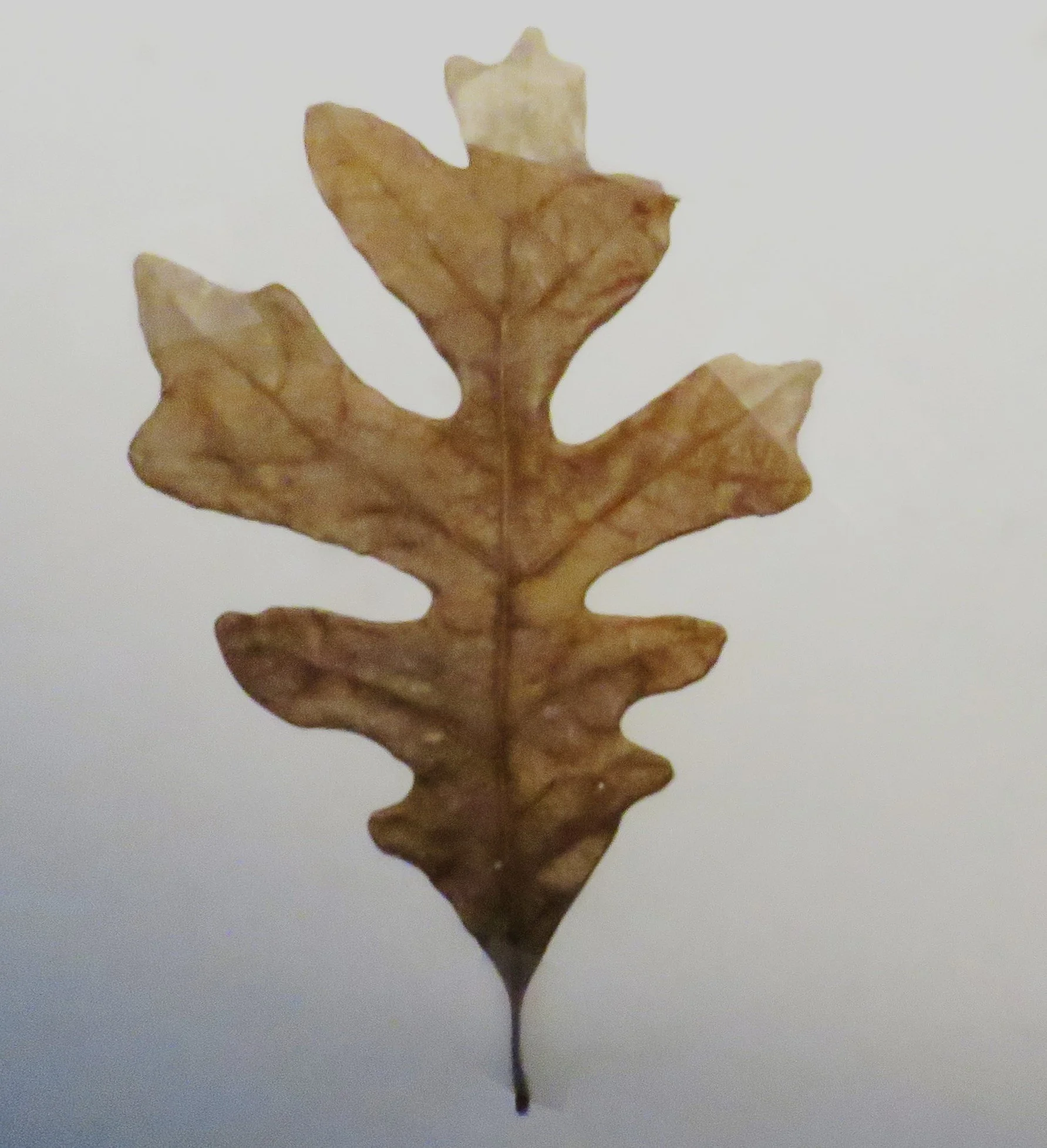
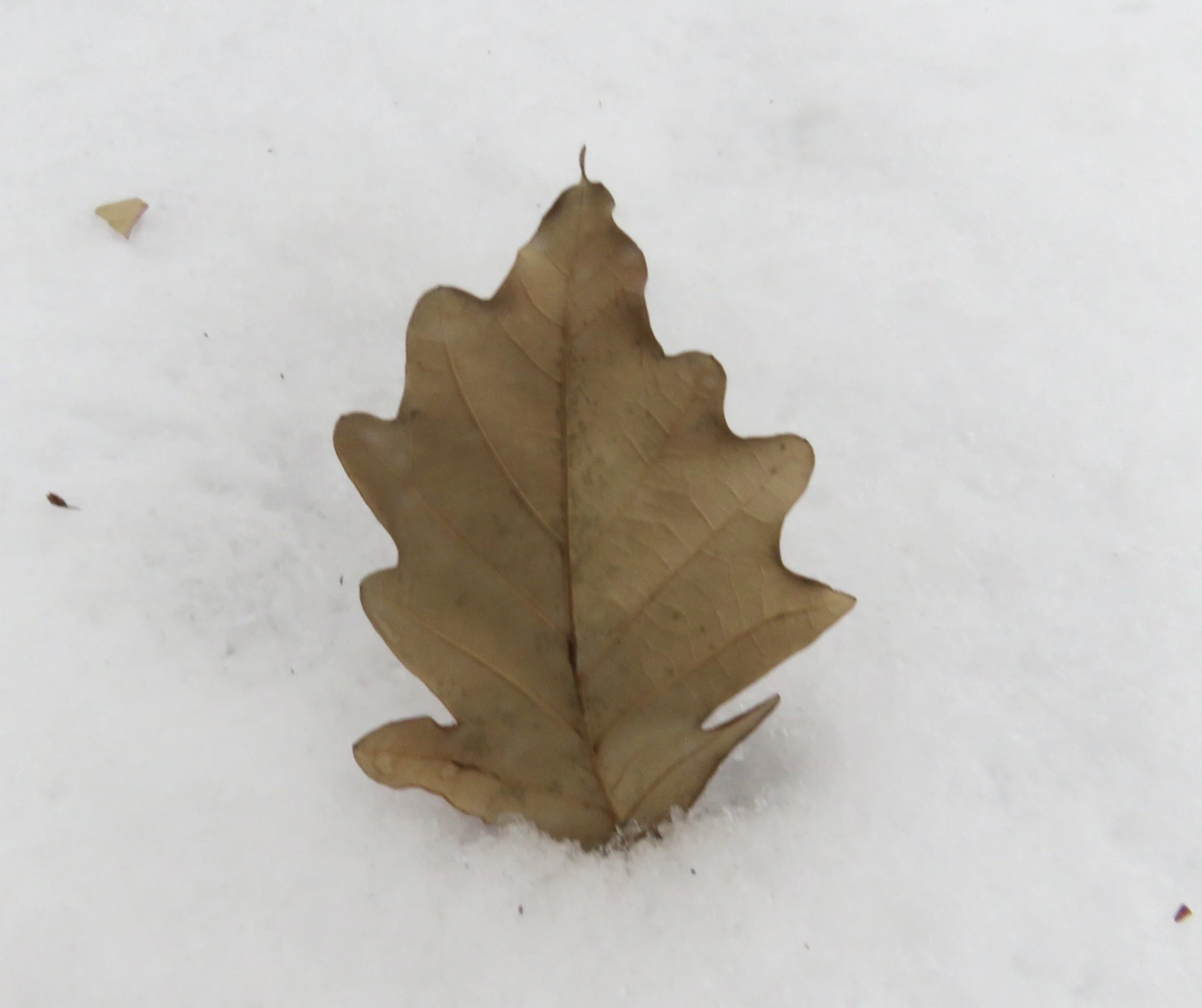
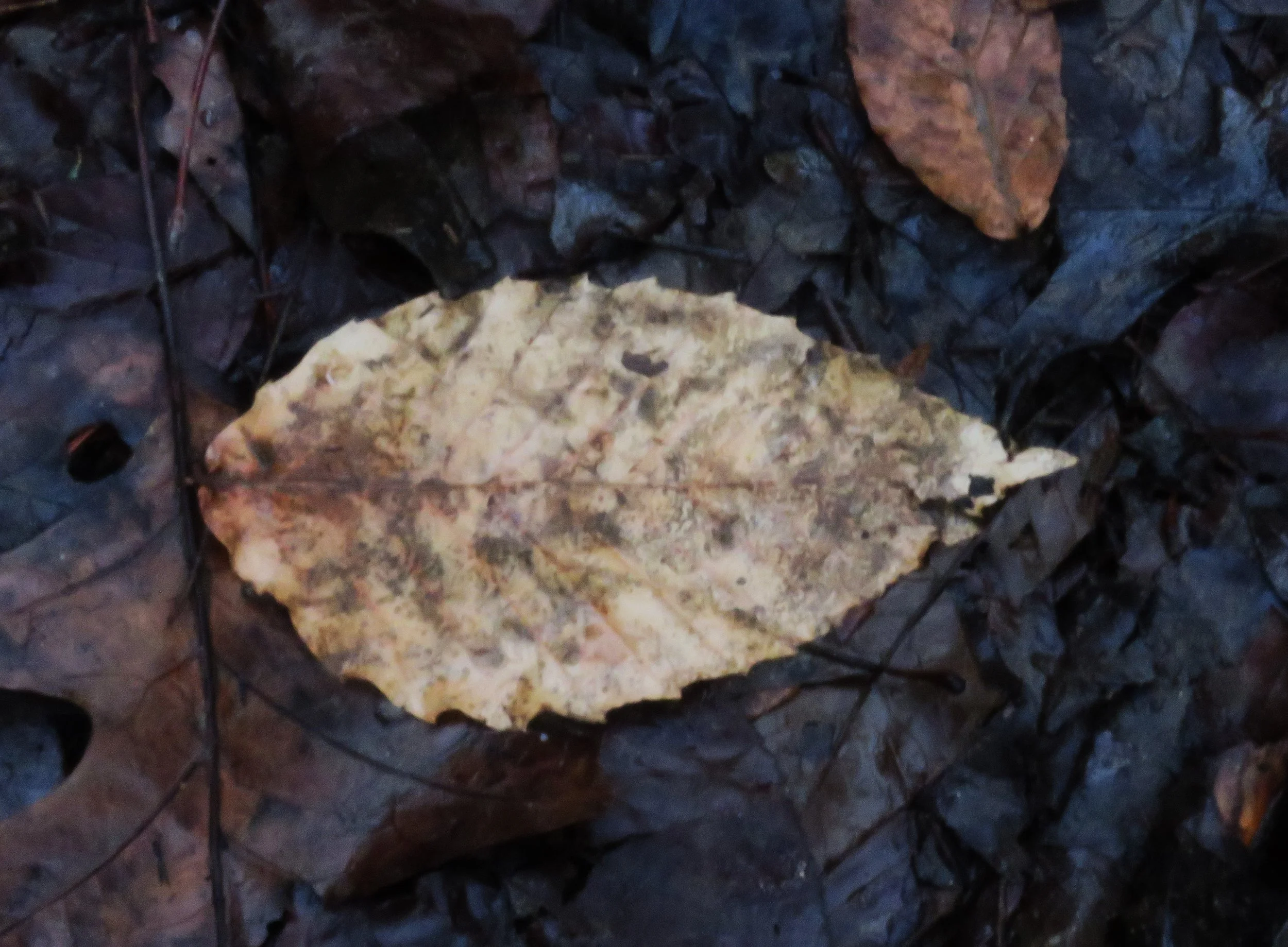
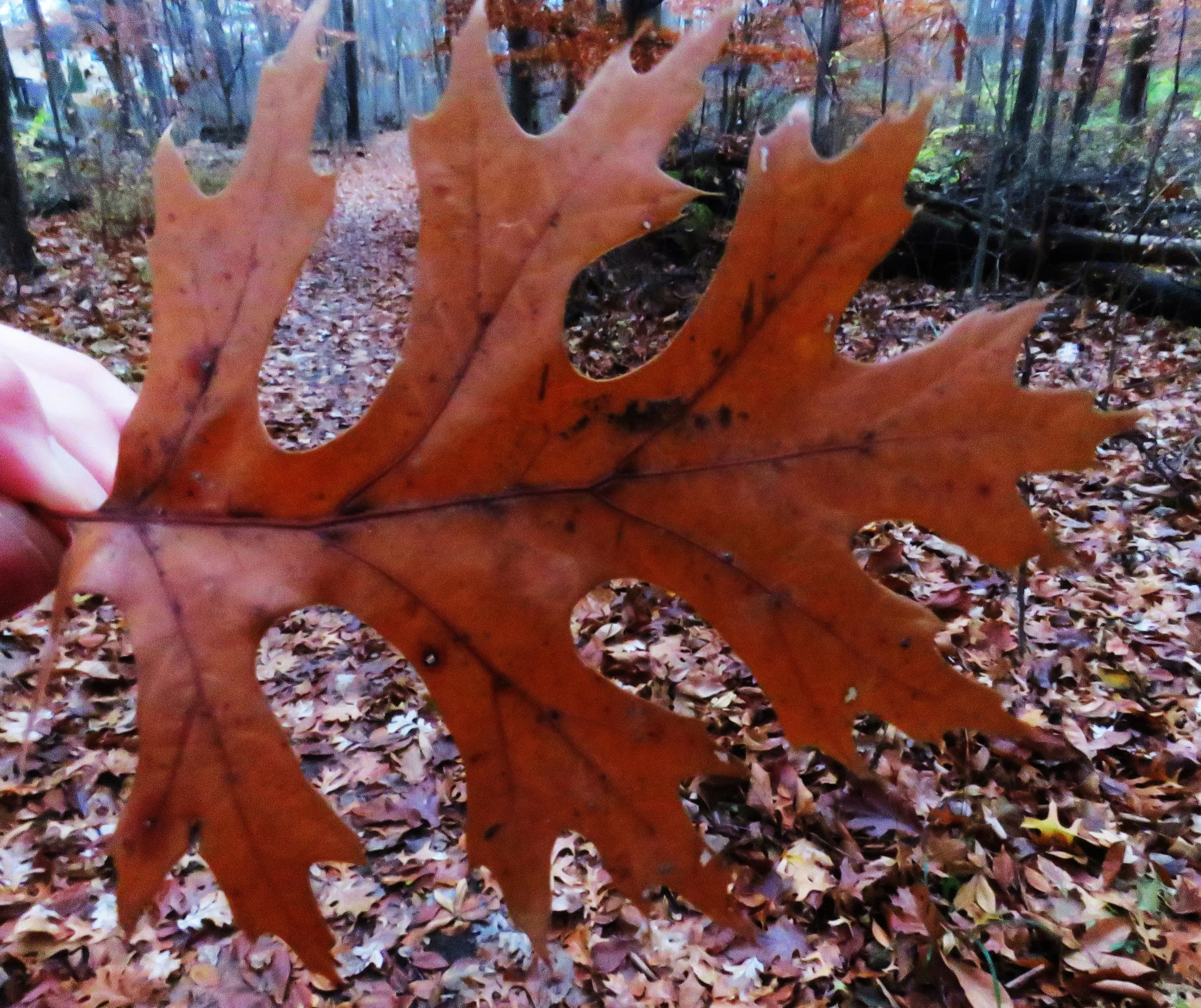
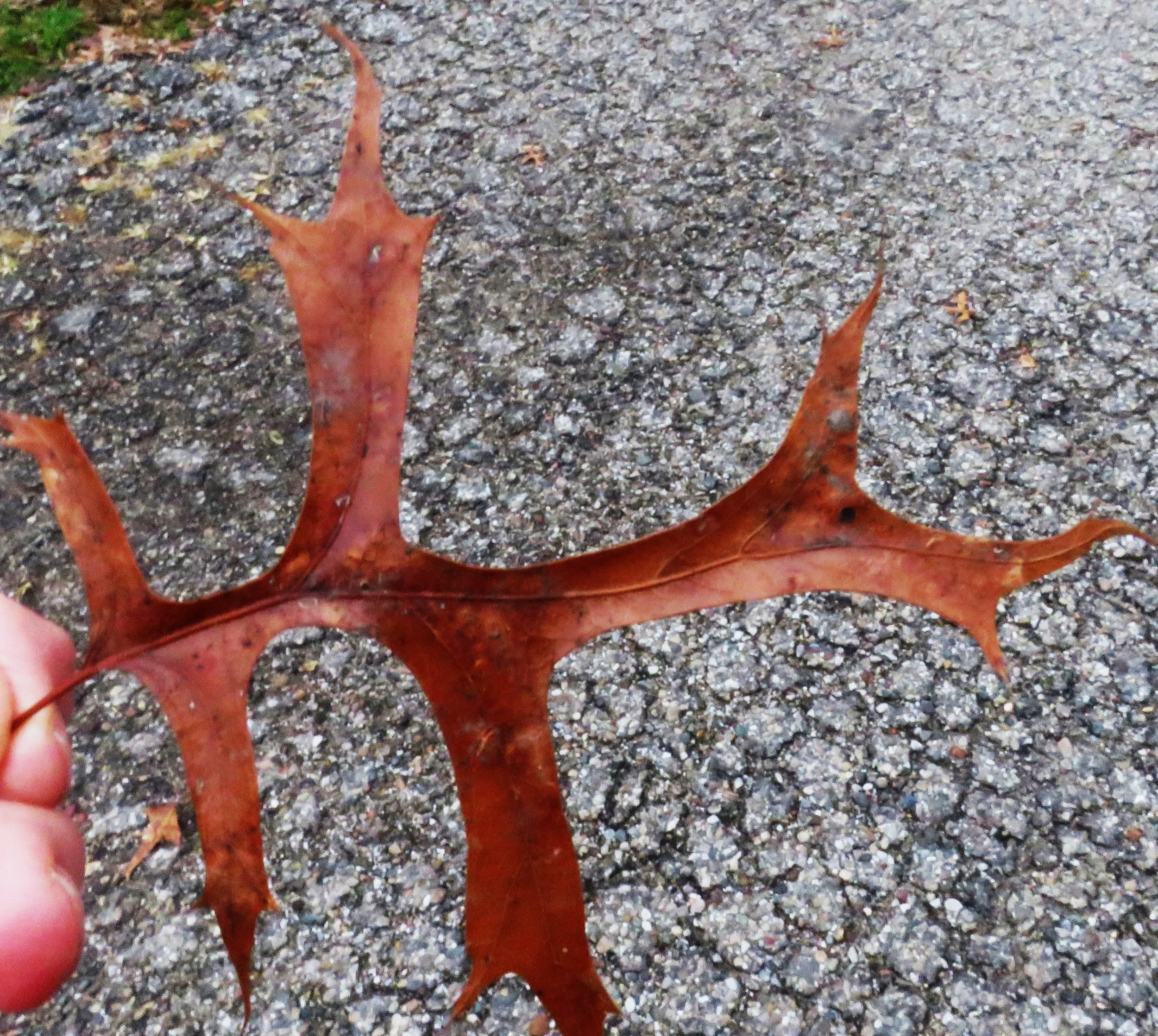
Top Row: Black Jack Oak-Shakamak Park / Burr Oak-Hulman Forest / Chestnut Oak-Deming Park
Bottom Row: Chinkapin Oak-Turkey Run State Park / Northern Pin Oak-Dobbs Park / Southern Red Oak-Dobbs Park
The climate and geology of Indiana are very conducive to the growth of tall trees, and you have no problem finding huge oaks, tulip trees, and shagbark hickory trees towering more than a hundred feet over your head. At the end of the year, a multiplicity of oak leaves dominate the multi-inch carpet of leaves that we shuffle through while wall along trails in the parks.
Have you ever tried to estimate how many leaves are on the ground? Probably not. I love to count almost anything, but until shuffling along a leafy trail in Turkey Run State Park, I had never considered this not so vital question. The answer is simple: billions. Really. Billions of leaves created the thick blanket covering the ground in the oak forest that we were walking through. I did the math. The next photo shows over a hundred leaves in a couple of square feet. The forest covers a square mile or more, and a square mile has more than 25 million square feet. Multiplying that area by a hundred leaves per square foot produces an estimate of well over two billion leaves per square mile!
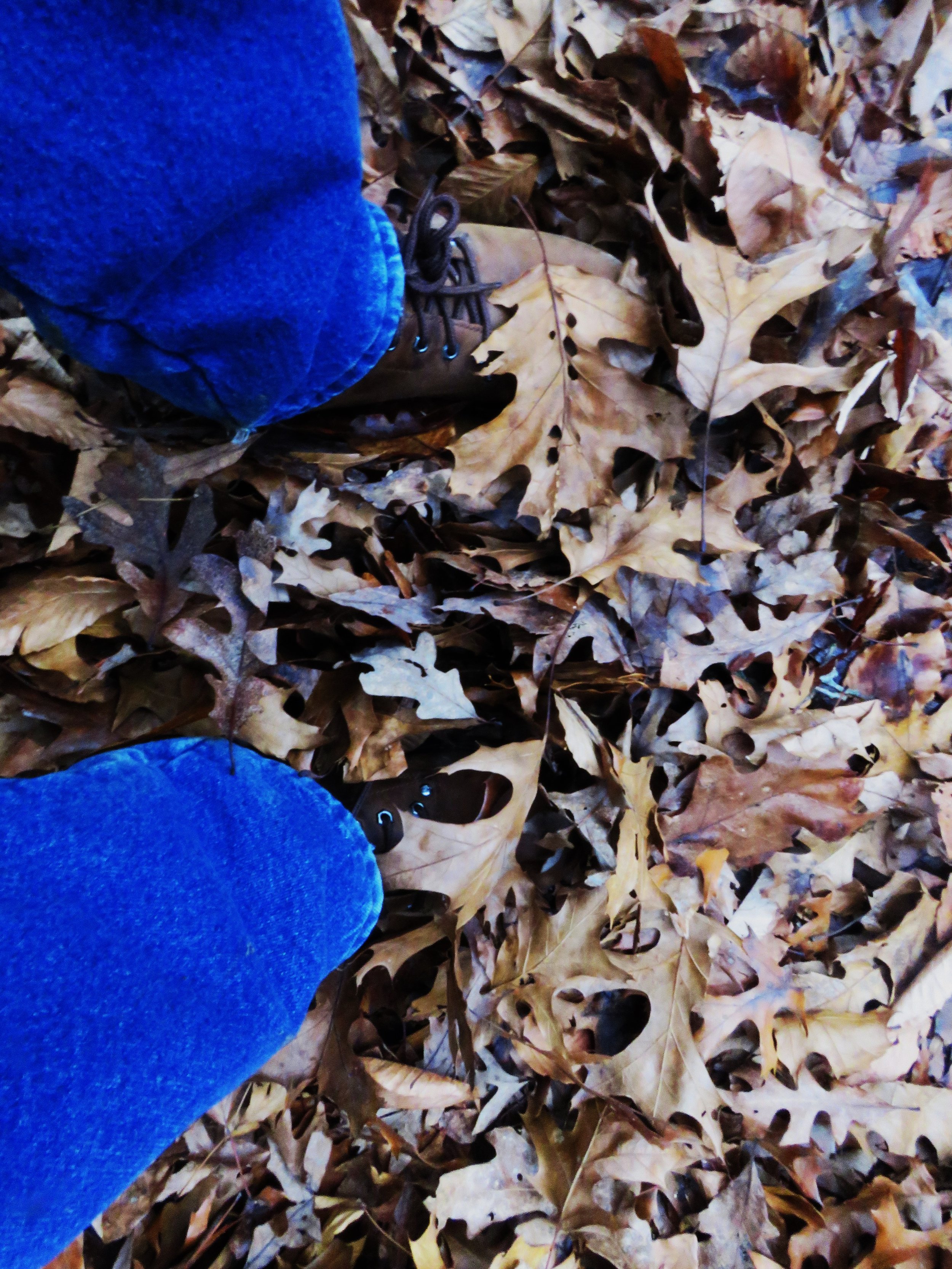
December 27, 2025
A three-inch layer of leaves covered the trails in Turkey Run State Park in Indiana.
Of course, we aren’t much interested in counting the trees in a forest, let alone worrying about the number of leaves on the ground. What we love is admiring a lovely leaf at the edge of a mossy stream or standing at the base of a huge tree gazing with awe straight up to the distant canopy, as shown below in a couple of photos taken in Turkey Run State Park.
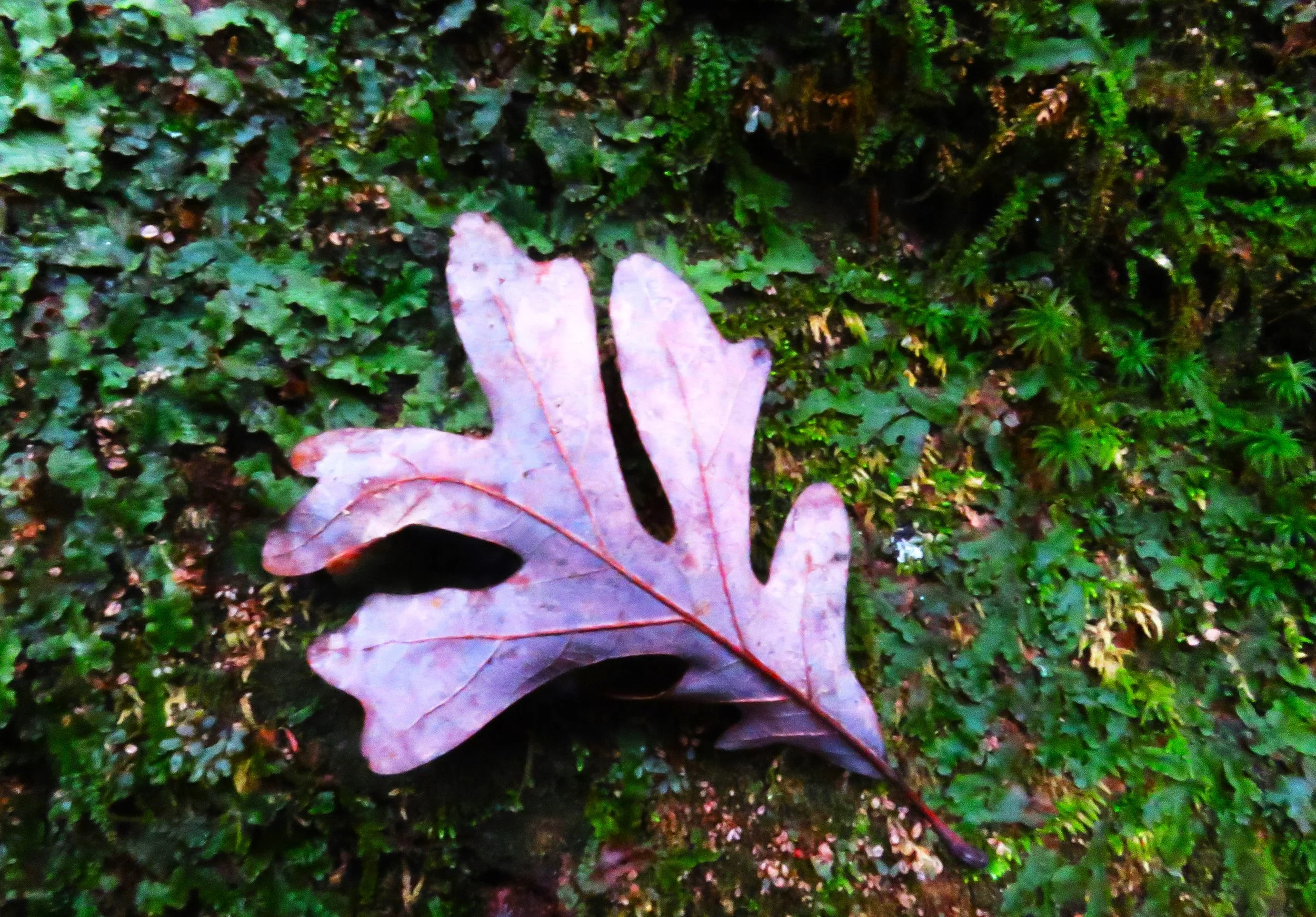
One leaf at a time: a lovely leaf of a burr oak on a moss-covered rock at the side of a little rivulet.
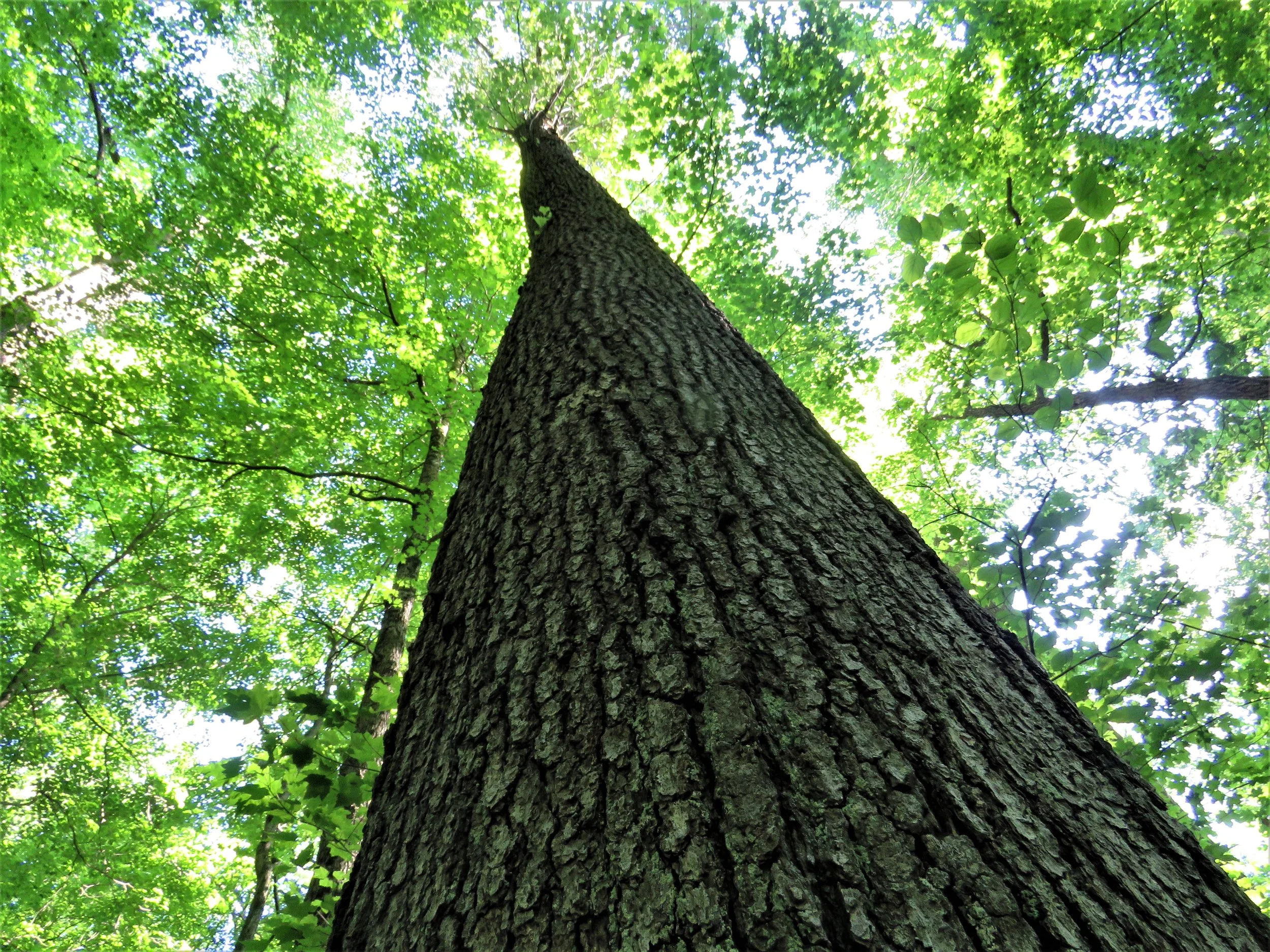
One tree at a time: looking up to the canopy along the massive trunk of a giant oak tree..
And, when we have the chance to have a picnic on a sunny day in late October, we are happy for the view of the pond that opened up after the leaves dropped to the ground.
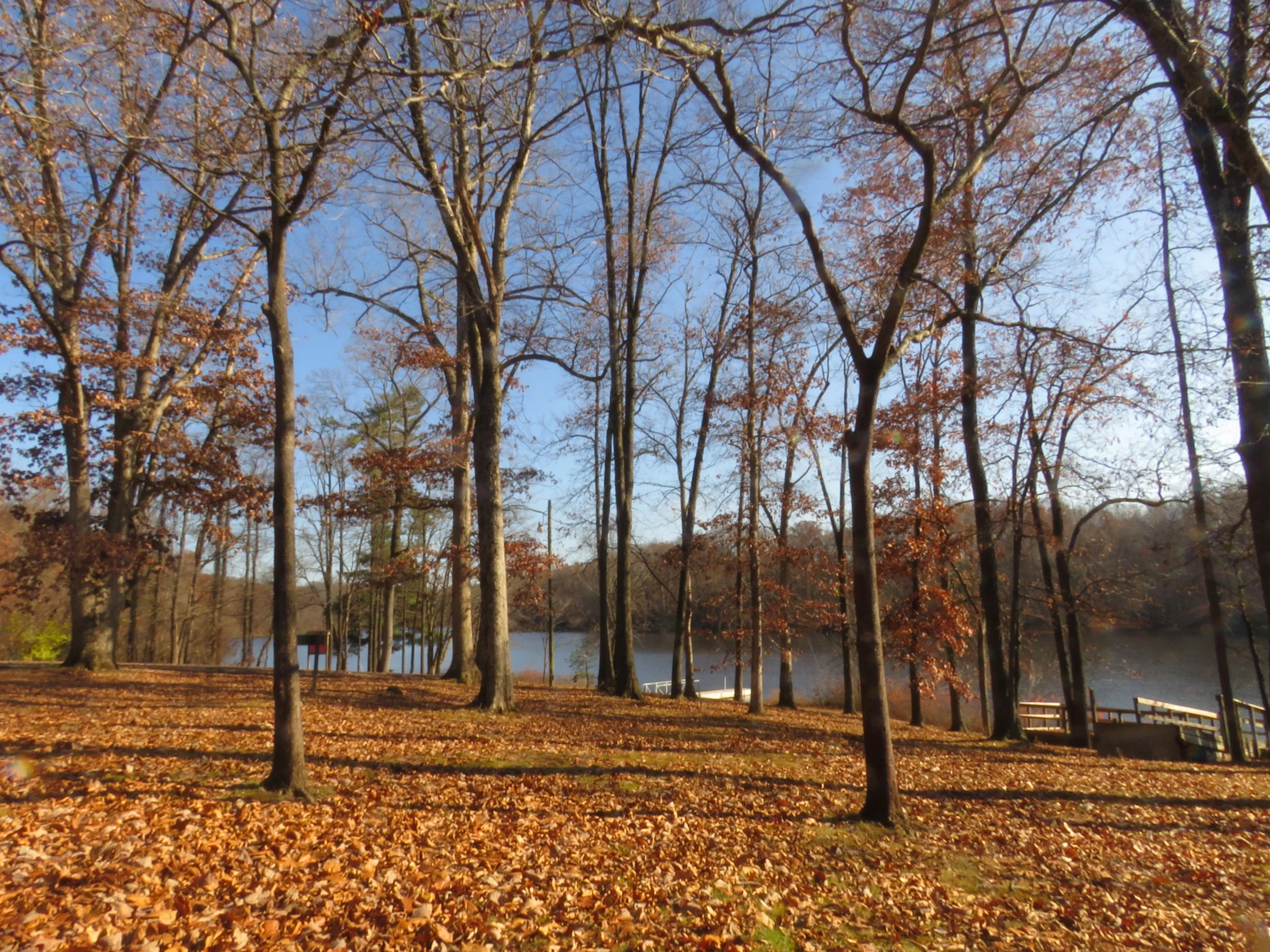
November 23, 2025 The leaves now cover the ground rather than the view from our picnic spot under the oak trees in Shakamak State Park near Terre Haute, Indiana.
Photos and text by Carl D. Martland, founding member of ACT, long-time resident of Sugar Hill, and author of Sugar Hill Days: What’s Happening in the Fields, Wetlands, and Forests of a Small New Hampshire Town on the Western Edge of the White Mountain. Quotations from his book and his journals indicate the dates of and the situations depicted in the photos.