
Phenological Phacts and Photos with Carl Martland June — 2026
Lady Slippers
Phenology – “a branch of science concerned with the relationship between climate and periodic biological phenomena (as the migration of birds or the flowering and fruiting of plants).”
Spring Ephemerals
In May and early June, the little guys have a chance. The oaks and maples are slowly leafing out, and sunlight penetrates through the canopy to the ground that is still damp from recently melted snow. The grasses, sedges, ferns and sprouting hardwoods will quickly rise to a foot or two, but in late spring, they are still pretty much asleep. The sunlight falls on the open, damp ground, and numerous small, low flowers take full advantage of their short opportunity. These early bloomers are known as “spring ephemerals”, because they won’t last once the taller, shade-tolerant plants get going.
In the Back 4, the first ephemerals are the trout lilies that cover an almost open area where a tiny rivulet channels snowmelt into the Pond. At the peak, which comes near the end of April, I often find a couple dozen of these small flowers hanging from stalks only a few inches tall.
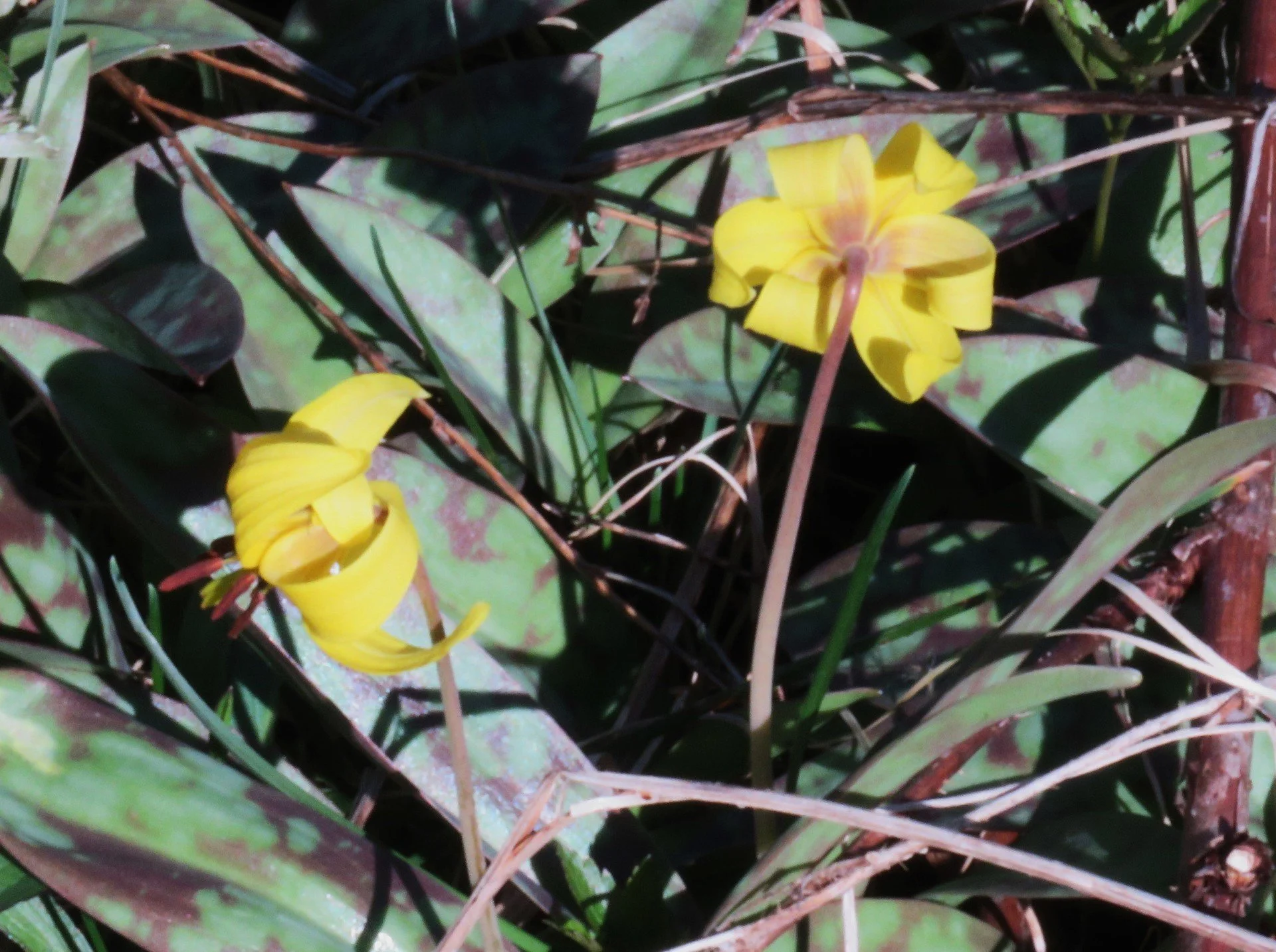
April 28, 2025
Trout lilies are blooming in the Back 4. They’re colorful, but being so close to the ground, they can be difficult to appreciate until you bend over or kneel down.
Out on the dam, dandelions truly provide a welcome bit of beauty to an area flattened by the load of snow that it carried through the winter. Much maligned by those who believe a lawn should be made up only of grass, dandelions are actually quite beautiful, either when viewed closely or when a hundred or more cover the yet-to-be mown lawn. Other flowers have blossomed on the dam, but they can easily be missed unless you are specifically looking for them. Violets and blue-eyed grass grow singly or in small clumps, and their colors are not as conspicuous as those of the yellows and oranges of the first dandelions.
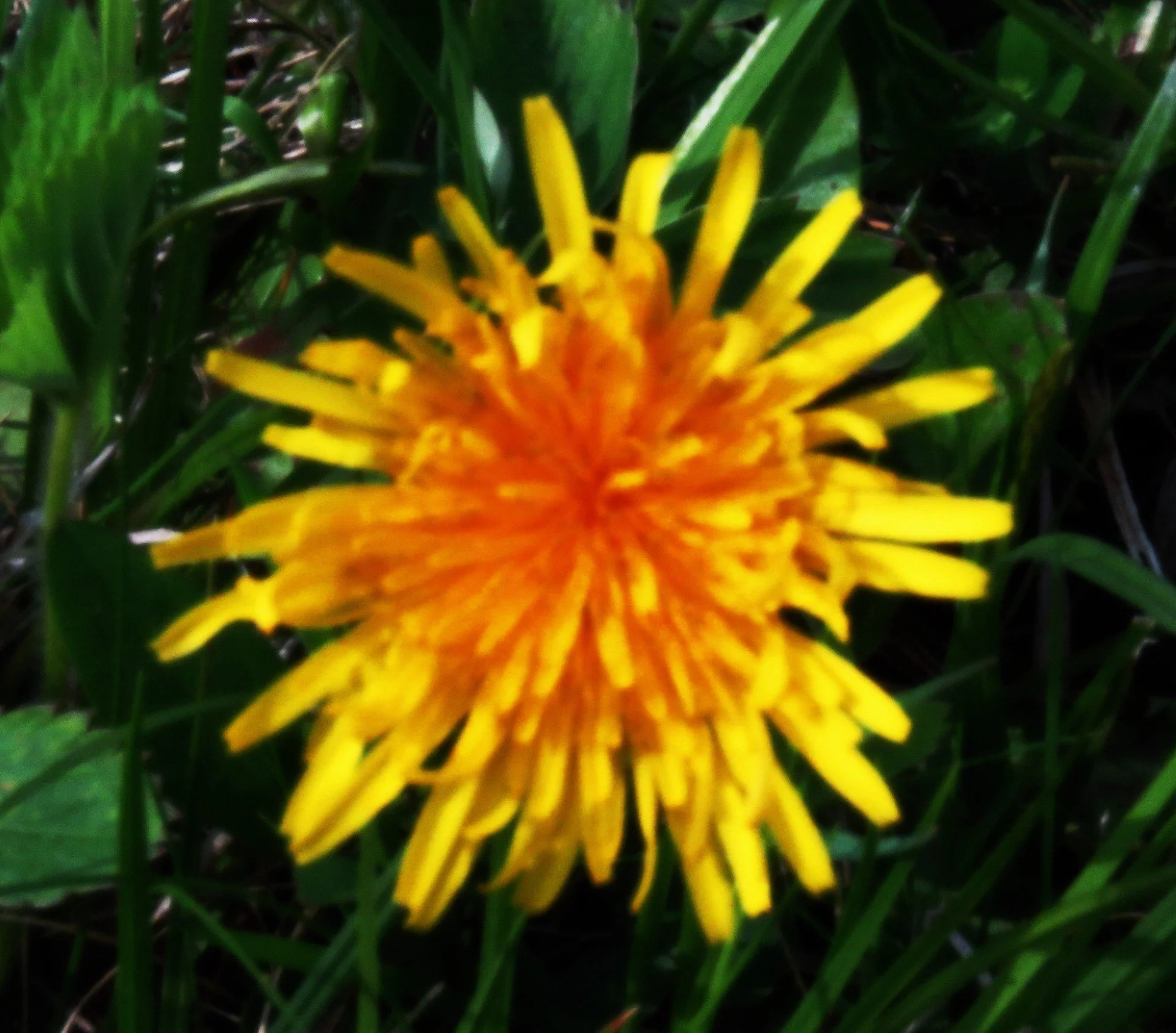
May 13, 2025
Surprisingly multi-colored dandelions provided welcome indications of spring as I walked along the dam.
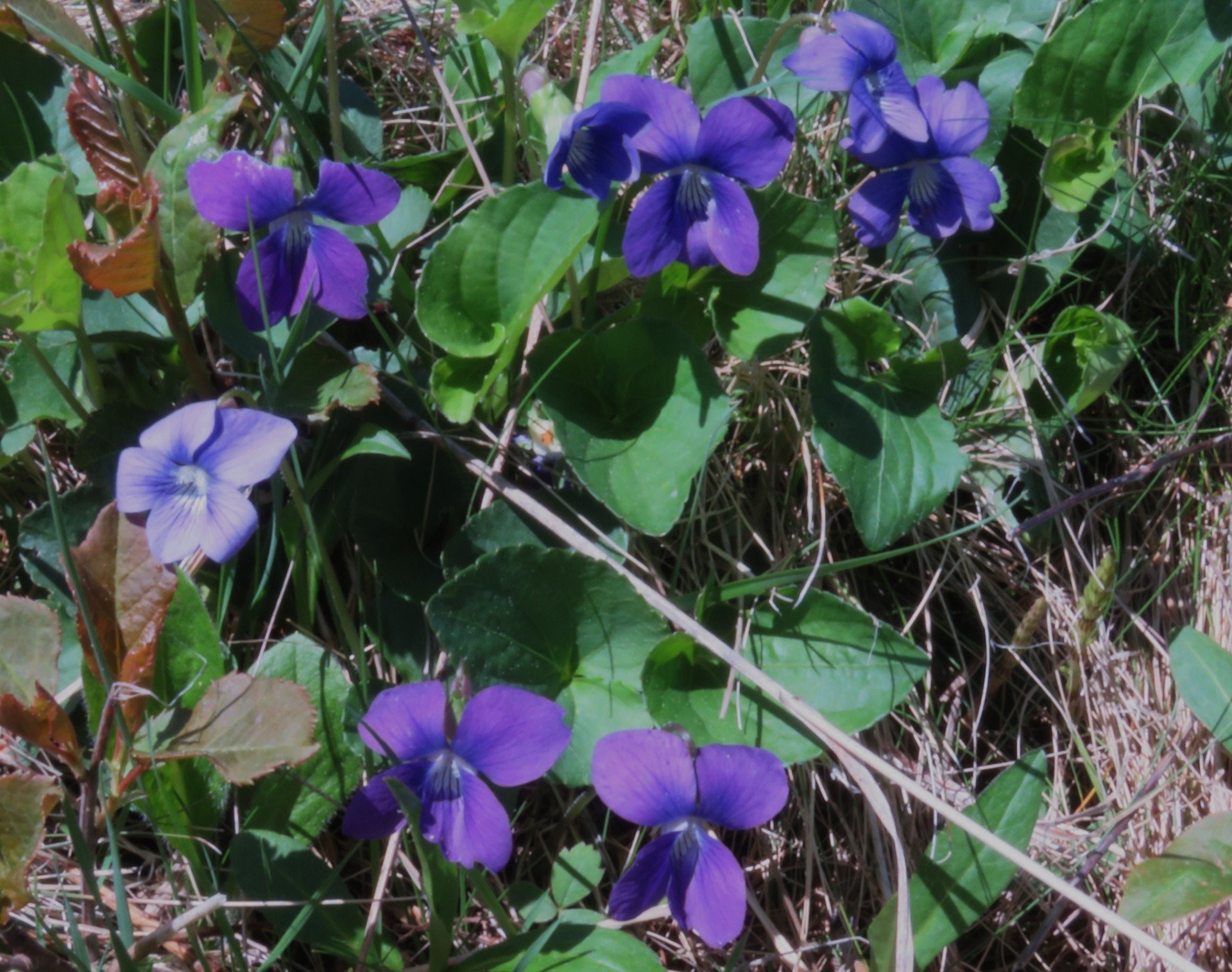
May 22, 2025
Now small clumps of violets can be seen emerging from the remains of last year’s grasses and lupines.
If you wander into the forests at this time of the year, you will find a great variety of ephemerals.
May 13, 2017, 70 degrees, cloudy. The early wildflowers are blooming along the trails in the Lower 40:
Trout lilies
Star flowers
An orchis with small, white/violet flowers
Trillium
Herb Robert
Bunchberry, another common ephemeral, blooms later in May. This plant, which can cover many square yards of open ground in a grove of fir trees, is a relative of the dogwood tree despite rising to the great height of only about four inches!
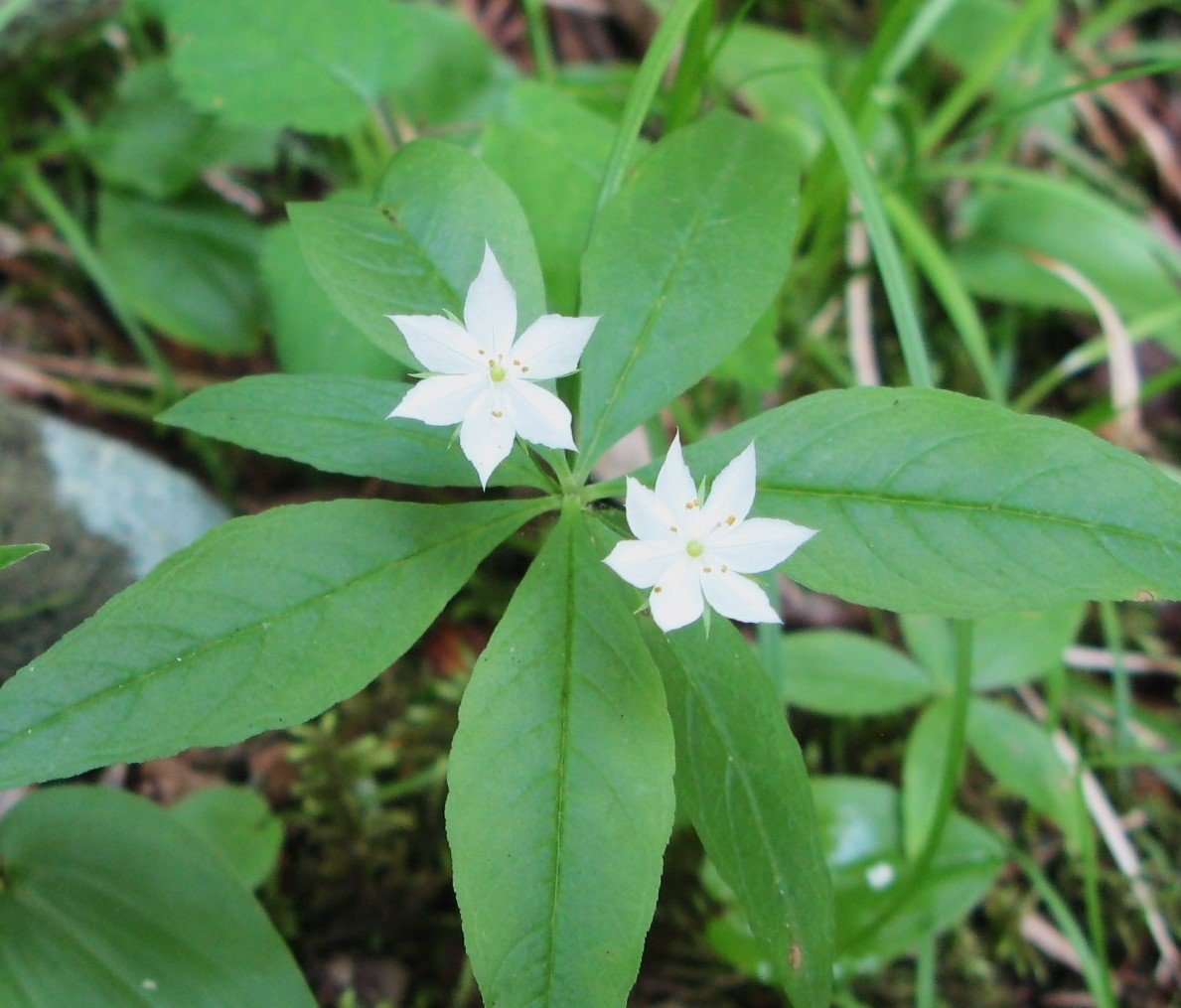
June 10, 2014
Star flowers are barely a half-inch across, but a close look convinces you that they are well-named.
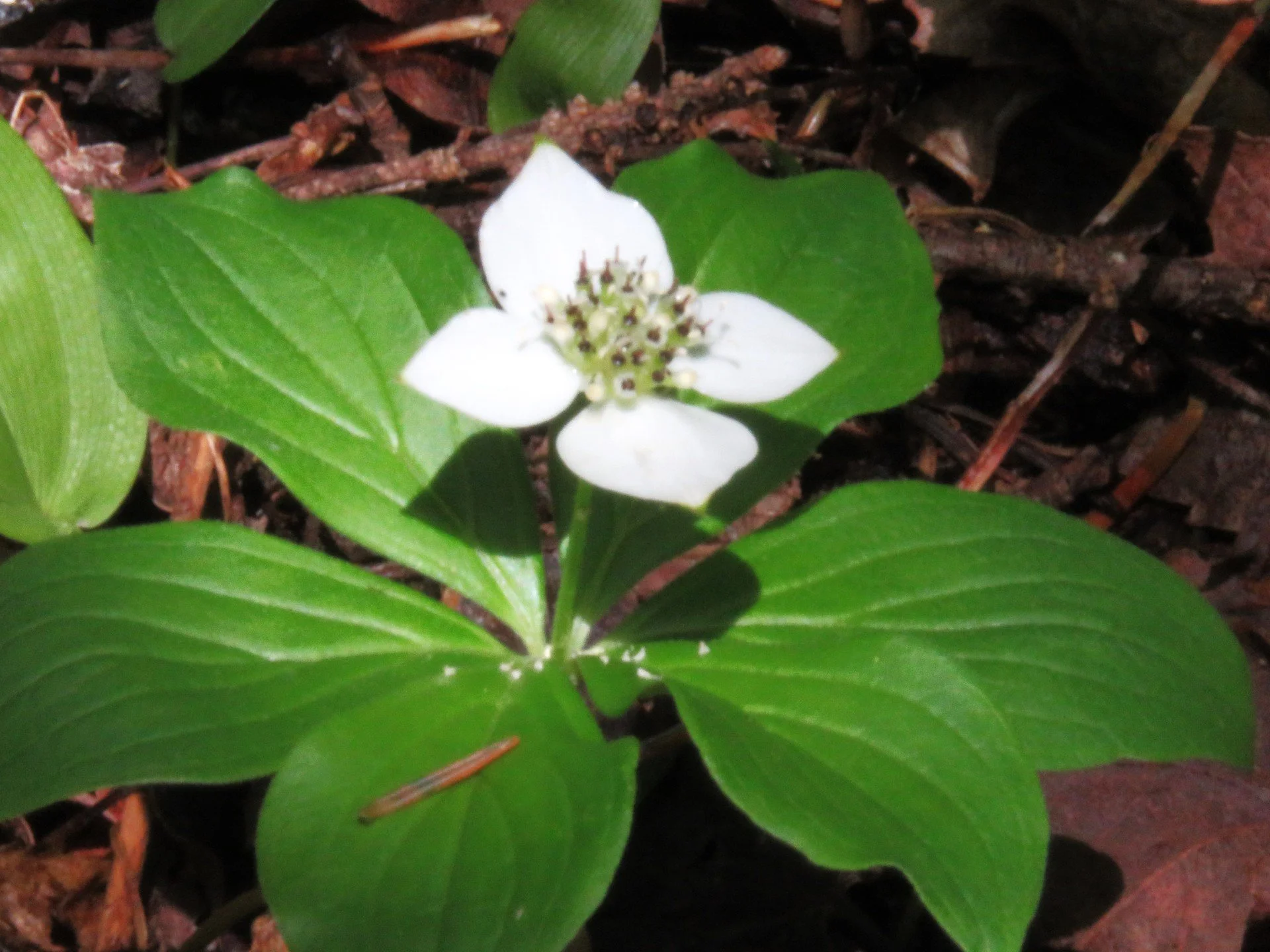
June 8, 2023
This is one of the dozens of bunchberry blossoms that filled an open area under some fir trees in the Lower 40
Ephemeral Royalty
North Country residents are well aware of the dangers of walking through fields and forests in late May and early June. We aren’t afraid of bears, because we know they are no more interested in a confrontation than we are. Make a little noise, and the bears will stay away. The same goes for coyotes, foxes and fishers. We’re all in this together, so long as its not hunting season. However, a couple of other critters are much more plentiful, more willing to go on the attack, and basically impossible to avoid or ignore. You know what I’m talking about: black flies and ticks. Perhaps it is reasonable to stay away from the woods until at least mid-June. But then you would be missing what I believe to be the best of the ephemerals. So, I douse myself with insect repellent and brave the potential onslaught of black flies and ticks to take a walk through my trails in the Lower 40.
As I proceed, I am happy to see the star flowers and the bunchberry, just as I am happy to see the ferns uncurling and the leaves opening on the maples and birches. But what I really want to see are lady slippers, which I consider to be “Ephemeral Royalty.”
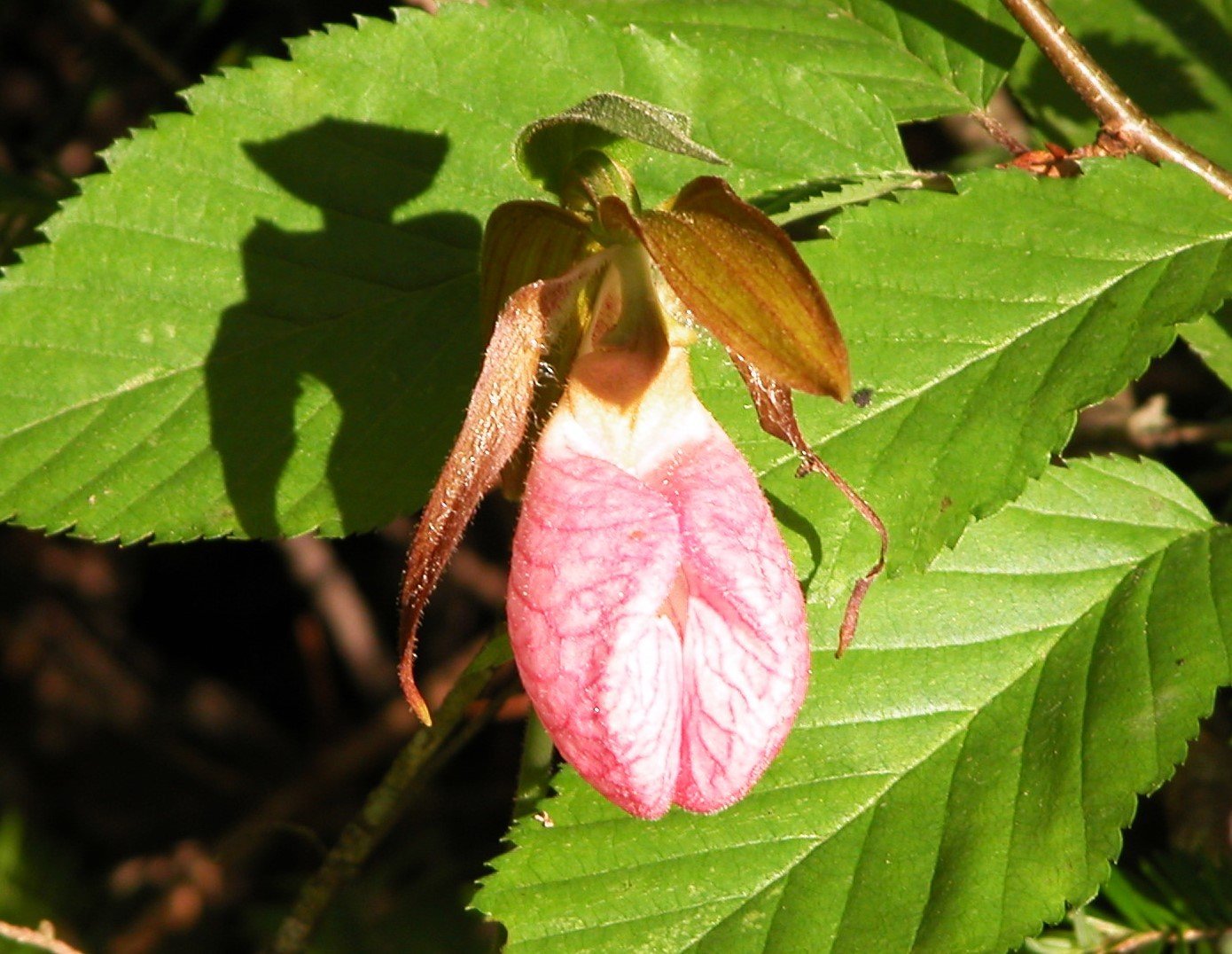
Lady slippers have a single flower hanging from a tall stalk rising from a pair of easily recognized leaves. Only one flower per plant, but what a flower!
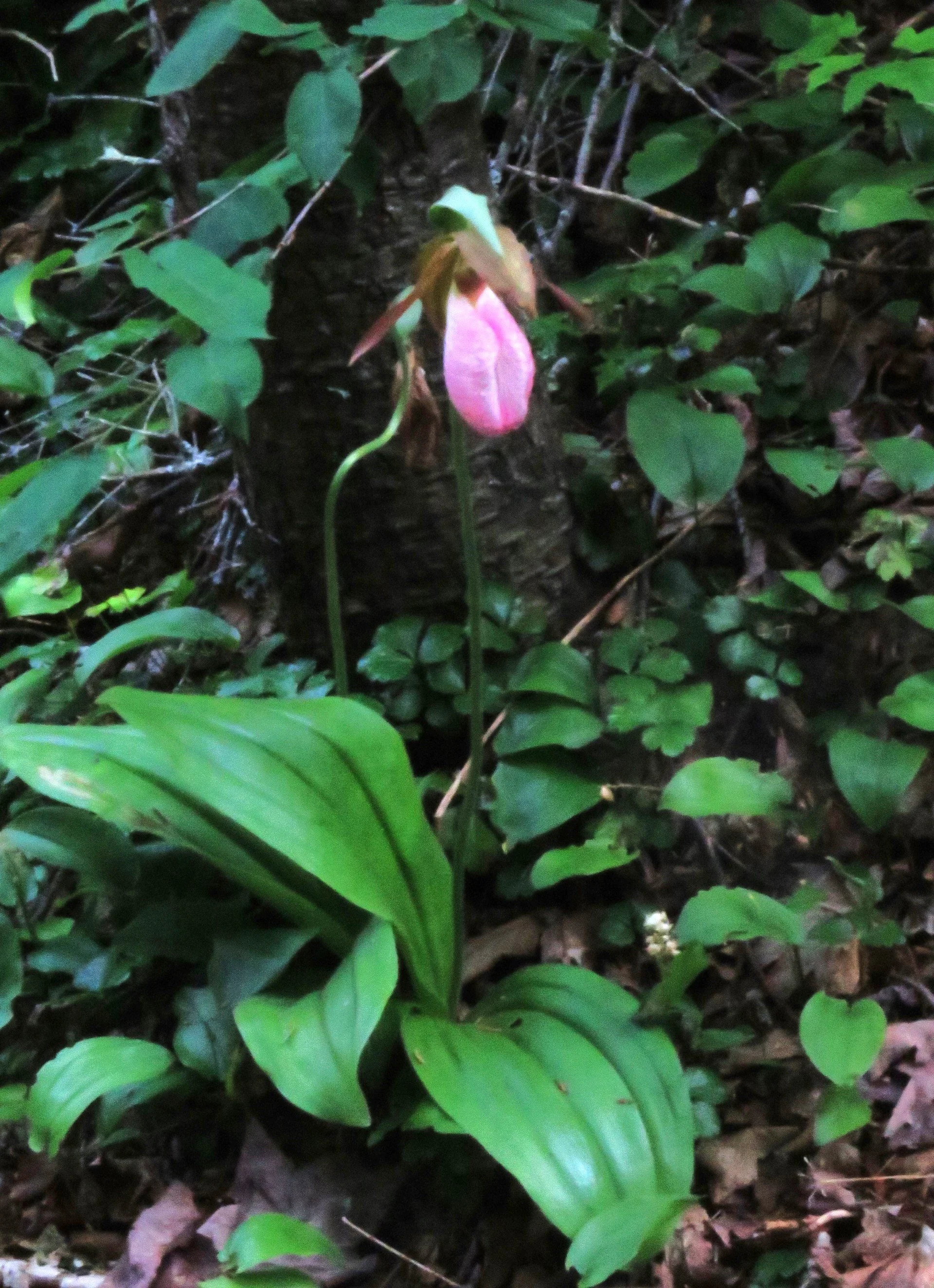
June 16, 2025, Kinsman Notch.
This photo shows how a lady slipper’s flower rises on a long stalk from a pair of large, veined leaves.
The flower, which is about two inches long, is usually a beautiful pink, but some in the North Country can be wholly white or a much darker pink, depending upon soil conditions.
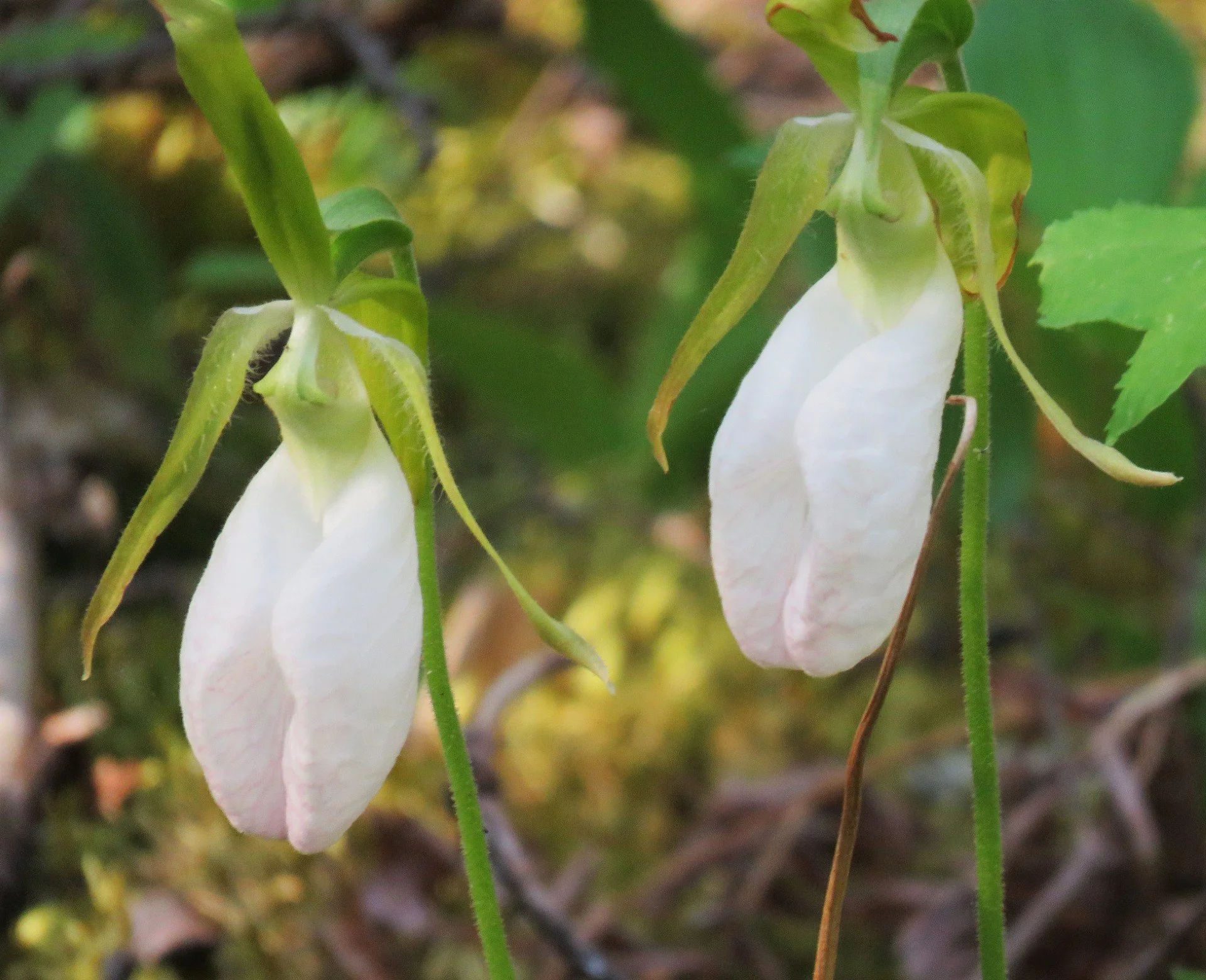
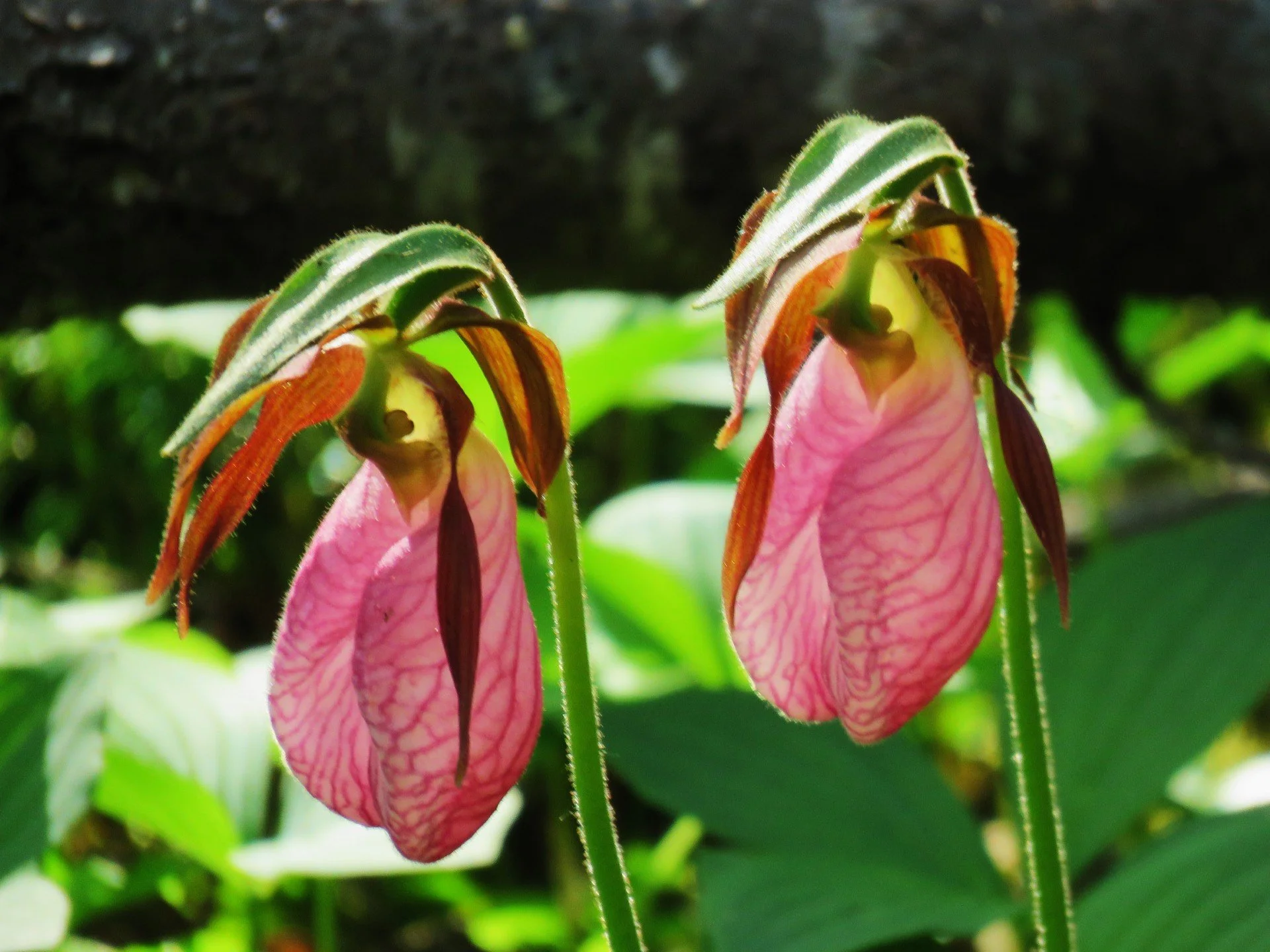
June 5, 2020
Lady slipper colors range from completely white to a deep pink, as shown by these two pairs found close to each other on the same day in Pondicherry.
My love of lady slippers began seventy years ago. My mother knew when and where to look for them, and she instilled in all of us a love for her favorite flower. In early June, she always insisted that the family visit a secluded opening at the edge of the Great Swamp in Kingston, Rhode Island where we always found dozens of lady slippers. Our love for the flowers was perhaps enhanced by the fact that we would then stop at Maine’s Ice Cream on the way home.
Lady slippers grow in the typical mixed forests of the North Country as well as in the oak/pine forests where we found them in Rhode Island. Whenever I walk through a forest in the late spring, I always look for the paired leaves of lady slippers, as it may be just before or after most of the flowers bloom. If I happen to see even one pair of these leaves, I begin to examine both sides of trail to see if any others are blooming.
In early June, I make sure to visit a couple of the sites where I have found lady slippers growing in the past. Several of these spots are in well-known parks in North Country, but that is as far as I will go in providing directions. I know that in Rhode Island and on Cape Cod, people a hundred years ago would dig up lady slippers, trillium, and other spring ephemerals to sell to tourists and flower shops. Unfortunately, lady slippers and trillium are very difficult to transport, so all this activity, while possibly rewarding to the trespassers, resulted in depletion of these special flowers along many a roadside.
A couple of my favorite sites are what I call the First and Second Lady Slipper Groves in the Lower 40. These sites were young groves of fir trees when I first came across lady slippers there nearly 30 years ago. For several years, I always found more than sixty lady slippers in these groves. For example:
May 31, 2004: Lady slippers were in bud or starting to bloom
on May 31st:
First lady slipper grove: 16 in bud or bloom; others with
no buds or no stalk.Second lady slipper grove, north: 24 in bud or bloom;
22 with just leaves.Second lady slipper grove, south: 5 in bloom (including
a clump of 4)A single lady slipper was near the big rock next to the
trail at the northern entry to the poplar stand
When I went back a couple of week later, there were still about forty in bloom, including one clump with nine flowers:
June 11, 2004. I next checked the lady slippers on June 11th:
First lady slipper grove: 13 in bloom (nine in one clump
by central log pile)Second lady slipper grove, north: 23 in bloom
Second lady slipper grove, south: 3 in bloom (one clump)
Over the years, the sites have changed as the understories have filled in and as a result of storm damage. One storm left one site looking like a pile of pickup sticks, which ruined many of the places where lady slippers had grown. On the other hand, the blowdowns created a number of openings amid the tangle of trunks and branches that were just large enough for lady slippers to flourish. In 2020, I found about 30 lady slippers blooming in the Lady Slipper Groves, not as many as in 2004, but still a nice display.
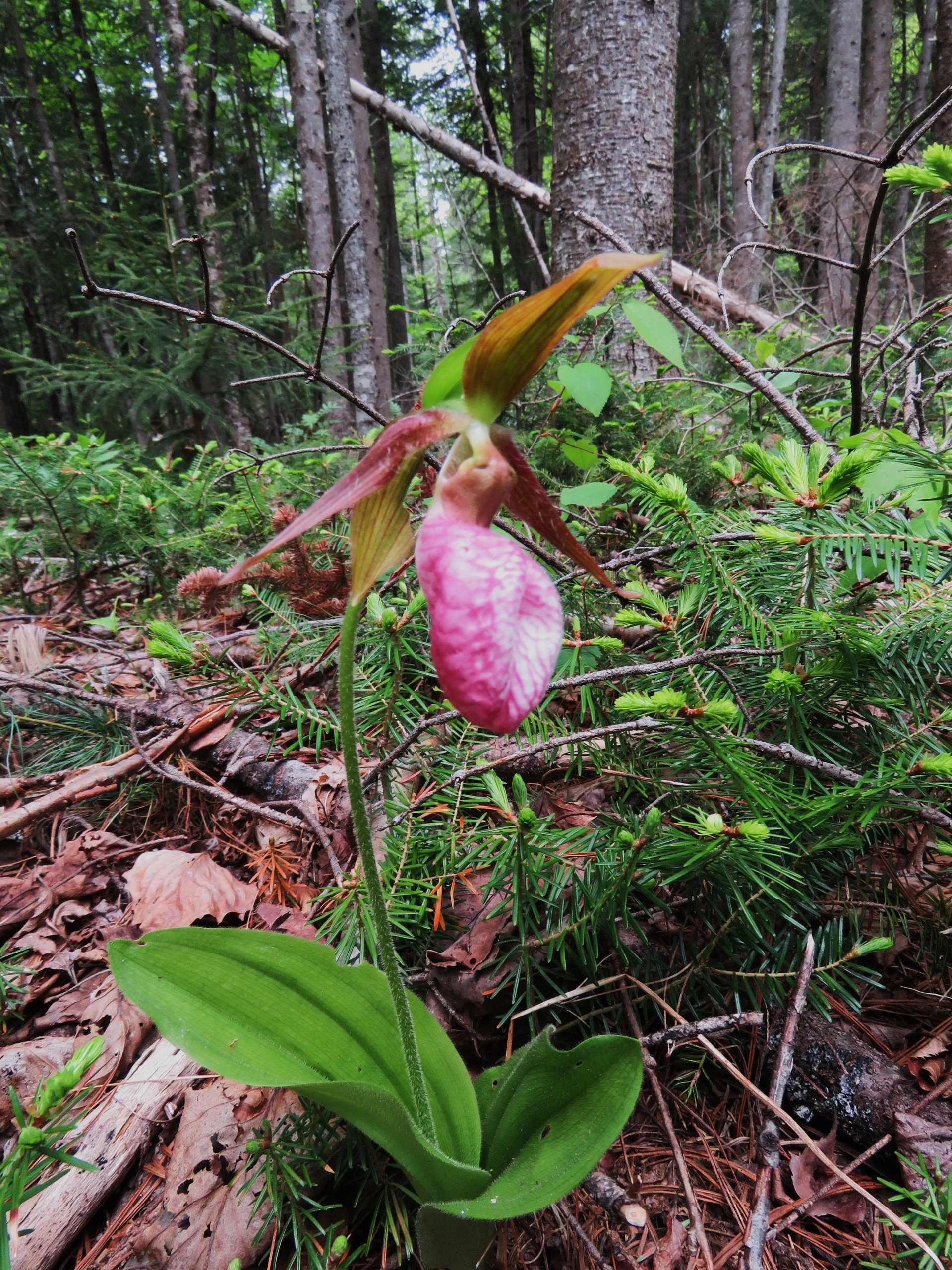
June 4, 2020: 70 degrees, mostly sunny, 10am. I went to the Lower 40 hoping to find Lady Slippers. I found a total of 25 in the First Lady Slipper Grove and a few on the way over to the Second. The majority of them were growing in places surrounded by fallen firs; only a half dozen grew in the open.
The fallen branches in the blow-downs may provide protection from another kind of enemy – the bears, deer, or other animals that apparently like to bite off the flowers or the seed pods. A couple of times I have found a half dozen or more lady slippers where some animal had bitten off the flower.
June 8, 2008: 88 degrees, mostly sunny. Lady Slippers:
1st Grove: only 3, all blooming
2nd Grove, North Side: 16 blooming, 1 eaten, 8 with
leaves only2nd Grove, South Side: 5 blooming among one group
of 10 (white flowers)
The following photo offers evidence that at least one critter has spent some time right next to a lady slipper, perhaps waiting for the flower to go to seed before taking a bite.
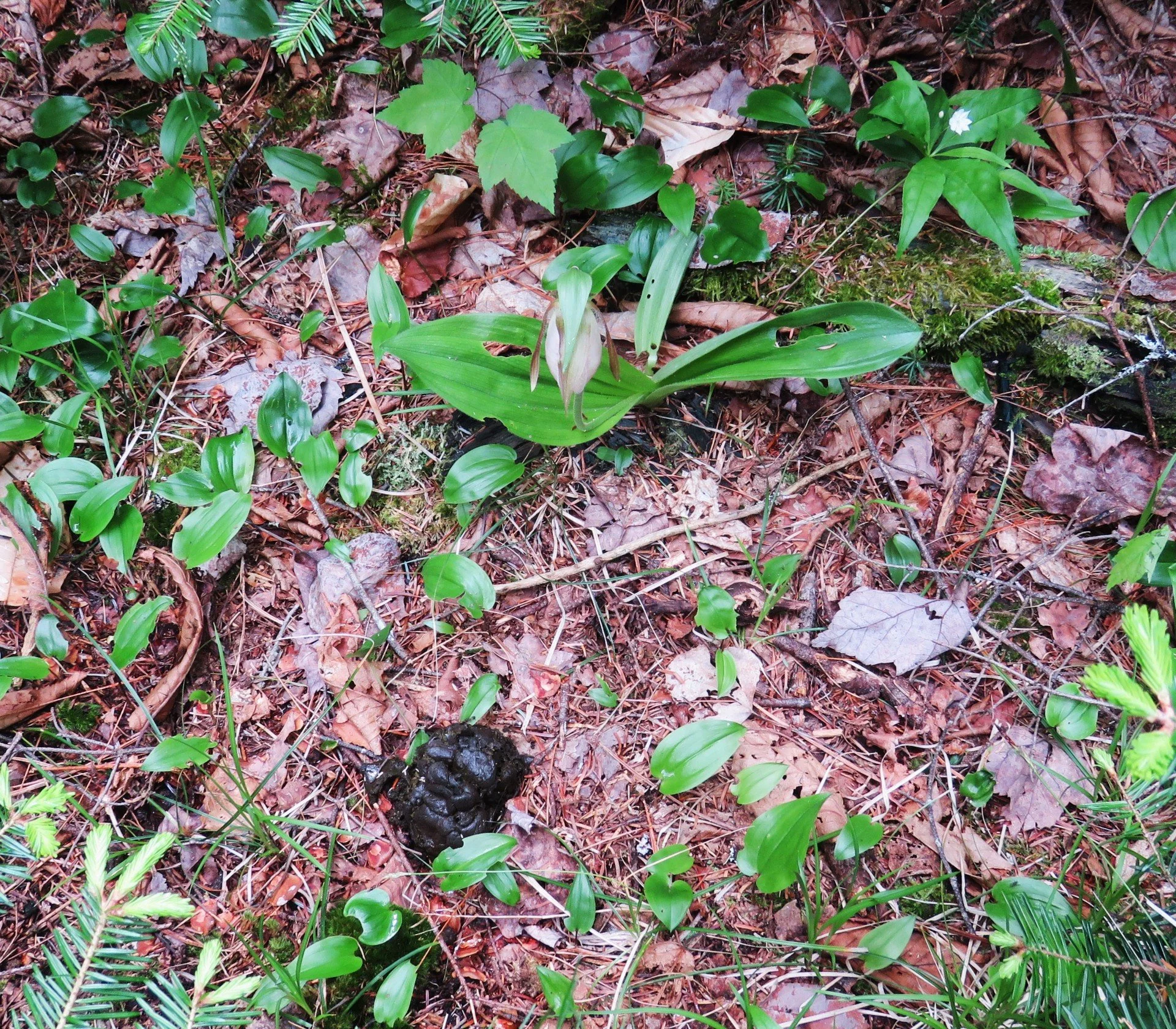
June 4, 2020
I’ve heard that bears like to bite off the tops of lady slippers, which certainly does in that unfortunate plant, but may explain why you find more lady slippers right next to the trails leading out of the places where these flowers are most abundant.
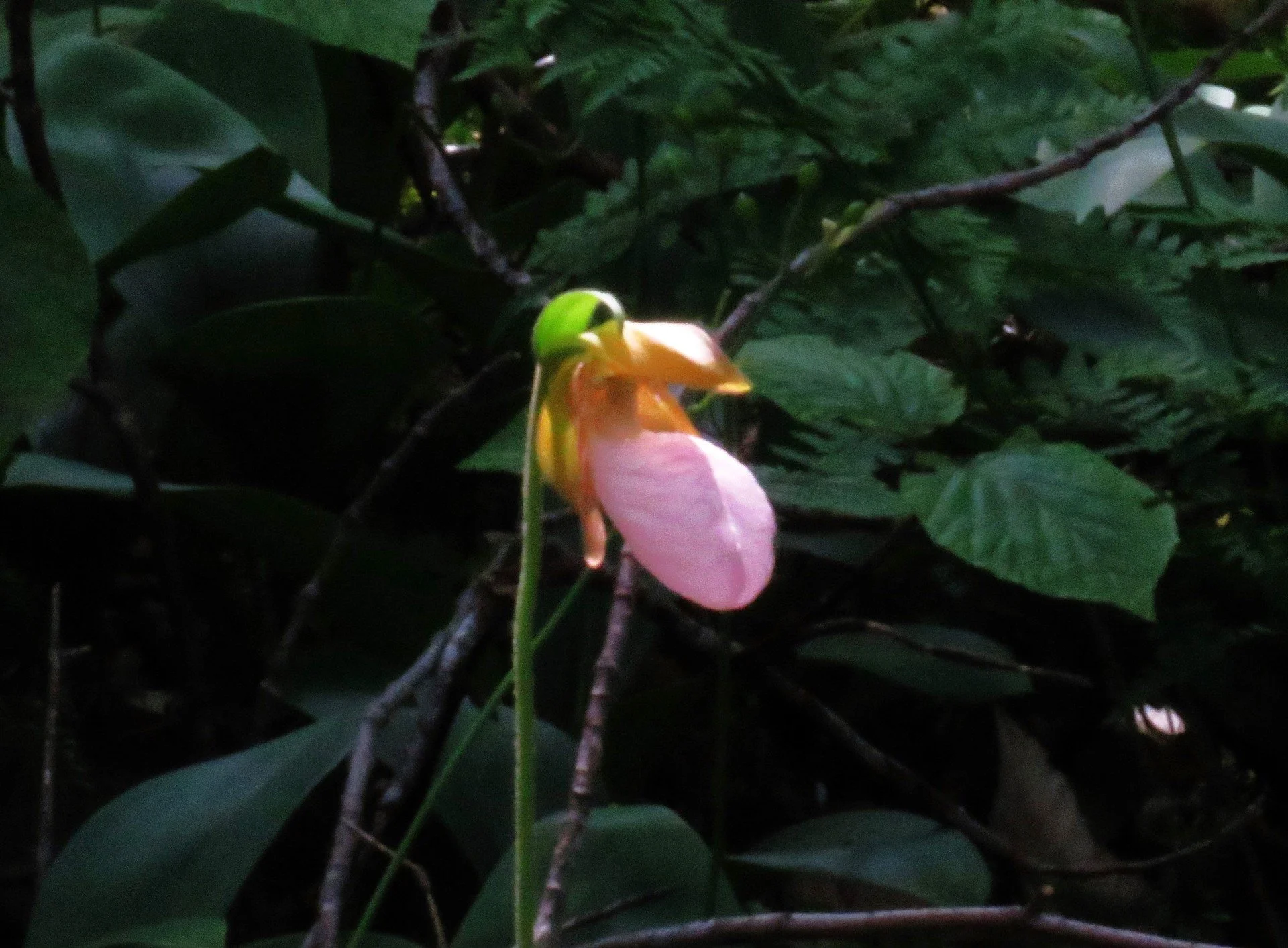
I’ve been working on this essay over Memorial Day weekend. Next week, I’ll be going down to the Lower 40 to see how the lady slippers are doing. If you happen to be walking through some dry woods over the first half of June, keep an eye out for these delightful flowers. Even a single one of these delicate blooms can stand out in your memory, just as this one leaning into the sunlight stands out from the shadows. Don’t forget your insect repellent, and please – “Take only photos, leave only footprints!” And check for ticks when you return home.
Photos and text by Carl D. Martland, founding member of ACT, long-time resident of Sugar Hill, and author of Sugar Hill Days: What’s Happening in the Fields, Wetlands, and Forests of a Small New Hampshire Town on the Western Edge of the White Mountain. Quotations from his book and his journals indicate the dates of and the situations depicted in the photos.