

NEWS
&
Musings

Protect the EPA
By Sharon Francis
I write to urge all who care about our health and environment to urge Washington lawmakers to oppose the administration’s proposed 25 percent cut to the Environmental Protection Agency budget.
The Trump Administration seems to believe that environmental protection is an enemy to be vanquished. Their proposed cuts are deep and mortal. Slated for total removal are Radon testing and control, beach water quality testing, diesel emissions reduction, and multipurpose grants to states. The water quality improvement grants for some of our country’s most valuable fishing, shipping, and recreation areas would also be gone: these include Puget Sound, San Francisco Bay, Gulf of Mexico, Chesapeake Bay, and the Great Lakes.
Grants from EPA to states like New Hampshire for drinking water, air quality, water pollution control, lead detection, nonpoint source pollution, toxic substances compliance are slated for 30 percent cuts. Most of us have heard that the administration favors the point of view that climate changes cannot be blamed on carbon dioxide emissions, so rather than invest in research from which they might gain improved information, they propose to cut climate research by over 70 percent.
Overall, the administration proposes to cut EPA funding by $2 billion. What is at stake? Most of EPA’s actions in behalf of water quality, air quality, and toxic substance control are investments in public health. At a time when the nation is deciding how much it wants to invest in health treatment, we would be well advised to continue our investments in avoiding health problems. Keeping contamination out of our air, water, and soil is a major way to do that. Furthermore, clean, attractive rivers, lakes, seashores, hills, and valleys are economic assets. They attract investments, whether from tourists or from families who wish to enjoy nature nearby.
Thousands of students have gone on field trips, studied the ways of water, taken college courses in the many pathways to a prosperous society and a healthy environment at the same time, and are pursuing careers in the technologies of saving energy and safeguarding life on our planet. We owe it to them, as well as to ourselves, to retain a strong, well-funded EPA.
I am now retired, but have worked in the environmental field for over 50 years. I love my country, and do not want to see it make a foolish, unnecessary mistake.
ACT member Sharon Francis lives in Charlestown., NH. She has devoted her career to conservation and the environment, and is a a recipient of the EPA Lifetime Achievement Award.
Red-wings are Back!
Red-winged blackbirds are back!
I heard a male’s exuberant “conk-a-ree!” song this morning. The males are usually the first arrival of spring. They’ve been making their way up the river valleys (the Connecticut River valley is a major migration path) and then to higher elevation areas like where I live.
We have a pond nearby where blackbirds nest, and they are frequent visitors to my feeder.

Photo by Minette Layne/Flicker
The males are unmistakable with glossy black bodies and red and chevron with yellow trim on their shoulders. Females can be mistaken for song sparrows or female red-breasted grosbeaks, as all three are streaked brown and off-white.
Walk near a pond or marsh in mid summer, and you’re almost certain to see these blackbirds. The males are very territorial, singing from cattails or nearby trees. Approach their nests, and you might get dive bombed! Last summer a particularly fierce male considered the entire pond his territory, and he let all the neighborhood dogs and people know it.
Notice above I wrote “nests.” Male red-wings are polygnous, meaning they have multiple mates. One bird may have several nesting females in his territory – especially dominant males can have up to 15 mates (!). However, according to the Cornell Lab of Ornithology, those ladies are not monogamous either. One-quarter to one-half of nestlings turn out to have been sired by a bird other than the territorial male.
This time of year, I think those first red-wings appreciate the backyard feder, where they like mixed seeds or sunflower seed, especially seeds on the ground. And I like watching the strut about, occasionally stretching their wings like a body builder and showing off this flashy chevrons. A few weeks from now we can all look forward to the females arriving.
Meanwhile, some of our winter birds are still here. Look for flocks of Bohemian waxwings congregated in medium to tall trees, with their distinctive high pitched whistling. Soon, they’ll head back north to their breeding grounds.

Get Your Daily Fix Yet?
Scientists are now becoming very aware of what we who live in the North Country have known all along: being outside is good for you.
Not just for physical fitness (we knew that, too). But for mood, attention span, even kindness toward others.
Get Your Daily Fix Yet?
Even a Short Walk Outside Can Make Us Happier
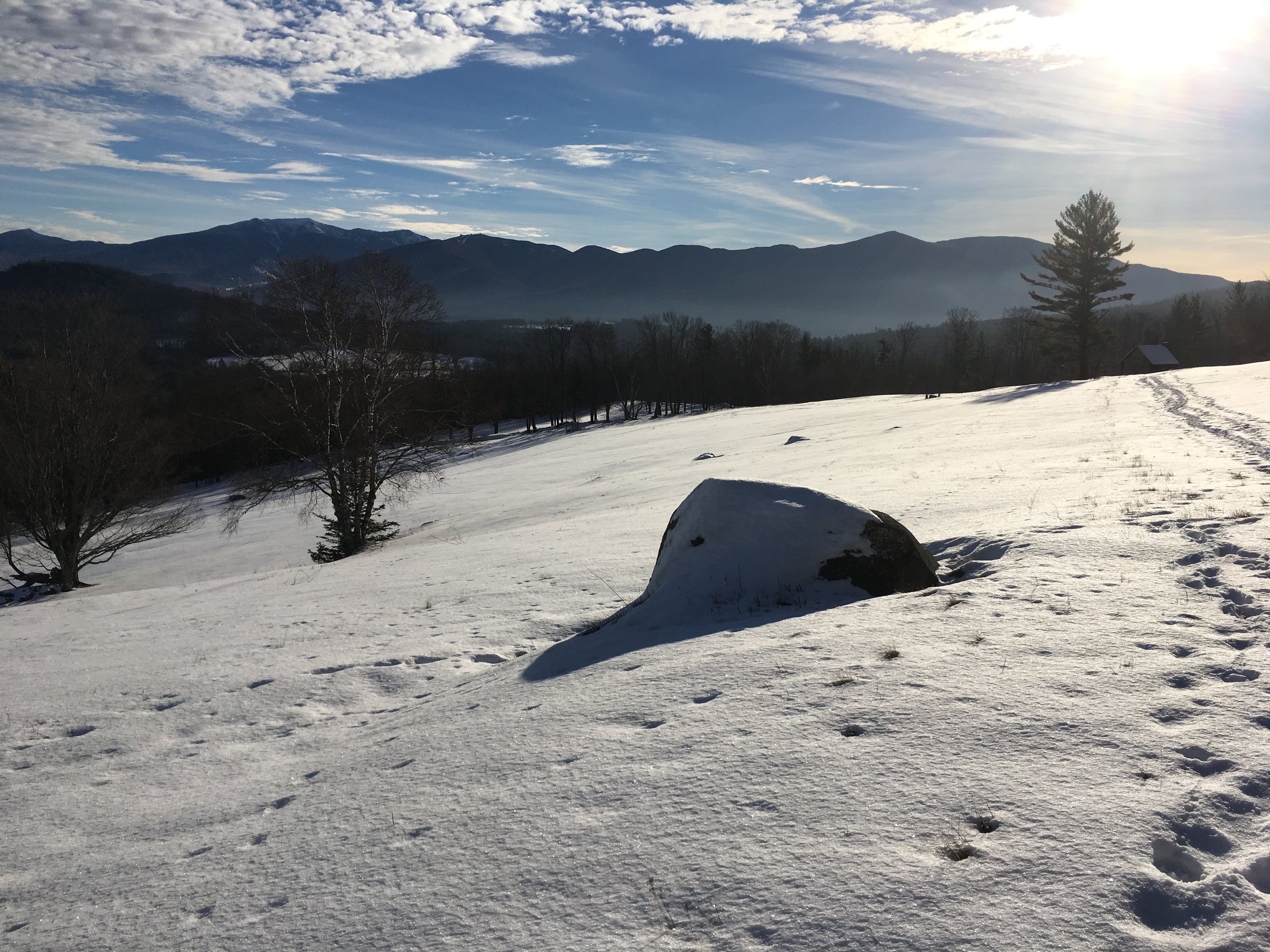
Scientists are now becoming very aware of what we who live in the North Country have known all along: being outside is good for you.
Not just for physical fitness (we knew that, too). But for mood, attention span, even kindness toward others.
A book published this week examines the research and reports that in numerous studies, peoples’ moods and sense of well-being was elevated by being outside. And they didn’t have to do anything epic – one study found that people who gazed up at tall trees for just one minute behaved more helpfully to others than people who looked at an unremarkable building.

The reason, explains author Florence Williams, is that people experience “momentary awe.” That feeling of being taken away from your own concerns, being part of something bigger, and the stately calm of big trees. All this has an effect on our brains.
The book is The Nature Fix: Why Nature Makes Us Happier, Healthier, and More Creative (Norton, 2017). Williams surveys a range of work that shows the effect of even small doses of nature on our moods and sense of self, but also “our ability to think – to remember things, plan, create, daydream, and focus.”
In general, Williams wrote in a recent essay in the Wall Street Journal, “the more time you spend in nature, the better you will do on measures of vitality, wellness, and restoration.”
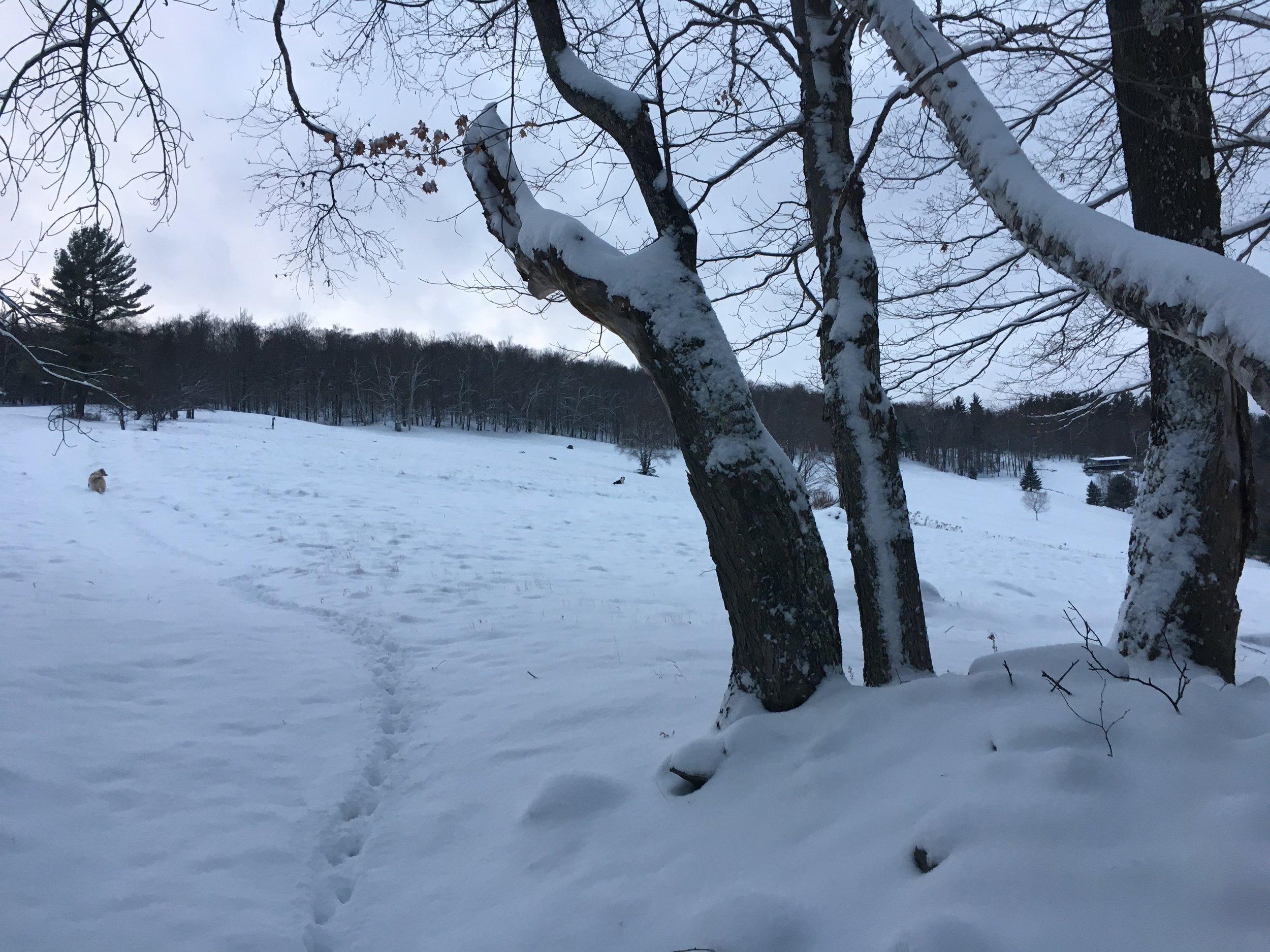
However, not all the news is good. Researchers are also finding a vicious cycle of people spending less time outdoors and more on social media, shopping, etc., thus not feeling the positive effects of outdoor time, and thus valuing the outdoors and nature less and less. And presumably, becoming less kind, less attentive, and less creative.
We’re blessed here to have so many places we can enjoy outside. Let’s keep it that way!

Boys & Girls Club Partnership
Kids need time outdoors to explore, play, imagine, and engage all of their senses. When a child's curiosity is sparked, learning comes naturally. This year we have partnered with the Boys & Girls Club of the North Country to use ACT's protected lands as an outdoor classroom to connect young people with nature.
Children from the Boys & Girls Club have hiked to the ledges at Cooley-Jericho to enjoy the views; discovered signs of moose, bear, and coyotes on the trails; learned about monarch butterflies and milkweed at Whipple Field; explored beaver ponds; and studied water quality on the Gale River.
The Littleton Courier recently published a wonderful front-page article about our Stream Safari program. Click here to read the article, and check out our Facebook page for photos!
You can help support our programs for local kids by donating to ACT today!
In Memory of Harry Reid
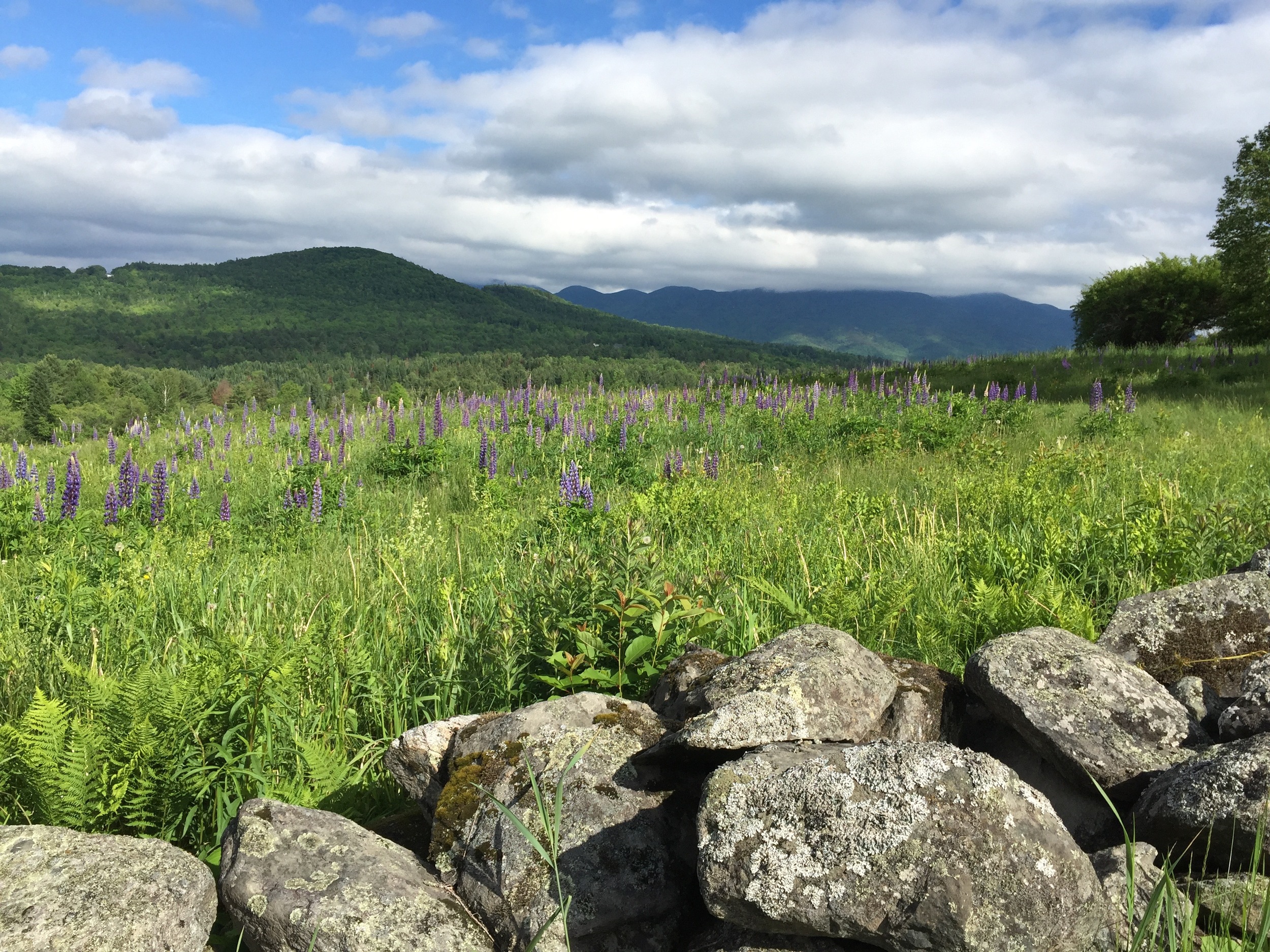
Harry Reid of Sugar Hill, NH was one of the small group of friends and neighbors who created ACT. He was an incorporator of the Trust, one of the five people who legally created the organization in the year 2000.
Harry loved the White Mountains and knew the Franconia Notch area as few do. As a boy he hunted and fished and explored, and as an adult (after coming home from a 20-year career in the U.S. Army) he was the manager of Franconia Notch State Park, including the Cannon Mt. ski area.
Harry believed in the power of people working together, and the importance of protecting the land we love.
Perk Up Your Ears
These days of snow, rain and gloom after those tantalizing warm days of early spring - every year I seem to forget that winter leaves so reluctantly.
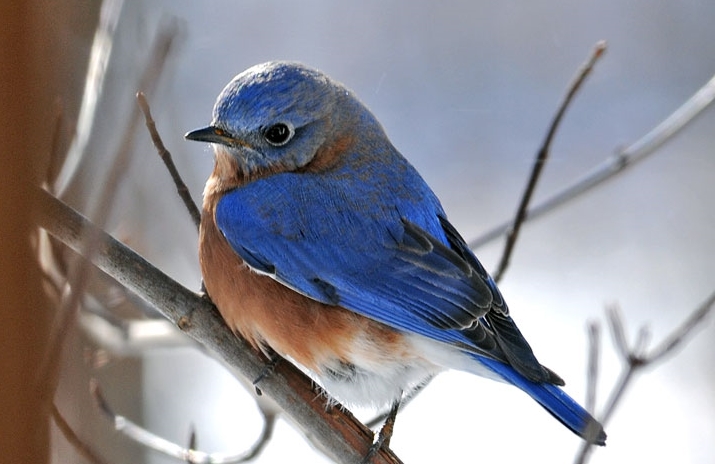
But spring is around the corner, and some of our early birds are here. In the last few weeks bluebirds, phoebes, white-throated sparrows have all arrived, along with flocks of robins. Geese and crows are making their nests. Woodcock have been here for a month. Mergansers, wood ducks, and mallards are in the rivers, and bufflehead and ring-neck ducks on the larger ponds. A few hardy peepers were calling before the ponds refroze and wood frogs ("croakers") are on the move. At my feeders, siskin and goldfinches continue to swarm, along with juncos, purple finches, and song sparrows. A few tree sparrows and bohemian waxwings are still about before they head north for the summer.
In anticipation of the birding season, we're offering two fun and informative events:
Celebrate Earth Day: 100 Years of Bird Conservation & Basic Birding Tips
Friday, April 22, 7 - 9 p.m., Weeks Memorial Library, Lancaster
Join Dave Govatski and me for a look at a century of conservation through the Migratory Bird Act, plus learn some tips on identifying more birds through knowing habitat and behavior.
The Music Around Us : An Avian Audio Tour
Thursday, April 28, 6:30 - 8:30 p.m., Franconia Town Hall
Expert birder Charlie Browne will present how learning songs will make you a better birder, and enrich your experience outdoors. Great for beginning and experienced birders.
Both events are free, with donations gladly accepted. Refreshments will be served.
Owl Prowl Sunday!
It looks like we'll avoid the snowstorm coming up the coast, so our walk Sunday evening March 20 is still on. Let's hope for continued improvement to the forecast, and we might see the rising moon.

We'll listen for saw whet owls and barred owls.
We'll meet at 5:30 p.m. at the entrance to Pondicherry National Wildlife Area on Airport Road in Whitefield, just across from the power plant. It will be chilly, so bring something warm to enjoy when we linger at the viewing platform over Big Cherry Pond, hopefully under the rising moon and hearing owls calling.
But whatever the conditions, walking in the woods at night is a great sensory experience!
For a map and more details click here.
Signs of Spring!

A chipmunk! One emerged over the weekend and hung out at the bird feeder. In the woods, purple finches, goldfinches, and pine siskins are chattering like crazy. And a new singer: the brown creeper, the only nuthatch-like bird who always likes to go up a tree (nuthatches typically creep downwards). And in the woods, snow fleas, peppered on the snow. I saw a teeny spider yesterday afternoon on the snow. This morning walking a woods trail I felt across my face the most delicate sensation, a spider's trailing string of web, which it uses to float hither and yon.

Brown creeper.
We will start our spring bird alerts in the next few weeks (red-winged blackbirds reported from Bath yesterday, along the Connecticut River Bath, so we know the migrants are on the way!). It won't be long before we hear woodcock. If you'd like to receive our bird alerts, please e-mail us.
Two "Winter" Walks Upcoming
What a bizarre winter we've had. From -20 Sunday morning to 52 (!?) as I write Tuesday afternoon.
The rambunctious wind has already scoured the overnight snow/ice coating from the fields.
A sign of spring! Yesterday the cardinal who's been hanging around the neighborhood all winter (and making everyone smile) started singing! He's a grand fellow, and all the finches, juncos, chickadees, nuthatches, and kinglets joined in. At our elevation of 1,300 feet, cardinals don't usually hang out; in the 20 years I've lived here in Sugar Hill, I've only seen one other male, and one female - sadly not at the same time! One spring that male sang for weeks, to no avail.
Regardless of the weather, everyone is invited to two (hopefully) winter hikes:
Cooley-Jericho Community Forest on Sunday, Feb. 28 at 1:30 p.m.
Rising Moon Owl Prowl at Pondicherry Refuge, Sunday March 20, 5:30 - 9 p.m.