

NEWS
&
Musings
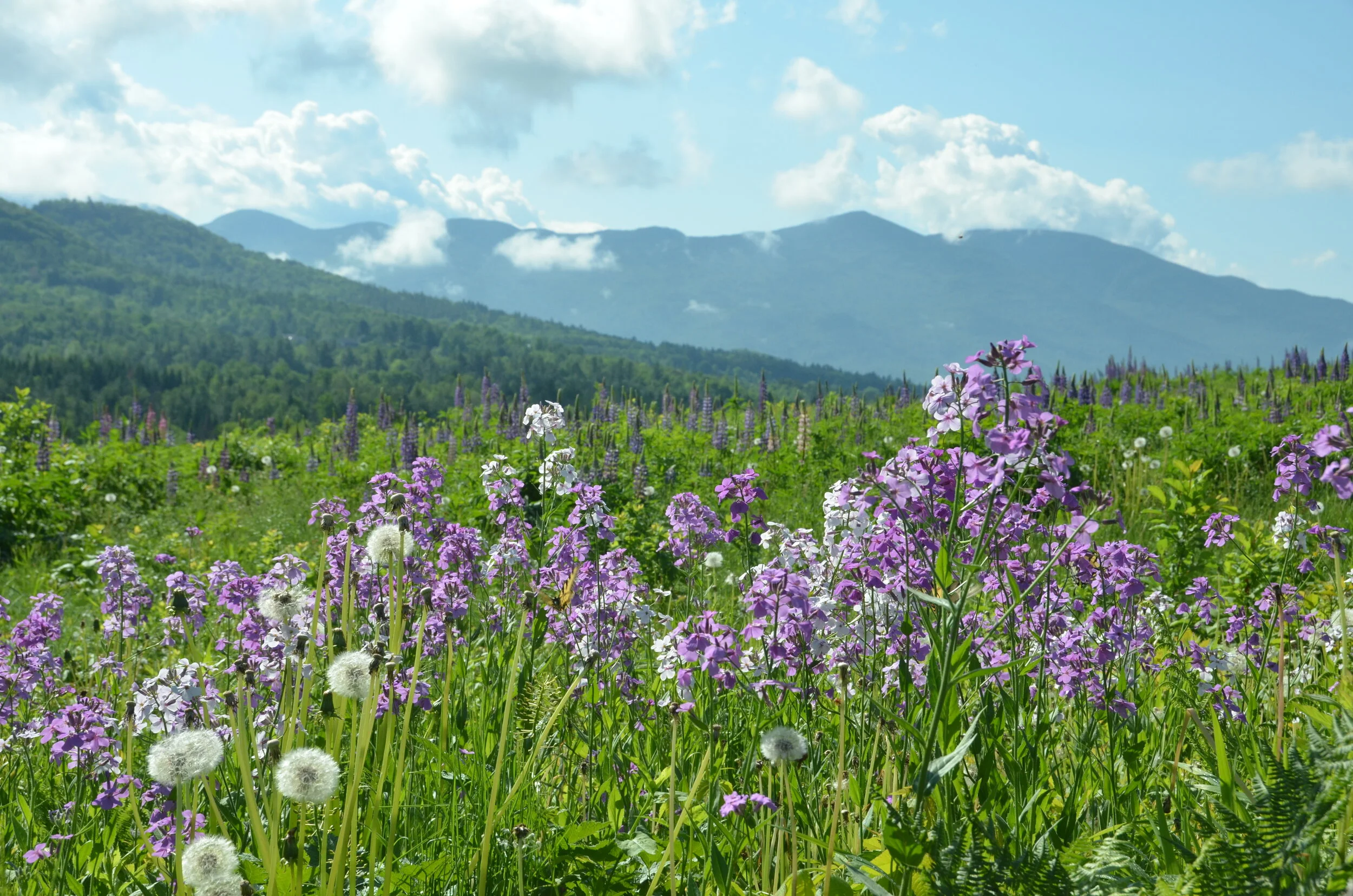
ACT's Executive Director Search Begins

Click the image to view the full job description announcement.
The Ammonoosuc Conservation Trust invites applications for the position of Executive Director, seeking candidates who bring a passion for the land and natural resources, an understanding of conservation as a tool for both environmental sustainability and community vitality, and the skills and experience to lead this successful, growing organization. The Executive Director will provide vision and strategic internal and external leadership, with significant emphasis on cultivating relationships with landowners, partners, donors, and funders. Working internally in a culture of shared leadership and collaborative teamwork, the Executive Director will be managing multiple projects, financial resources, fundraising, and grant-writing.
Applicants should have a degree and experience in conservation or a related field, and five years of demonstrated success in organizational leadership and management.
Click here to view the full job announcement.
Please email a cover letter and resume to [email protected]. Review of resumes will begin in mid-June, 2020.
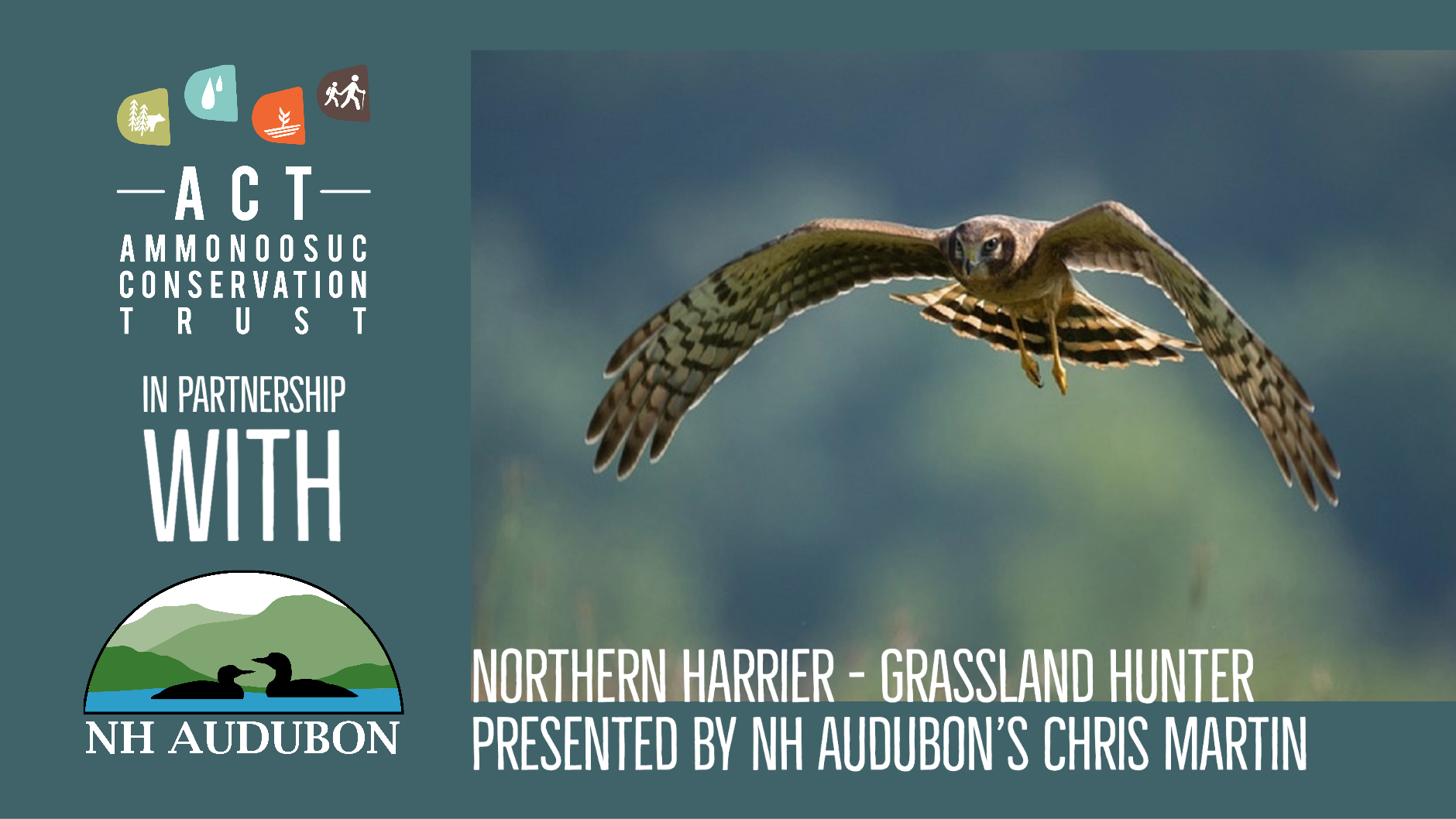
The New Normal = Posting Recorded Zoom Presentations
Missed the Northern Harrier Presentation? Watch the Recording!
Yesterday evening (May 13, 2020) 68 patient folks came together for ACT’s very first attempt at hosting an online event co-sponsored by the Ammonoosuc Chapter of NH Audubon. We are happy to report that things went pretty well with only a few technical glitches. All things we can learn from and improve for the next one!
Although getting the event itself off the ground was pretty exciting, we’re delighted to be able to bring the recording to you, another first for the organization. We hope to continue bringing these types of events to you and as we add recorded presentations to the roster we’ll be sure to create an archive where you’ll be able to find previous recordings, until then, we’ll be posting them here, on our blog which is also searchable.
Enormous thanks to both Chris Martin for the outstanding presentation and Dave Govatski for his openness to collaborating and his stellar co-hosting skills.
We hope you enjoy the presentation. If you have a question that isn’t covered or you’d like to share some feedback, we’d love to hear from you. Please send Gal an email with your thoughts.
Thank you for watching and we look forward to doing more of this kind of programming, so please keep an eye out for future events.
Remembering Rufus Perkins
One of ACT’s great champions has left his us. Rufus was one of the kindest and most decent people I’ve ever known.
By Rebecca Brown

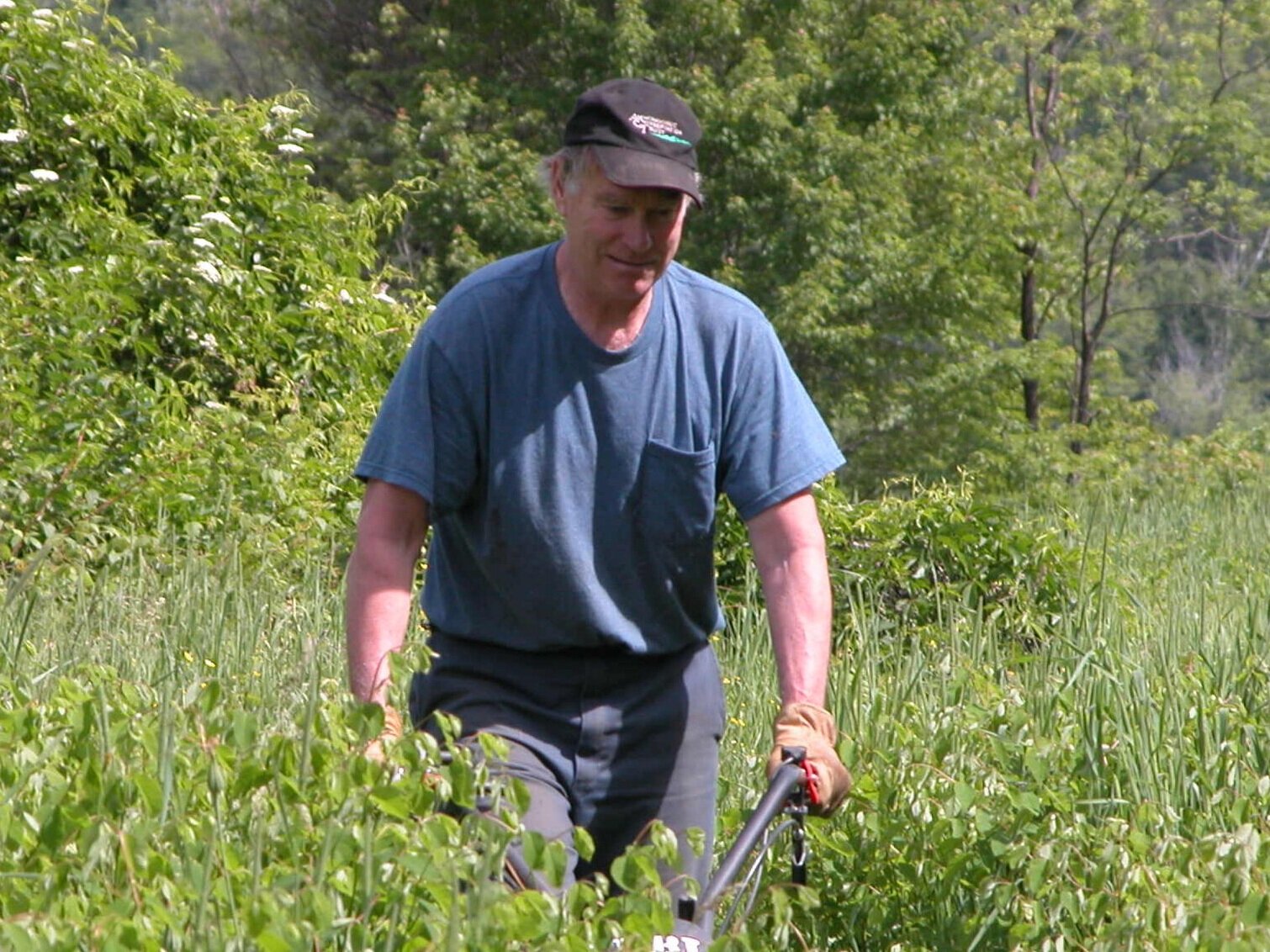
Rufus mowing the trail at the Whipple Farm Field in Sugar Hill. (Carl Martland photo)
One of ACT’s great champions has left us. Rufus Perkins, a founder, long time trustee, and even longer time volunteer, died March 13 after a short bout with cancer. He was 80 years old.
Twenty years ago, I didn’t know Rufus. I’d lived in Sugar Hill several years, and Rufus was the second home owner who occasionally drove by on his way to his place up the hill. I was told he was an economist, and from Cambridge, so I assumed he’d be elitist, aloof, even somewhat intimidating. But then the proposal for 10 house lots on our collective backyard woods came along, and Rufus was among the neighbors I asked to gather to discuss our options.
In the subsequent time of forming ACT and beginning our work protecting land, Rufus became for me one of the kindest and most decent people I’ve ever known. Yes, he possessed a prodigious intellect. But his mind was matched with a down to earth presence, and a sense of humor – sometimes devilish and other times disarmingly childlike – that made him eminently approachable and enabled him to work effectively with people very different from himself. He devoted himself to helping build ACT, and became my most constant source of encouragement, as well as ally in creative thinking, problem solving, and reflection for the next 20 years.
We learned about this business of land conservation together, attending workshops and seminars. (One year, while at a national land trust conference in Nashville, he let it slip that it was his birthday. We celebrated, improbably, by attending an NHL hockey game.) Most of all we learned by doing, and were never hesitant to question ourselves and each other. We didn't always see eye to eye, but we always resolved whatever we were doing and went on to the next thing. From pitching in on everything from financial management and member database creation to mail merges and envelope printing, as well as mowing fields and trails, Rufus was the consummate volunteer.
As we got to know each other and shared stories, I imagined him riding his motorcycle cross country when he was a young man, being at Berkeley in the ‘60s, and living and working in Saudi Arabia. Rufus was a throwback, a gentleman of old Boston stock who was the perfect date, but never married.
Rufus was independent to the core, and that occasionally provided some grist for our companionable mill. For instance, he steadfastly refused to wear protective gear when wielding his chainsaw. That, coupled with the fact that he usually worked alone unless he was on some ACT work party, made me a bit nervous. So I’d raise an eyebrow, but nothing more. Then one day after a bad storm I walked up the hill to see how he’d fared. I found him, chainsaw in hand, about to tackle a huge pine that had fallen across the road, bringing with it a tangle of lesser trees. The pine hung about six feet in the air. Cutting into that mess was a recipe for disaster. I said as much, but Rufus insisted it was fine, why wait for the power company, etc. etc. He revved the saw. I forget exactly what I said next. It may have included some unrepeatable words, and maybe I threatened to never speak to him again. But he stopped.
Family members called Rufus’s work with ACT his second career, one that he relished and which brought him tremendous satisfaction. In his obituary, they wrote: Modest and unassuming, Rufus touched the lives of innumerable people, mentoring some, playing the role of beloved uncle or big brother to others. He will long be remembered for his gift as a conversationalist with wide-ranging interests, for his unexpected and outrageously funny comments, for his unfailing kindness to his friends and family, and for his devotion to the landscape that shaped his life and is his legacy.
A team of ACT volunteers has begun maintaining the trails on the Bronson Hill land Rufus held so dear. As a tribute to him, we hope more people will become involved with maintaining the trails and the land.
Rufus’s energy, passion, and love of the land will always be an inspiration to me, and I hope, to ACT.
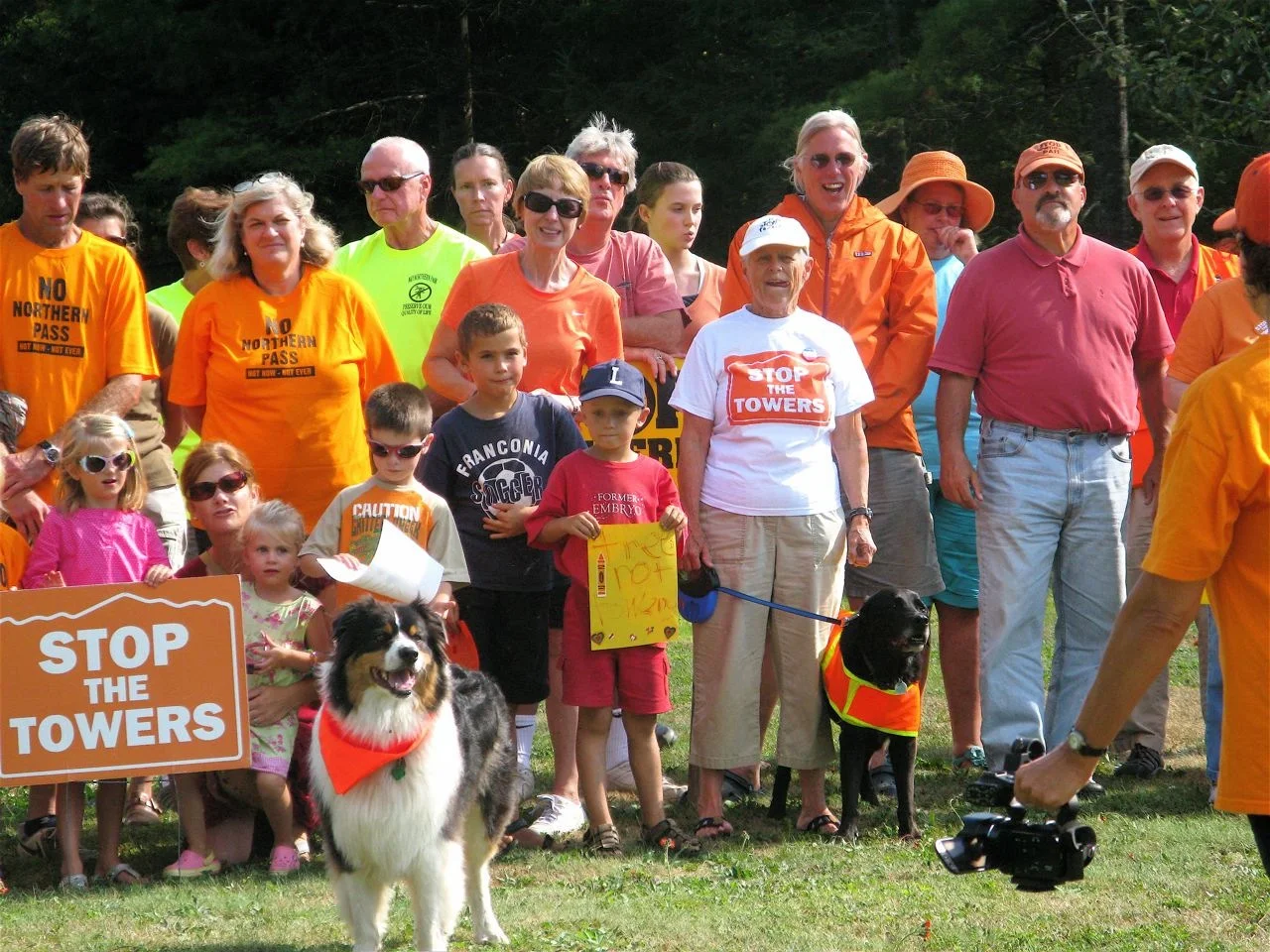
Supreme Court Buries NoPass

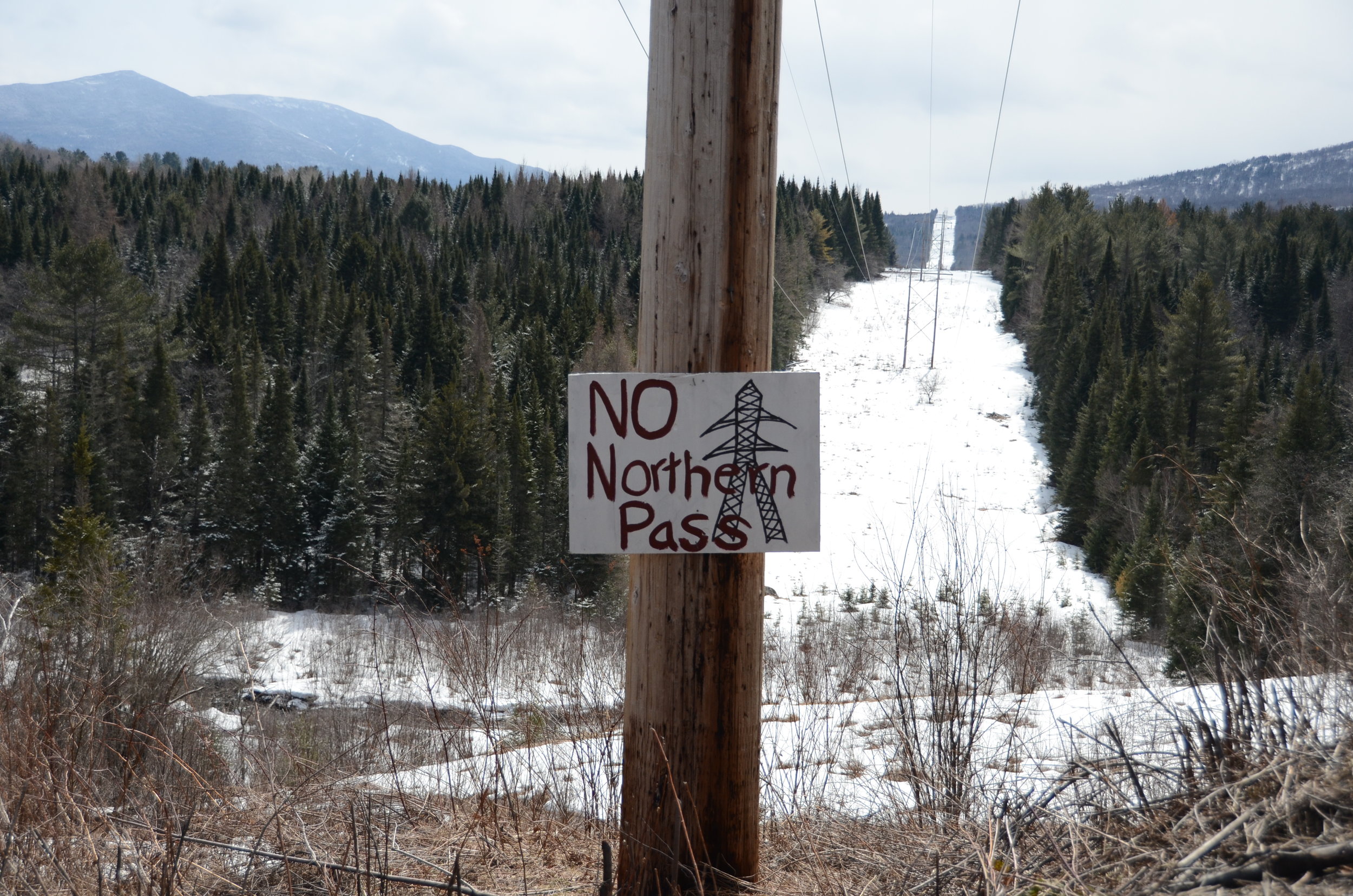
A sign on proposed path through Sugar Hill
This appears to be the final blow to the ill begotten project, a 192-mile high voltage transmission line through the heart of the North Country on its way to consumers in Massachusetts and Connecticut.
ACT was an early intervenor against the project when it was announced nearly nine years ago. We joined the Appalachian Mountain Club and Conservation Law Foundation in defending the state’s permit denial at the Supreme Court.
Eversource has 10 days after the decision to file for reconsideration. We’ve been amazed that the project continued over all this time, given the intense opposition, the dubious finances, the old-school technology, the change in energy markets, and the other new energy projects in New England that have little opposition. So it may be that Eversource stands up for yet another round, but we’re pretty confident that we’ve seen the last of this project.
You can read the full Supreme Court decision here and the Union Leader’s coverage here.
Photos:
A sign on proposed path through Sugar Hill.
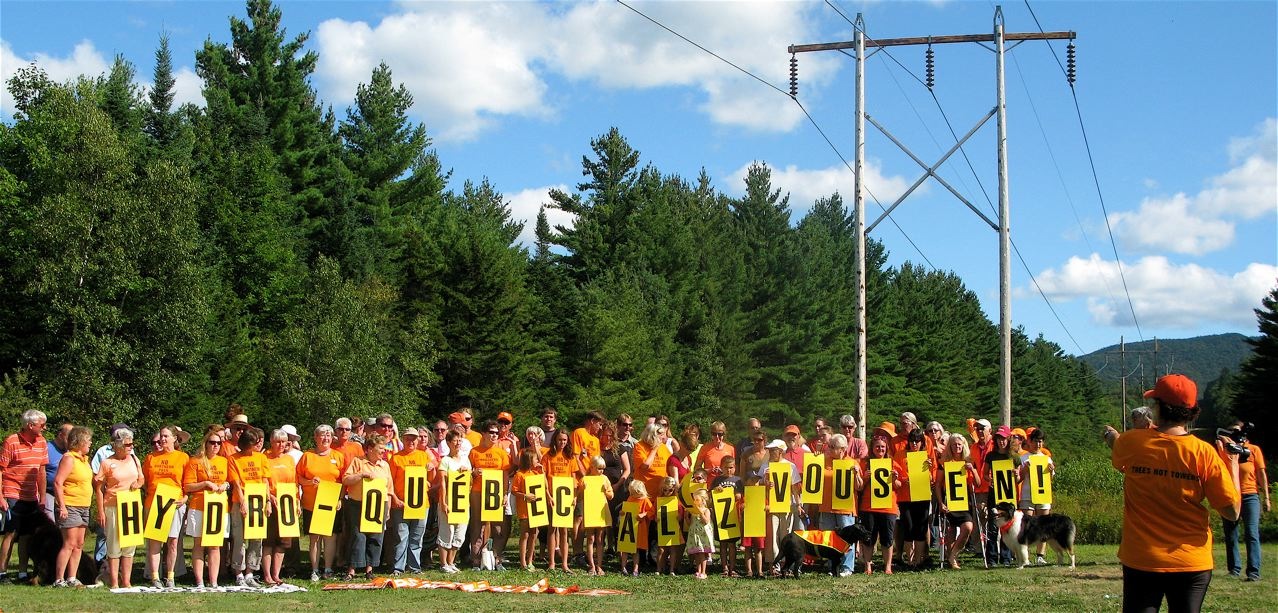
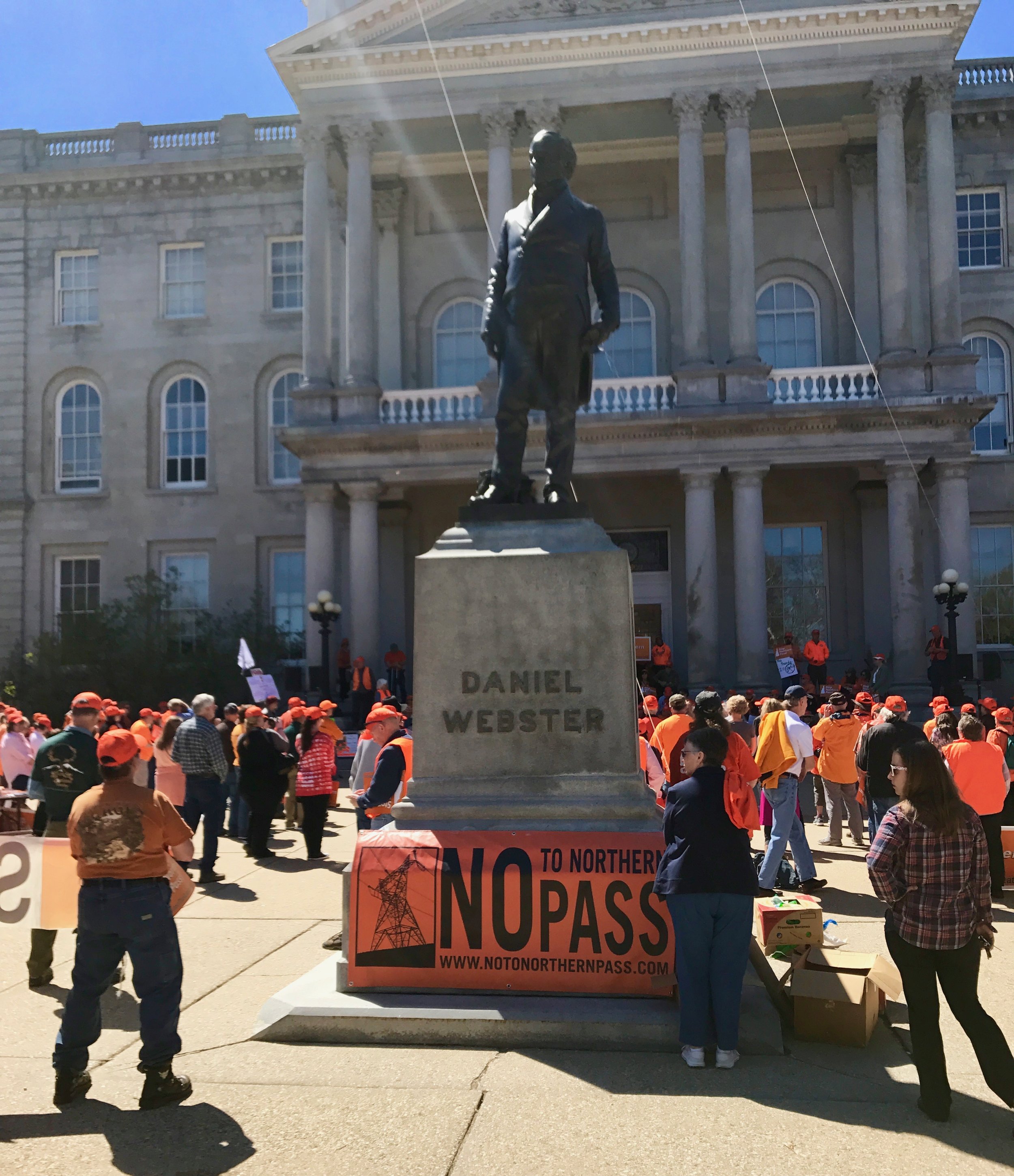
NoPass Rally, September 2012 in Easton (3).
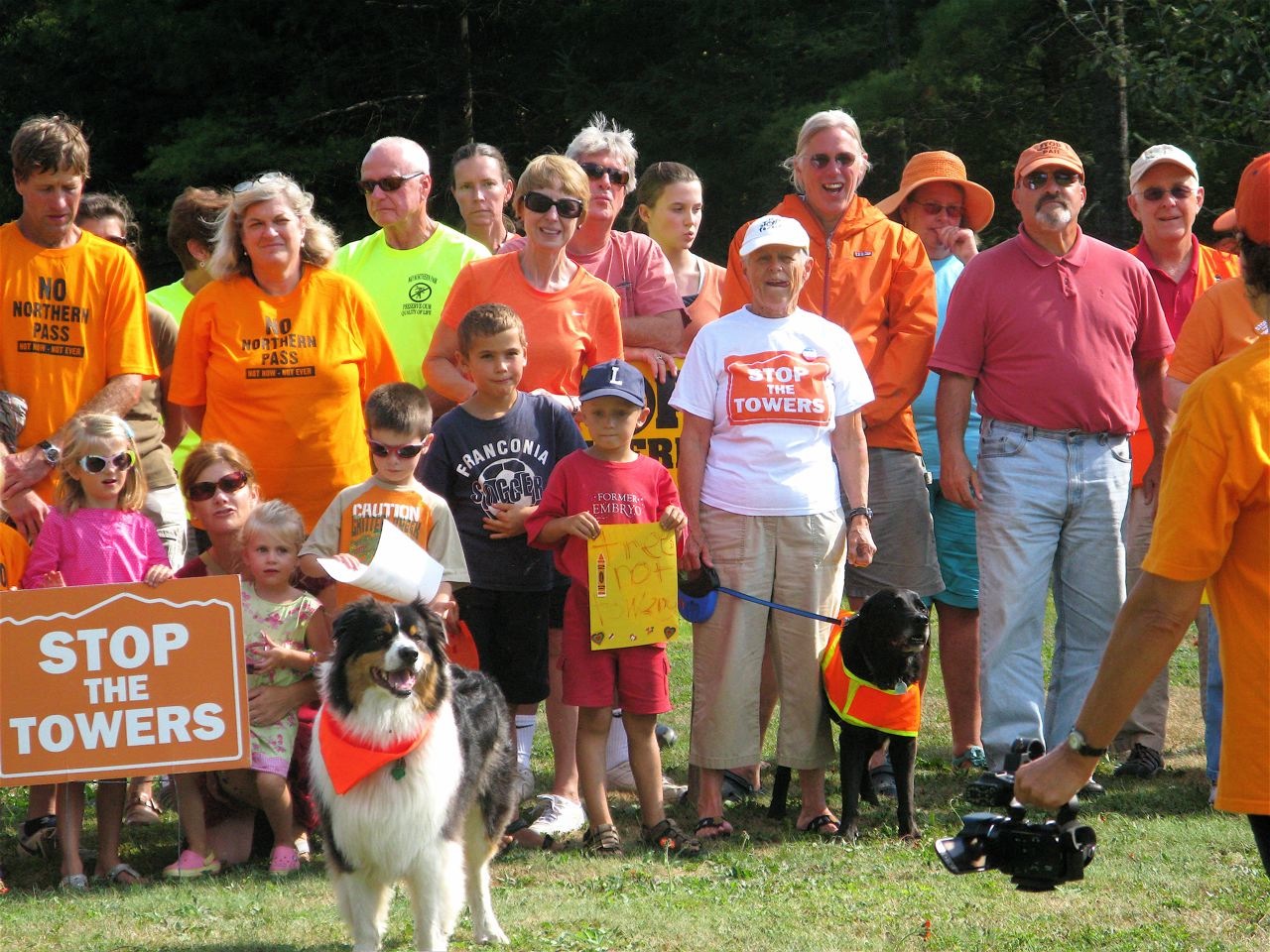
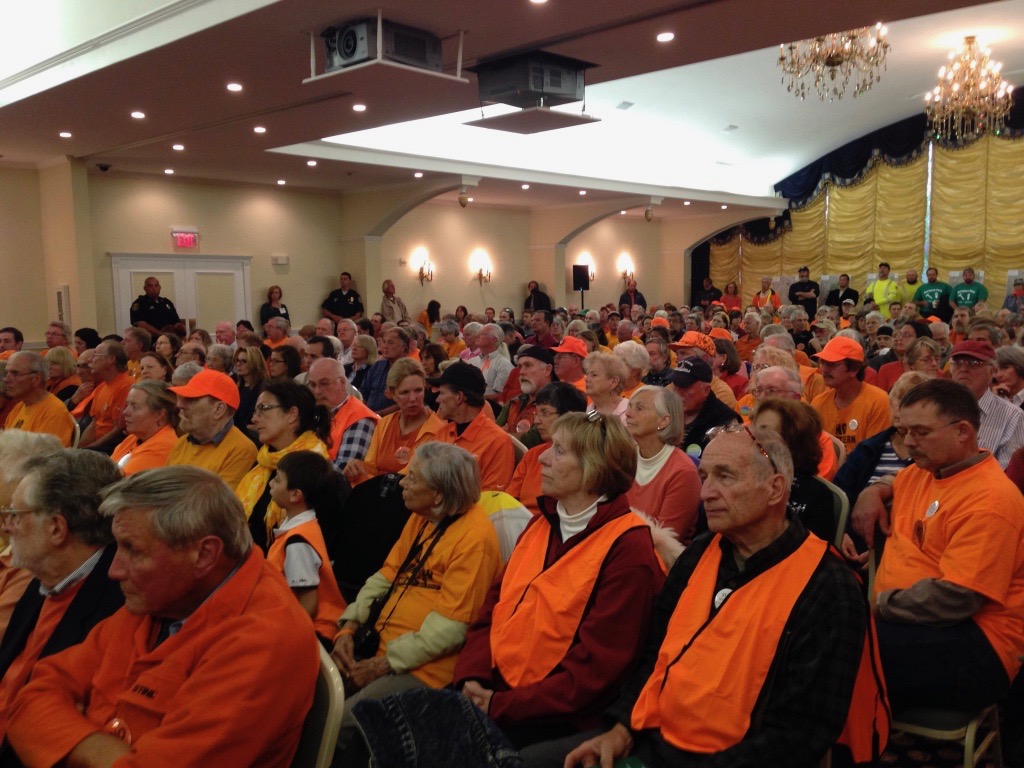
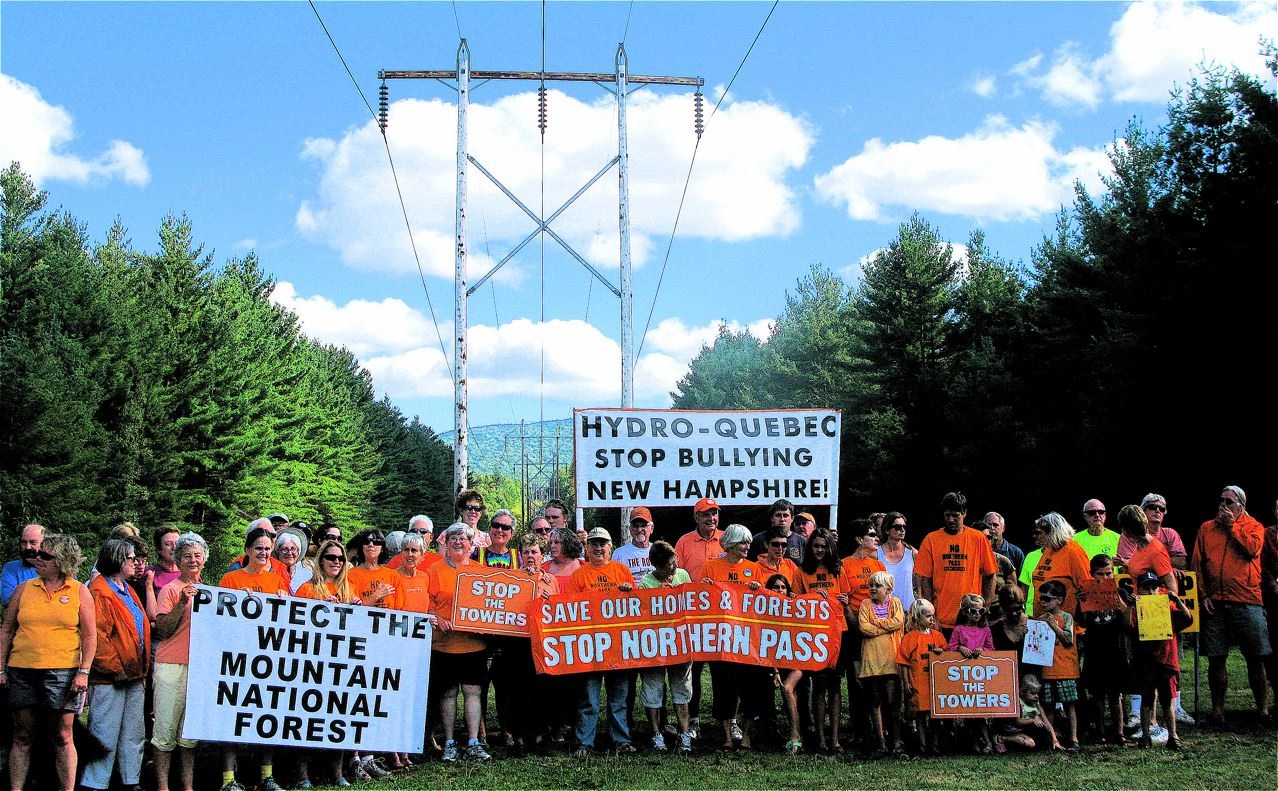
Room of orange at another public hearing, September 2013 at the Mt View in Whitefield.
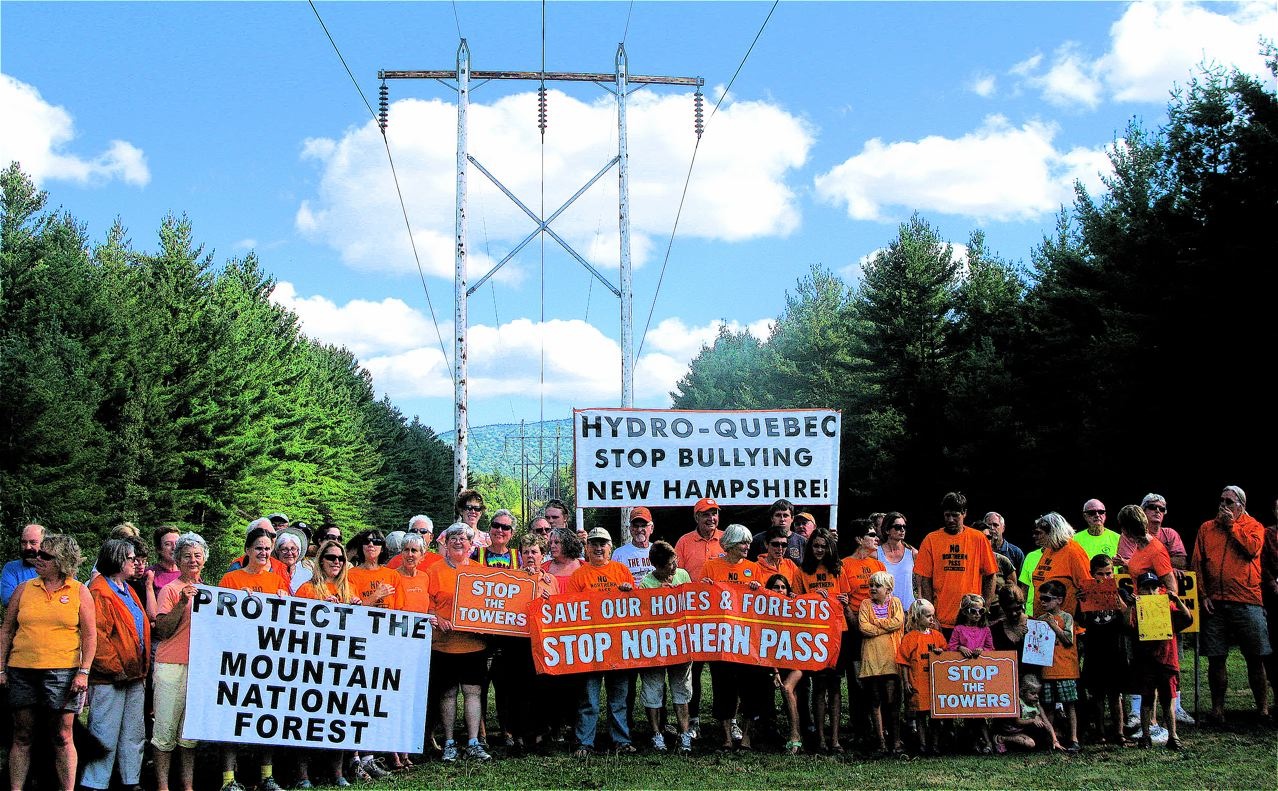
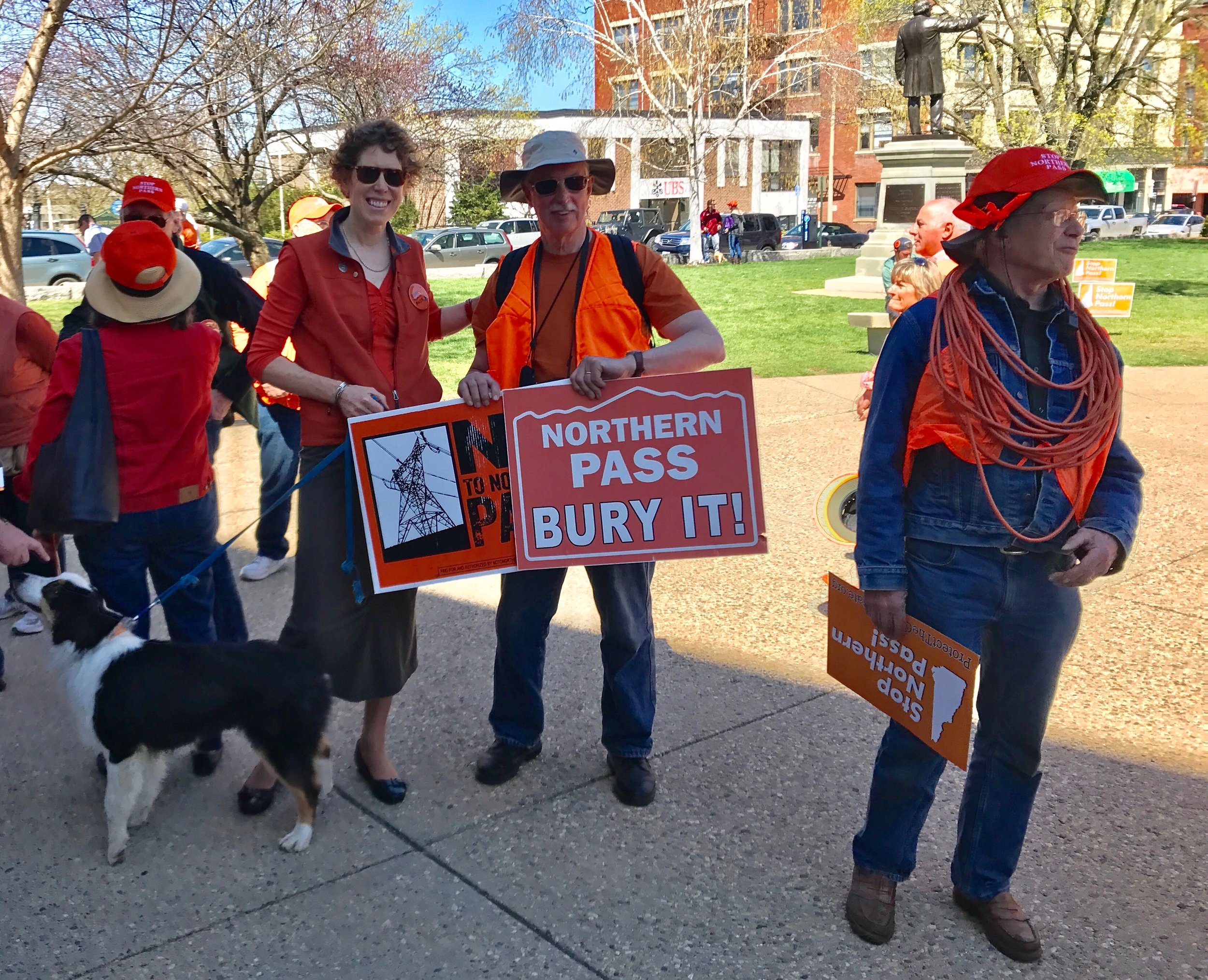
On Earth Day 2017, opponents made a ring around the State Capitol in Concord. Shown are ACT members and NoPass activists Carl Martland, Doug Evelyn, and Executive Director Rebecca Brown. (2)
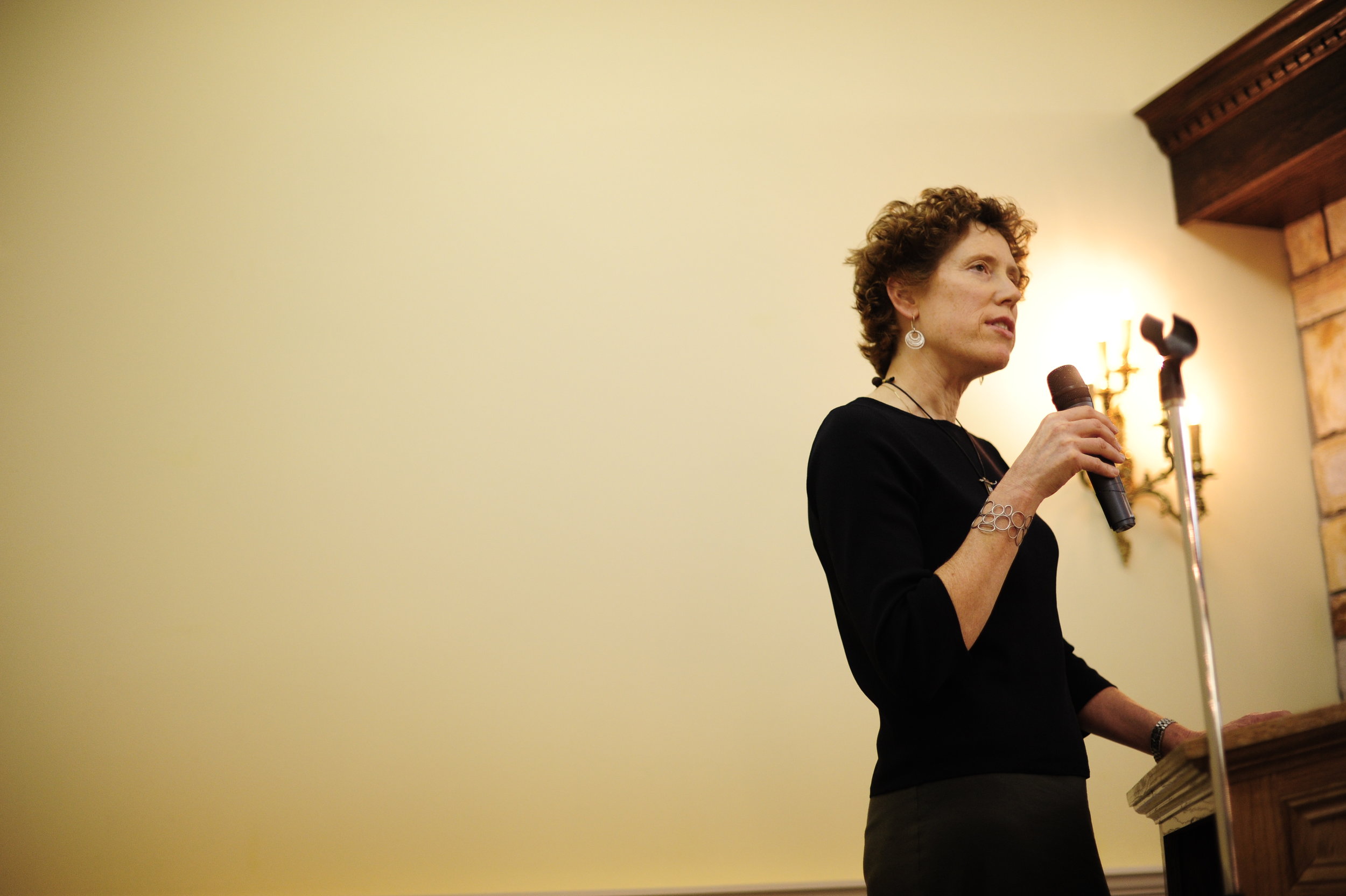
Rebecca Brown speaking at a hearing in Whitefield, March 2011. Photo credit: Paul Hayes, Caledonian Record.
Managing Our Woods for Birds
ACT practices forestry for the birds. So can you.
By Rebecca brown
Many bird populations are declining at an alarming rate. Some of these species have their largest breeding populations in northern New England. Landowners can play a crucial role in keeping these birds from declining even further and maybe even help turn the trends around.
Some local bird favorites, including woodcock, Bicknell’s thrush, scarlet tanager, chestnut-sided warbler, and yellow-bellied sapsucker have a large portion of their global populations breeding here. The North American Bird Conservation Initiative calls these “responsibility birds,” meaning that we have the collective responsibility to focus land management and conservation work on these species. In other words, the actions we take on our lands will have a crucial impact on the survival of these bird species.
As a landowner, ACT manages woods for high-quality timber, wildlife habitat, public recreation, and clean water protection. As our ownership grows, new research in conservation biology, climate resilience, and population trends for various wildlife species influences our management goals and practices. Very exciting to us is the emerging partnership among foresters and wildlife biologists focusing on management practices that are good for birds and good for forest products, from high-quality timber to firewood to maple syrup.

ACT demonstrated logging with horses as part of our winter 2014 timber harvest at the Foss Forest in Sugar Hill. The harvest was planned with birds in mind.
One partnership that inspires and informs ACT’s forest management is the Foresters for the Birds initiative started by Vermont Audubon. The initiative helps landowners integrate the practices of timber and songbird habitat management.
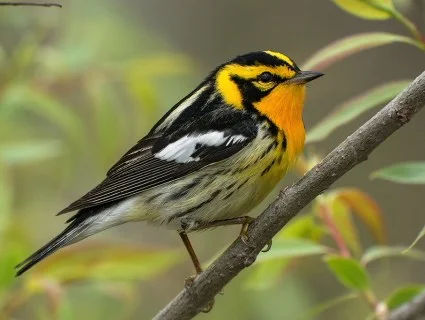
Following recommendations from Foresters for the Birds, at our Foss and MacCornack-Evelyn forests in Sugar Hill timber harvesting included methods to encourage black-throated blue and blackburnian warblers .By harvesting small groups of trees and retaining some of the largest trees, we now have a more varied forest with many mature trees growing above pockets of young conifers trees and shrubs, just what these species like.
As a complement to these practices, the harvest also included a three-acre patch cut to create habitat for birds that like openings in the forest, such as chestnut-sided warbler. Now about five years after the harvest, this patch cut opening dense with young hardwood trees and shrubs; chestnut-sided warblers love nesting in the dense tangle of young trees and shrubs now growing in the opening.

Chestnut-sided warbler
Research suggests that these openings are also important for birds that favor mature forest, such as scarlet tanager. They use these openings for foraging, especially after their breeding season and before they migrate south.
Our management plan for our nearby Cooley-Jericho Community Forest includes areas where we will maintain larger, multi-acre patches of younger forest. While the Community Forest and its variety of habitats is rich with birds, we found an abundance of birds nesting and feeding in the young forest growing across the property, including mourning warbler and Canada warbler, which are among the less common responsibility species, These two species like the high density of young trees growing in the higher elevation, more remote community forest. Without some form of continued management, young forest will grow up and become less suitable for these species. While we are letting most of the property’s young forest continue to grow, we have identified a few areas to maintain young forest with cutting every 10-20 years.
Interested in how you can manage your land for birds? We’d be delighted to talk with you. Give us a call at (603) 823-7777 or email us at [email protected]
Here is an excellent guide, from VT Audubon, Managing Your Woods with Birds in Mind.
Here is the list of 25 responsibility birds species Vermont. These are also good for New Hampshire.
Protect the Planet, Save Ourselves
Many of would enjoy living a fuller life of the senses. We can…
By Rebecca Brown
Material resources like clean water and soils for growing food are critical to protect, but they’re not all we get from the earth. A large and growing body of research points to the importance of nature to our own well being. Time in nature can spark our creativity and intelligence and be restorative to our physical, psychological, and spiritual health.
The research suggests the more we rely on the two-dimensional world of computer and cell phone screens, the less fully we engage our senses. Our awareness and attention atrophies, and we’re less able to find pleasure in the real life that surrounds us. Even though technology can link us anywhere in the world in an instant, our actual connections are shrinking, and there is a negative effect on our physical, mental, and societal health.
The poets knew it long before the scientist, but the empirical evidence shows that time in nature healing to the heart and soul. It’s calming, and boosts creativity and problem solving. It connects people with others, and reconnects people with something bigger than themselves. It can invoke our spirit sense, when we drop our own internal chatter and open to the energy in the natural world around us.
I invite you, now that spring has finally arrived, to find a place outside, whether by a pond or on a hillside or under a tree, and sit. Begin to tune in one sense at a time. Close your eyes and count every different sound you can hear. How many different bird songs? Is the breeze touching the grass, or dry cattails, or distance tree branches? Feel the weight of your body on the ground, your connection to the earth.
Open your eyes and look carefully at everything around you, observe the nuances of color, texture, and shape. Feel the grass, the twigs, the bark of trees. Allow yourself to be immersed in the world around you.
While grand views and spectacular sunsets are wonderful, the power of the natural world is right in front of us in the smallest ways, too. You can just sit and feel and observe deeply, no hiking, no counting steps on your Fitbit, no destination necessary. Just be. I promise you will discover magic there.
Good for Fish, Bats, and People: Land Conserved in Sugar Hill
We are proud to announce the conservation of two properties that will help protect clean water and wildlife habitat forever.
Carl and Nancy Martland have conserved two parcels of land bordered by Pearl Lake Road and Hadley Road in Sugar Hill.
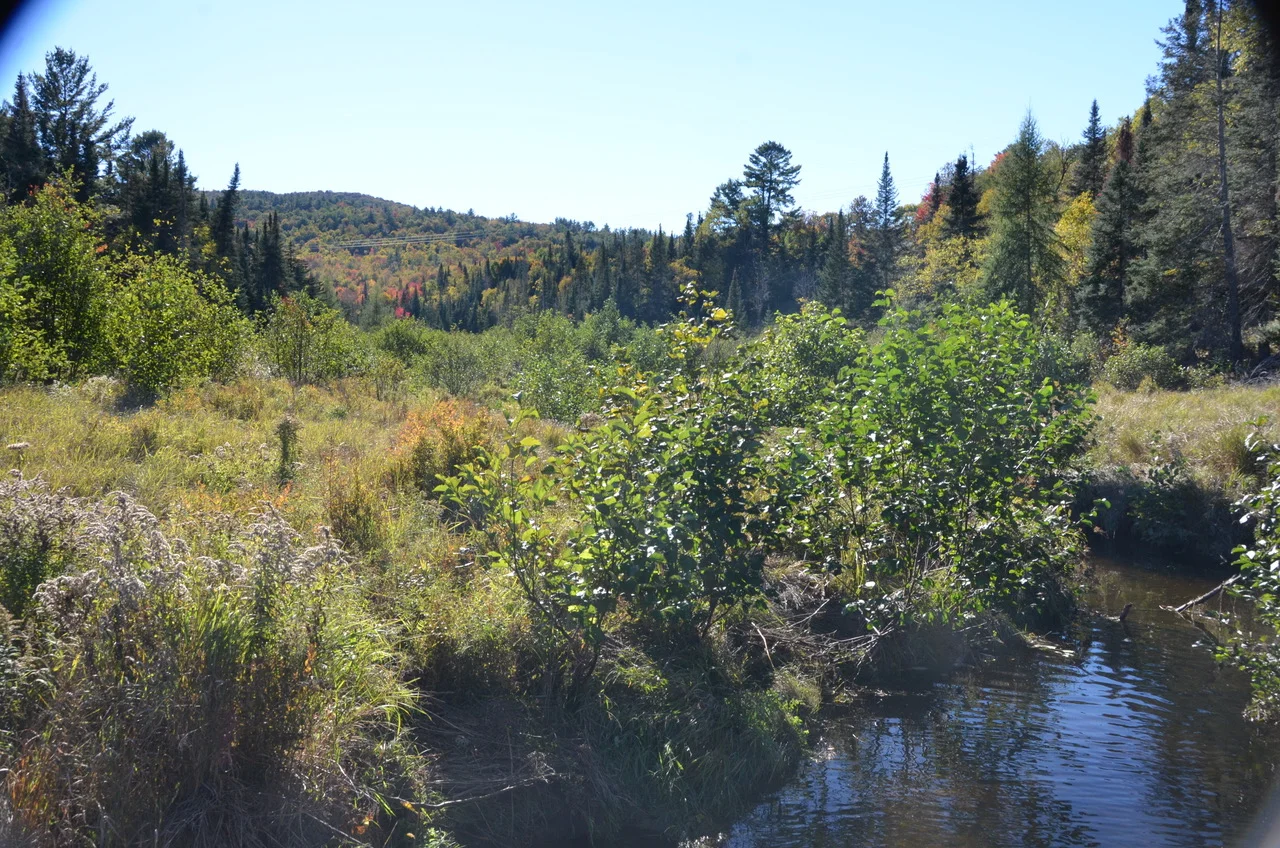
On the south side of Pearl Lake Road, the 16.6-acre Creamery Pond parcel protects the Salmon Hole Brook, a cold water stream that supports wild brook trout, and flows into the Ammonoosuc River in Lisbon. The land is mostly floodplain with sedge meadow, alder swamp, and the brook, and has some surrounding upland forest.
On the north side of the road, Salmon Hole Brook continues, and the approximately 41-acre Whipple Pasture parcel contains floodplain, wetlands, and an upland forest that is home to black bear, all kinds of songbirds, grouse, woodcock, and deer, among other creatures.
Together, the two parcels protect nearly a ¾ mile of stream frontage. Built into the conservation agreement between the Martlands and ACT is special protection for the land along the Salmon Hole Brook.
“We helped create ACT, have been involved ever since, and we are thrilled to see it develop into the premier land trust in our region,” said Carl Martland. “We’re pleased that we can contribute these easements on Whipple Pasture and Creamery Pond in Sugar Hill. We’re especially pleased to be able to protect one of the special features of our land – Salmon Hole Brook, which provides breeding habitat for native brook trout. This habitat is disappearing, and riparian protection vital to the continued health of this population.”
“The location of this new easement near to other ACT properties improves and enhances the overall conservation effects that ACT is able to achieve,” said Nancy Martland. “We encourage other landowners to work with ACT as we have, to protect the rural character and native species of our wonderful area. Thanks to ACT and the New Hampshire Charitable Foundation for its support in making this possible.”
“A priority in our work is protecting water quality,” said ACT Executive Director Rebecca Brown. “Wild brook trout only live and breed where the water is clean and cold, and so are a good indicator of stream health. With New Hampshire Fish & Game and Trout Unlimited we’ve identified streams in our area that are important for protection. Salmon Hole Brook is a high priority. What’s good for trout is good for people. We all need clean water.”
In addition to protecting water and riparian habitat along streams, the Martland land is an important place for bats. The property is less than 10 miles from three known bat hibernacula (hibernation spots). All three hibernacula are known to support species, including the federally threatened northern long-eared bat, that forage in riparian areas that have nearby roosting habitat (live and dead trees with cavities, crevices, and/or flaking bark). The Martland properties both contain this type of habitat.
ACT is involved with a special project aimed at understanding bats’ use of the landscape and how landowners might manage forests and open areas to support bats’ needs.
For more information on land protection for the benefit of people, communities, and wildlife, please contact ACT at (603) 823-7777, or visit www.aconservationtrust.org.

Join us for the Super Blue Moon!
Supermoon, Blue Moon, Eclipse!
Wednesday is the Super Moon and a Blue Moon – come watch the moonrise from a great vantage spot in Sugar Hill. We’ll walk up to the open fields on Bronson Hill, on land that is conserved forever. You’ll get the best eastward view in the area. If the day is sunny as forecast, we should get a splendid view of the moon rising over the Presidential Range.
Meet at 4:45 p.m. at 80 Post Road in Sugar Hill (third house on the right. Canines as well as all bipeds are welcome. We’ll walk up a hill, and it may be icy. Please bring traction for your feet and a flashlight or headlamp for the walk down.
Registration is not required for this event. Please contact Rebecca at (603) 823-7777 with any questions.
A blue moon occurs when the moon is full twice in a single month. Wednesday is the first of two blue moons that will occur in 2018 (the second is March 31). A super moon is when the full moon coincides with the moon’s orbit bringing it closest to the earth, making it look unusually large when it rises.
Adding to the drama, there will also be an eclipse of the moon on Wednesday morning. Look for the moon setting in the western sky a bit before 6 a.m. You’ll see the very beginning of a penumbral eclipse, when earth’s outer shadow begins to overlap with the moon. Before the moon drops out if sight you may see it begin to assume a reddish cast.

Brebner Farm & Forest on Ammonoosuc River Saved
Good News for the Ammonoosuc RIver!
Forest, streams, and shoreland conserved in Bethlehem.
We’re thrilled, proud, and humbled to announce the protection of over 200 acres and nearly ¾ mile of shoreline along the Ammonoosuc River in Bethlehem.
Asa Brebner conserved the land that his parents acquired in the 1960s. The land at the end of Blaney Road had been a dairy farm, and its enormous barn still stands.
While cows no longer roam, the property’s woods, streams, wetlands, and old pasture hosts a rich range of plants and wildlife.
Brebner and his family, including two young sons, live full time in Cambridge, Mass. and visit the old farm as much as they can. “I want my two boys to experience the same joy I had as a kid exploring that land,” Asa said.
“It’s increasingly rare to find so much land in one ownership along the Ammonoosuc River, so we were really intrigued when Asa Brebner called us about the possibility of conserving it,” said ACT Executive Director Rebecca Brown. “Conserving land around our rivers and streams to protect clean water and wildlife habitat is one of ACT’s highest priorities.”
Our Clean Water/Healthy Trout initiative aims to protect streams for people and wildlife. So far, ACT has protected the origins – or headwaters – of Salmon Hole Brook, a tributary of the Ammonoosuc River in Sugar Hill, and nearly two miles of shoreline on the Ammonoosuc River in Bethlehem, with its other conservation land bordering the river on Wing Road. This year ACT has also protected, in partnership with the Franconia Conservation Commission, over a mile of streams that flow into the Gale River.
“Brook trout live and breed on many – but not all – streams in the Ammonoosuc watershed,” Brown said “It’s good news when trout are present because they demand cold, clean water – they won’t live anywhere else. If streams are supporting native trout, that’s a sign of good water quality for people and wildlife. It’s our opportunity and challenge to keep streams healthy.”
As part of the conservation project, ACT partnered with N.H. Fish & Game, with assistance from ACT volunteers and the PAWS (Panther Adventure Wilderness Society) of Lisbon Regional School to assess the streams on the Brebner property. Fish & Game biologists and the students found baby brook trout, showing that the water quality was excellent. According to NH Fish & Game, baby trout use tributaries of larger rivers for cover from predators, and for thermal refuge – cold water – when the summer heats up.
“A whole host of wildlife from warblers to black bears use forested stream corridors,” Brown said. “They need streams with lots of trees and vegetation along their banks for foraging, cover, traveling, nesting, and refuge from heat.”
On the Brebner property, there is now a 200-foot wide buffer along the Ammonoosuc where trees will not be cut during future timber harvests. Similarly, protective forest buffers will be maintained along the small streams that feed into the Ammonoosuc.
“On properties owned by private landowners and conserved with ACT, we encourage strong stream protection,” said Brown. “We do the same on the land we own and manage. It’s the best practice for clean water and wildlife.”
Funding for the Brebner project came from the state’s Aquatic Resource Mitigation Fund, administered by the Dept. of Environmental Services, and from the Upper Connecticut River Mitigation and Enhancement Fund, administered by the NH Charitable Foundation. Both funding sources focus on conserving and restoring wetlands and waterways.
Write NO to Northern Pass
This is a competition and the Site Evaluation Committee keeps score. Only about 1500 letters have been received. This is less than the population of Franconia and Sugar Hill! We have to bury the SEC in a stack of letters showing the deep opposition to this project.
Bury the SEC in Letters Opposed
Are you opposed to the Northern Pass (NoPass)? Have you put your opposition in writing? If not, you’re not alone. Of the thousands of residents who oppose this unnecessary and environmentally destructive project, relatively few have written to New Hampshire's policymakers. But that’s OK – the time is now, and it’s never been more important.
The state’s Site Evaluation Committee (SEC) is in the midst of considering the Northern Pass application to build a high voltage transmission line from Quebec through the North Country, so power can flow to points south like Boston and Hartford.
The SEC decides if NoPass gets a permit to build in New Hampshire. Members of the SEC have been questioning Northern Pass very closely, and it appears to some observers like the tide may be ever so slightly turning from an expected “pass” for NoPass to some well considered skepticism and even opposition.
Part of the what the SEC must determine is if the NoPass project is in the “public interest.” So the committee is asking what is the cost - it's imperative that we clearly outline the cost to New Hampshire's residents. The impact would not only disrupt the state's ecologic and scenic landscapes, but damage small businesses and property values that rely on the preservation of our region's beauty. New Hampshire’s very sense of place, who we are, and what we value is on the line. This is why it so important to write the SEC and express your opposition to the NoPass project.
Letters against vs. for NoPass are running about 10:1. This is a competition and SEC keeps score. But only about 1500 letters have been received. This is less than the population of Franconia and Sugar Hill! We have to bury the SEC in a stack of letters showing the deep opposition to this project.
You don’t need to write a treatise. Just a few lines expressing why you oppose it – what you love about New Hampshire, your town, and/or your land that will be forever lost if this project goes through. Comments focused on aesthetics, historic and cultural landscapes, economic impacts, private property rights, and construction issues are key.
You might also mention Massachusetts. Right now, Massachusetts is analyzing proposals for new energy sources and NoPass has staked a lot on being chosen. We’re sure that ACT members, and the many other second home owners and visitors who live in Mass, don’t believe their state should facilitate the enormous set of landscape scars NoPass would impose on New Hampshire. So, especially if you are a Massachusetts resident, weigh in with your state. Addresses are below.
One more thing! Please send a copy of your letter to the editor of your local paper, and to the NH governor. If you want some assistance of any kind, or ideas, please give us a call at the ACT office. And, can you recruit a neighbor to write as well? If all of us got just two more people to write, it would be a huge impact. Let’s do this by December 1!
Addresses:
New Hampshire Site Evaluation Committee
Pamela G. Monroe, Administrator
21 South Fruit Street, Suite 10
Concord, NH 03301
Or send email comments to: [email protected]
The Honorable Chris Sununu
Office of the Governor
The State House
Concord, NH 03301
These are the two key individuals in Massachusetts on the energy supply contract:
The Honorable Maura Healy
Office of the Attorney General
State Of Massachusetts
One Ashburton Place
Boston, MA 02108-1518
Judith Judson, Commissioner
Massachusetts Department of Energy Resources
100 Cambridge Street
Boston, MA 02114
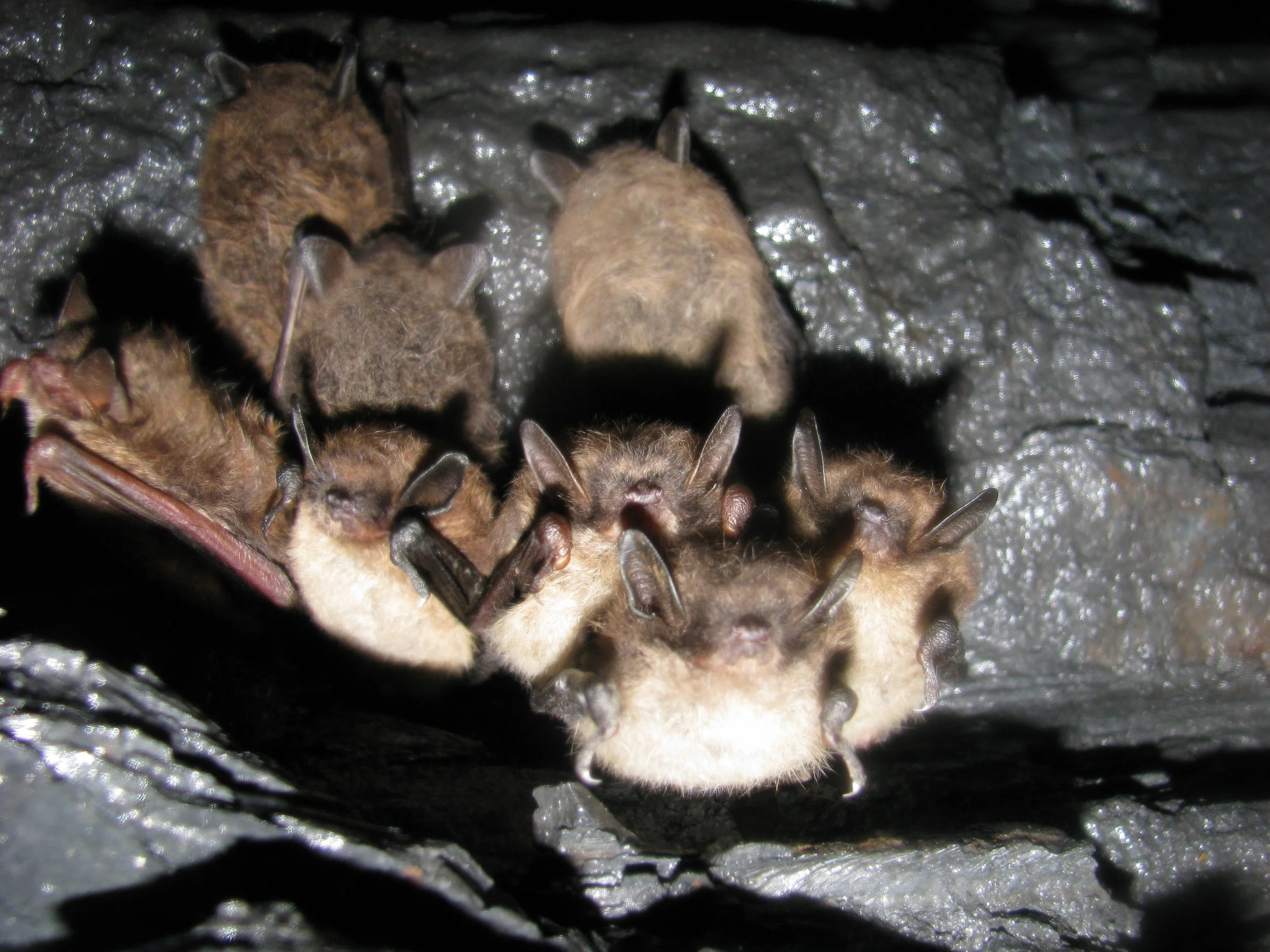
Bat, Man, and Robin
There used to be so many bats here that nobody really bothered studying some of the most of their species. Wildlife experts likely knew more about robins, another ubiquitous species, than they did bats. Nothing against robins, but bats play a really crucial role in controlling insects, especially around farms.
Things have changed.
There used to be so many bats here that nobody really bothered studying some of the most abundant species. Wildlife experts likely knew more about robins, another ubiquitous species, than they did bats. Nothing against robins, but bats play a really crucial role in controlling insects, especially around farms.
Things have changed. Bat populations have plummeted because of a fungal infection called white nose syndrome. Where there used to be tens of thousands of bats there are dozens. We feel lucky to see 3 or 4 on a summer evening.
The northern long-eared bat, formerly one of the most numerous species, has been one of the species hardest hit by this disease. The U.S. Fish and Wildlife Service recently listed this bat as a “threatened species,” placing it under the protection of the Endangered Species Act.
Forest landowners like us at ACT, and others across the region will be facing a new challenge of bringing northern long-eared bat considerations into our forest management plans and harvests.
ACT is working to build knowledge about long-eared bats and other declining forest bats. Our consulting ecologist, Jesse Mohr, is leading a project to learn about how bats are using forested habitats and how forest landowners can help to conserve these declining species. He has placed acoustic survey devices on conservation properties in Lyman to help acertain local bat populations. With partners including US Fish & Wildlife Service and the Natural Resources Conservation service, Jesse will collect and analyze the data and develop guidelines for forest managers.
On Aug. 4 we’ll host a workshop for landowners and foresters at one of our conservation properties to see what a bat-friendly harvest looks like, and share more about what we've learned about bats.
If you're interested in coming to the bat workshop please register by clicking the "Register Here! " button on the right side of your screen. See you there!

How are We Doing?
It's time for ACT to renew its national accreditation as a land trust - your comments are invited!
It's time for ACT to renew our national accreditation as a land trust. We earned this designation five years ago by demonstrating that we adhere to the highest professional and ethical standards. These standards that cover all aspects of our work are set by the national Land Trust Accreditation Commission. The commission, an independent program of the Land Trust Alliance, is conducting an extensive review of our policies and programs.
A public comment period is now open.
The Commission invites public input and accepts signed, written comments on pending applications. Comments must relate to how ACT complies with national quality standards. These standards address the ethical and technical operation of a land trust. For the full list of standards see http://www.landtrustaccreditation.org/help-and-resources/indicator-practices.
To learn more about the accreditation program and to submit a comment, visit www.landtrustaccreditation.org, or email your comment to [email protected]. Comments may also be faxed or mailed to the Land Trust Accreditation Commission, Attn: Public Comments: (fax) 518-587-3183; (mail) 36 Phila Street, Suite 2, Saratoga Springs, NY 12866.
Comments on ACT's application will be must be received by July 15, 2017.

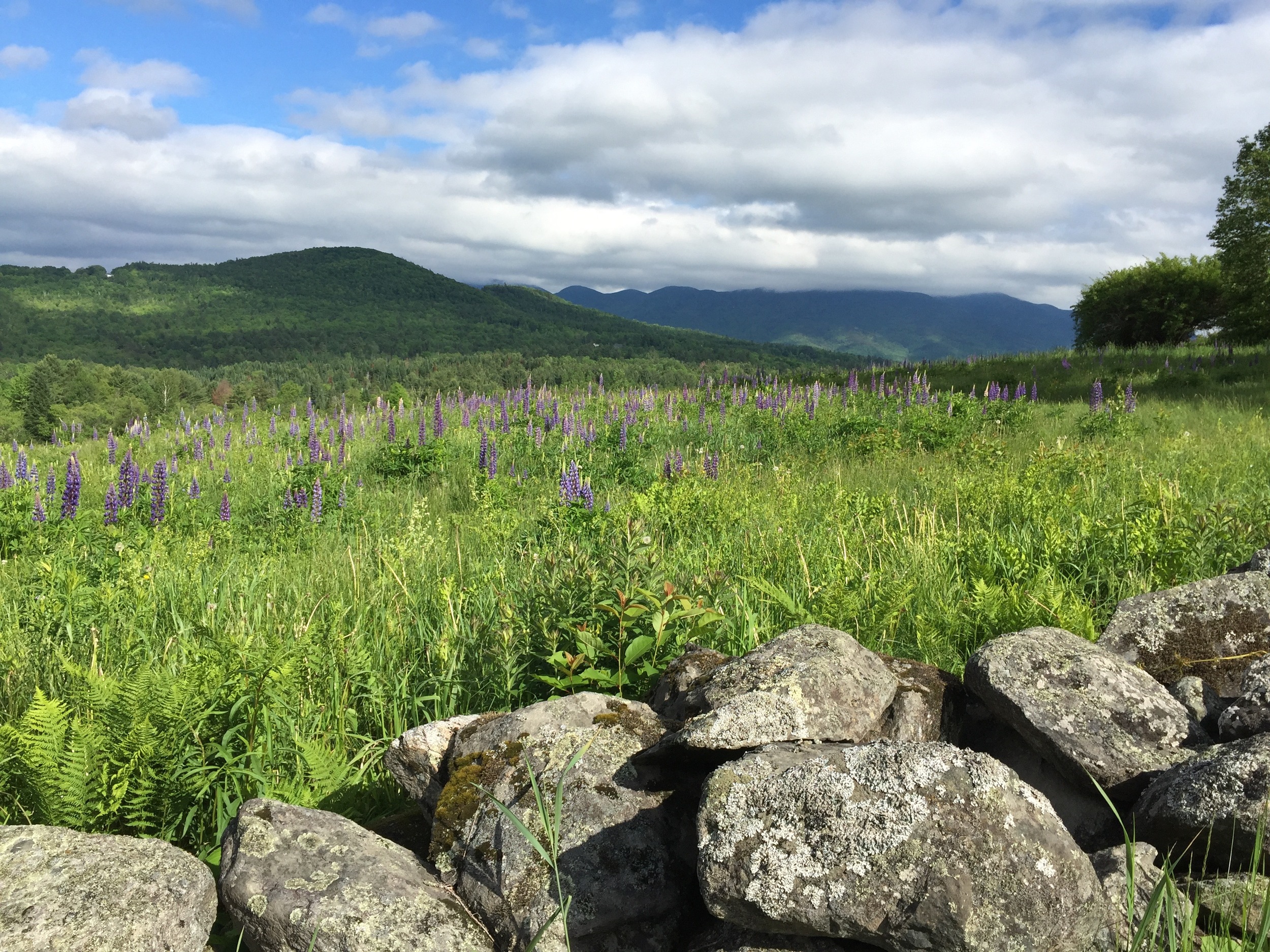
The Lupine Field on Sunset Hill in Sugar Hill, one of our first conservation projects.
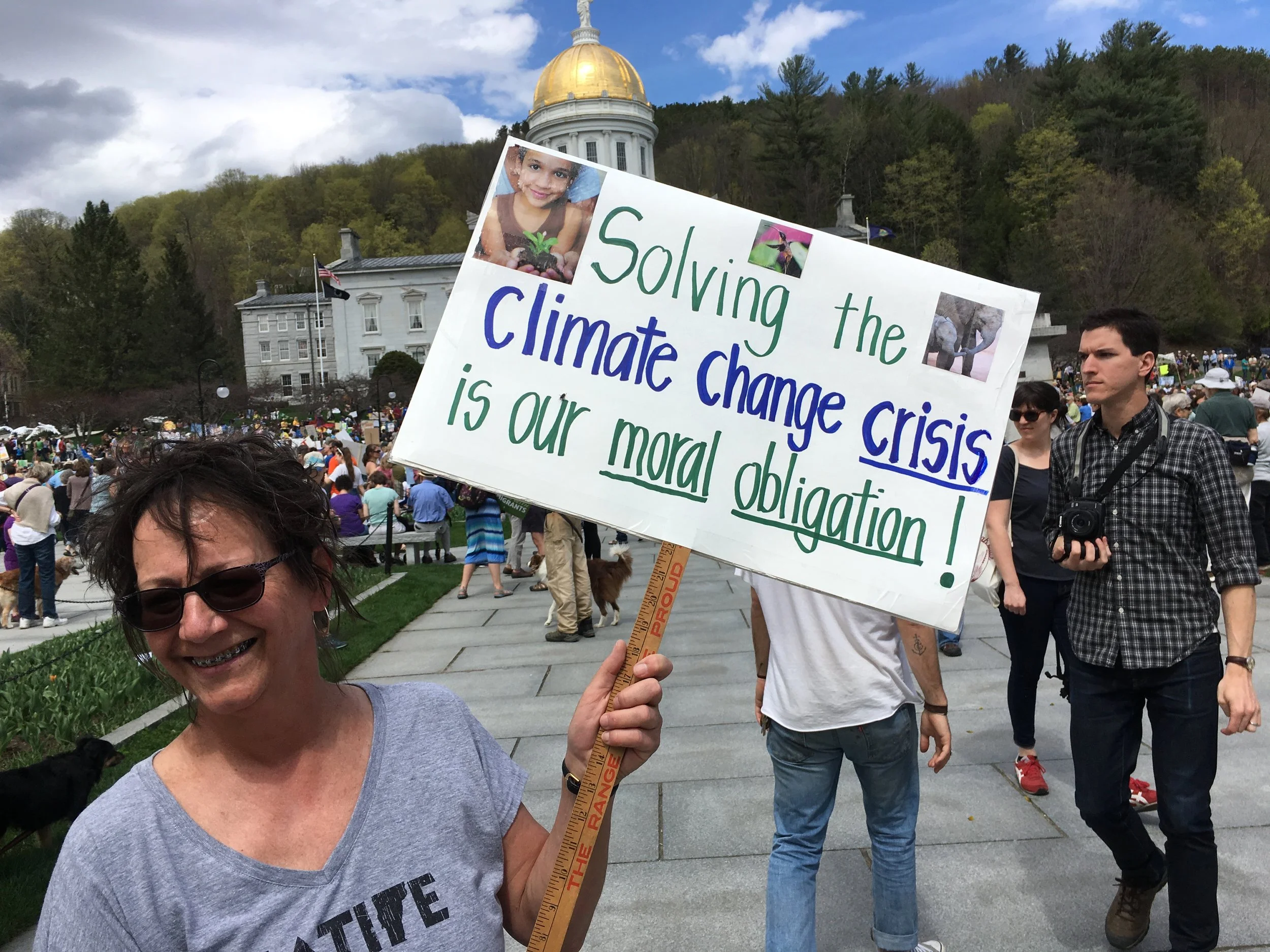
Earth Day 2017: Chaos is Good News
Close your eyes and think of a place very special to you – a place where you can go to find some peace, some solitude, get grounded, recharged. A sacred place.
What does it feel like, what do you see? What do you feel? What are the sounds, the smells, the sensations on your skin?
Open your eyes. How many of you imagined yourself in front of your computer? Nobody was checking Facebook? How about on your cell phone? How about reading a book?
Following is a talk ACT founder/director Rebecca Brown gave at the Franconia Community Church on April 23, the guest sermon for Earth Day 2017.
Close your eyes and think of a place very special to you – a place where you can go to find some peace, some solitude, get grounded, recharged. A sacred place.
What does it feel like, what do you see? What do you feel? What are the sounds, the smells, the sensations on your skin?
Open your eyes. How many of you imagined yourself in front of your computer? Nobody was checking Facebook? How about on your cell phone? How about reading a book?
Show of hands – how many people imagined someplace outdoors, in nature?
In the mountains? At a lake, a stream?
How many imagined a place right around here?

That is the magic, the mystery, and the priceless or intangible value of nature, of wild places. It’s part of being human to want to be in a place that gives you a sense of peace, but also of grandeur, of things bigger than ourselves, a sense of awe.
I’m going to come back to the importance of these places.
But this talk is called “Chaos is Good News – Lessons from Land and Spirit” And now I’m going to talk about why.
I’m going to start by asking you, what is the most important issue of our time. It’s not war, or immigration, or poverty, or climate change. It’s how we think of ourselves.
It’s how we think of ourselves.
How we think of ourselves is reflected in how we care for our land. In how we care for this planet. But I’m getting ahead of myself.
Let’s come back to chaos.
It may be an understatement, but looking around at our country, at the world, things do seem rather uncertain to say the least, out of control, frightening, chaotic. Why would this be good news?
Let’s go back to the original Greek meaning of the word. Chaos is a wide open expanse, the great emptiness that occurs before genesis. It’s the openness where things fall apart and new creations arise. When things seem really bad, there’s an opportunity for something good to take place. It provides is with that opportunity to deeply examine what is wrong, in order to find how to do things right.
Looking at “chaos as good news” is something I learned – learned from a great Tibetan Buddhist meditation master and teacher named Sakyong Mipham. He believes that the pain and confusion of the world is now so vivid and unavoidable that we have no choice but to acknowledge it. That when we are finally fed up with torturing ourselves, others, and the planet, out of our exhaustion will arise that wide open space, where we come to our senses and rediscover a more natural state.
And what is our more natural state? What is beneath all the anger, and confusion, judgement, bias, and hate?
The Tibetan masters believe that we are basically good. That the natural state of our being, is open, kind, and wise. That we have the answers to all of our problems. We might not like all the answers – they don’t suggest that everything comes up roses - but the Buddhist tradition is actually very hopeful in that there is unconditional confidence in human nature. The challenge is for each of us, discovering, or rediscovering, our innate sense of wellness, or wholeness, or worthiness. Finding that in ourselves. Each of us.
This is not some kind of exalted self-esteem exercise. It’s actually the foundation of a healthy society.
That’s because society is made up of all of us. It’s a network of relationships among us and it starts with the relationship between just two people.
It starts with how we treat each other – the relationships between ourselves and others – the one to one relationships, and all builds from there. So transforming society can happen one person at a time. That transformation starts with how we acknowledge one another. From a family member, to someone at work, to the person you’re passing on the street or in line behind at the check out. The power of a smile, or a small kindness, can never be underestimated.

Let alone listening to someone, really listening, not just hearing and getting ready to make your own point as soon as they take a pause for breath. In fact, giving someone our full attention is probably one of the kindest things we can do right now, when we have so many distractions around us all the time.
I’m not saying that we shouldn’t get angry or express hard emotions – rather, I’m saying there is immeasurable power when someone is kind to us, or really sees us, and listens to us. And one thing we’ve learned, I believe, from the last election, is there are a lot of people who feel overlooked, who do not feel acknowledged.
How we feel about ourselves is key. Every morning we wake up , and we have that split second decision about how we feel about ourselves.
Do we feel angry? Frustrated? Hopeful? Calm? At peace? At war? How we feel has a direct effect on how we are in our day and how we treat others.
But what if we acknowledge the inherent struggles in life without getting sucked into the negativity? Without falling into the trap of doubting our own and others’ worthiness? What if we create an environment where our minds and hearts can have some time to reflect on what is important, on how we will be in this challenging world? How we might transform our world, by the simply choosing how we are?
We can create that environment, and in fact we have it right here.
I think we live in one of the greatest places in our country, and in the world. It may take spring an awfully long time to get here, but we learn patience and fortitude, and a bit of humour.

We can step outside into a remarkable landscape, we can walk for a few minutes and escape traffic noise. There are still places here that seem untouched by the hand of people.
We have wide open rugged expanses, and we have more intimate places. The edge of a pond, a clearing in the woods, the way the early light reflects off a mountain stream. The ancient Celts had a name “thin places,” where suddenly, you feel outside yourself – and very much grounded – feel a sense of mystery, and connection to something bigger – it’s like heaven and earth are joined. Christians feel that. Buddhists feel that. Apaches feel that: the Apaches say, “wisdom sits in places.” It’s part of being human, a yearning for connection, a yearning to feel awe.
Getting outside, into nature – it’s like a prescription for what ails us. Science – so much research now on – the perpetual question – who are we? What is consciousness? What is the nature of our minds? Neuroscience tells us that the brain responds – our cognition, our emotions, and the places beyond our conscious thought – are affected by being outside. We become calmer; we think more clearly; we think more creatively, and we behave more kindly. Just being in nature – it doesn’t have to be on top of Mt Lafayette, or 10 miles from a road – city people can find it by looking at a single tree – being in nature is powerful and transformative. And we can be in nature right outside our door – that’s why we’re so lucky here.
When we get ourselves away from the din, the chatter, the overload of information and media and technology driven sensations we are blasted with – when we choose to step away from that, we can hear ourselves think. We can give ourselves the time to reflect. We can feel. Feel with all our senses. Be completely present with what is, right now. It’s our choice to do this. And doing this – taking the time to just be – reflect, feel – today, in our culture, that’s a radical act.
We are not going to remake our world, our society from the top down. Transformation starts from the human heart, from every one of us. And even if you’ve stopped working, you’re still part of society – in that respect, we never retire. We can’tretire from society.
Chaos gives us a lot of ground, a lot of space to work in. I believe that we live in one of the last sane places. Our traditions of local, self-government, direct democracy through our town meetings, our reliance on civic volunteers, our tradition of taking care of things ourselves, with our neighbors and in our communities, all of this is very powerful. We have the tools we need. We just have to use them. And that starts with how we feel about ourselves, and how we acknowledge each other.
One of the most radical things I’ve found about our state came, believe it or not, from a governor’s report. A special commission, in 1991, a special commission that was asked how NH should prepare for the 21st century.
And here we are. This is what the commission said:
"People come to New Hampshire, or stay in New Hampshire, to be independent. We discover, paradoxically, that independence requires a community effort. Under the mainstream of rugged individualism there has always been a practical current of interdependence and cooperation. As New Hampshire grows, our sense of mutual dependence must become as strong as our independence, or we will lose both."
- From New Hampshire: My Responsibility, Final Report of the Governor’s Commission on New Hampshire in the 21st Century, 1991.
I want to conclude by giving thanks, which seems a good thing when speaking from this place, giving thanks to the people who came before us, over a hundred years ago, who had the vision and the boldness and the courage to fight back against the powers that be and created the White Mountain National Forest.
And I want to thank the dozens of landowners I’ve had the honor and privilege of working with who love this place, and their places within in, love it so much that they have protected their land for all time. Protected their land so that wildlife always has a home, and so that people will always have places to go where we can reconnect, find solitude, and find a sense of the sacred.
Some of these landowners have passed on, and their spirit is so very present in that land, and always will be. And the sprit lives in the souls of those who are still here.
So on this fine spring day, do something radical – get outside, leave your cell phone behind, and give yourself some space to just be. Savor that experience. And be kind to whoever you meet.

Happy Spring!
Happy Spring!
It’s the vernal equinox, and while we’re still enjoying a good layer of snow, things are beginning to get more lively out there among animals, insects, and birds.
Happy Spring!
It’s the vernal equinox, and while we’re still enjoying a good layer of snow, things are beginning to get more lively out there among animals, insects, and birds.
The vernal (and autumnal) equinox means that at noon somewhere along the Equator, the sun was directly overhead. It happened at noon in central Africa, and our time at 6:29 this morning.
Even during last week’s cold temperatures and heavy snow, the stalwart mourning doves were singing, and a few intrepid red-winged blackbirds stuck around until it got really bad. I expect they’ll return this week.
Woodpeckers are drumming, marking their territories. Ravens are cavorting, flying in pairs and executing barrel rolls. Coyotes and hares are very frisky, even rushing about in broad daylight.
Snowfleas have been active for weeks, finding mates. They look like black dust sprinkled in the snow – until you notice them jumping about.
Our Groundhog Day was Thursday. Someone emerged from his/her den and trooped across the deep snow on the Bronson Hill field, crossed the stonewall, headed westward, and eventually returned by the same path (see the photo).
I saw a turkey vulture last Thursday in Concord. It used to be that these big birds rarely never came this far north, and now the trend is they arrive earlier every year. However, this time last year we already had vultures and woodcock were singing. Bluebirds arrived this very week. The forecast doesn’t sound like bluebird weather, but I know they’ve been in southern Vermont and no doubt with a few warm days we’ll see them here.
A nice piece in the Times examines this phenomenon of the earlier spring. Among other issues, it raises the question of how birds are affected. In a warmer early spring, flowers and insects comes out sooner, and birds that migrate in the hundreds of miles, such as blackbirds and phoebes, can respond to those conditions and begin their move. Those who come thousands of miles, like bobolinks or warblers, may arrive too late for some preferred food source or habitat.
I’ve been keeping records of bird arrivals and frogs singing in their breeding pools for over 20 years. While cold weather like we’ve had can slow things down, the trend is definitely toward earlier arrivals. I’ll be starting our e-mailed spring bird alert within the next few weeks.
Winter Weasel: Now You See Me, Now You Don't!
By Brendan J. Whittaker

On a recent late afternoon (before this week’s snow!), I was yarding some harvested trees from our farm woodlands here in far northeastern Vermont. My tractor path led across one of our frozen icy crop fields, snowless and colored mud-brown, so unusual here in late winter.
Suddenly a flash of bright white caught my eye. “Weasel!” Gorgeous in its winter fur, it headed across the field quite purposefully, as though he/she knew exactly where it was headed and intended to arrive there, my presence not mattering.
Winter weasels are usually a quick flash of white, and I always feel lucky to see them. More likely to see their tracks than the furtive animal itself. Sometimes I’ll catch one slipping behind our warm kitchen chimney when one chooses to overwinter in our house. "Now you see me...flash!...now you don't!" After, we're apt to say, "Did I really just see what I think I did?" Then we reflect with gratitude on the harvest of house mice our winter guest must be reaping. But this outdoor sighting was a good one, perhaps a minute and a half, the best weasel view I've ever had, as I sat motionless on the idling tractor.
The animal, with no great haste, half-circled me to my east, vivid against the brown, frozen open space. Its coat was brilliant spotless white, intensified by the rays of the setting sun. The white fur was broken in just two places: its coal black eye, which it kept locked on me as it progressed. The other was the black tip of its tail, a distinctive mark on both of our weasel species here in New England. The weasel tipped its tail jauntily as it went along, and gave me one last flaunt before it disappeared into brush at the end of the field.
In New England we have two weasel species: the long-tailed (which I saw from my tractor), (Mustela freneta) and the short-tailed, usually called the ermine (Mustela erminea cicognanii) when it assumes its winter coat. At our northern latitude, both species turn white in winter. More southerly weasels – called “stoats” in Europe, may stay more brown coated.
Ermine fur has been prized in former times as a mark of status and honor, adorning the robes of judges, royalty, and popes.
Weasels are ferocious hunters. Homeowners who keep chickens in this area may know this all too well. When weasels attack a flock, not content with one or two, they will quickly slaughter all they can find in the poultry pen or chicken house, as we learned many years ago. Their long slim bodies can slither through amazingly tiny entrances in what the chicken keeper may think is a totally weasel-proof pen. A colleague, who is a professional Wildlife Biologist told me recently that he thought his own hen flock was weasel-proofed, until, finding all the birds dead one morning, searched and searched for the mustelid's entry place. He finally located it: the small bored hole through which the electric wire for the henhouse heat lamp. He described the hole as barely big enough to squeeze the wire through, but Mr or Ms. weasel had been successful in getting in!
Some of us who have lived in the North Country for a long time will remember the WMTW-TV weather report from the summit of Mt. Washington. Marty Engstrom was a long time weather reporter up there, rather famous for his humorous grimace he'd sign off following his professional, rather dry weatherman 's forecast.
Marty and the other crew had a cat there on summit, which we'd view occasionally during the telecast. They also referred to what we thought was an imaginary pet named "Herman the Ermine." Night after winter night, Herman might be mentioned, his activities described, but he was never seen. They obviously were making the whole story up....Until! One memorable night, there was Herman! On a table in front of Marty, undeniably winter white, black tail and nose, showing off for the TV. camera. A real-deal weasel-ermine, with his weatherman hosts, in their warm winter habitat at 6,288-feet in elevation. It's many years ago now, but I think I recall that Herman the Ermine gave us all his own weasel- grimace, just like Marty's as they signed off for the night.
Brendan Whittaker is an ACT Advisor, and a member (past chair) of the Lands Committee. He is a professional forester, and served as Secretary of the Agency of Natural Resources in Vermont. He lives in Brunswick, Vermont.

Protect the EPA
By Sharon Francis
I write to urge all who care about our health and environment to urge Washington lawmakers to oppose the administration’s proposed 25 percent cut to the Environmental Protection Agency budget.
The Trump Administration seems to believe that environmental protection is an enemy to be vanquished. Their proposed cuts are deep and mortal. Slated for total removal are Radon testing and control, beach water quality testing, diesel emissions reduction, and multipurpose grants to states. The water quality improvement grants for some of our country’s most valuable fishing, shipping, and recreation areas would also be gone: these include Puget Sound, San Francisco Bay, Gulf of Mexico, Chesapeake Bay, and the Great Lakes.
Grants from EPA to states like New Hampshire for drinking water, air quality, water pollution control, lead detection, nonpoint source pollution, toxic substances compliance are slated for 30 percent cuts. Most of us have heard that the administration favors the point of view that climate changes cannot be blamed on carbon dioxide emissions, so rather than invest in research from which they might gain improved information, they propose to cut climate research by over 70 percent.
Overall, the administration proposes to cut EPA funding by $2 billion. What is at stake? Most of EPA’s actions in behalf of water quality, air quality, and toxic substance control are investments in public health. At a time when the nation is deciding how much it wants to invest in health treatment, we would be well advised to continue our investments in avoiding health problems. Keeping contamination out of our air, water, and soil is a major way to do that. Furthermore, clean, attractive rivers, lakes, seashores, hills, and valleys are economic assets. They attract investments, whether from tourists or from families who wish to enjoy nature nearby.
Thousands of students have gone on field trips, studied the ways of water, taken college courses in the many pathways to a prosperous society and a healthy environment at the same time, and are pursuing careers in the technologies of saving energy and safeguarding life on our planet. We owe it to them, as well as to ourselves, to retain a strong, well-funded EPA.
I am now retired, but have worked in the environmental field for over 50 years. I love my country, and do not want to see it make a foolish, unnecessary mistake.
ACT member Sharon Francis lives in Charlestown., NH. She has devoted her career to conservation and the environment, and is a a recipient of the EPA Lifetime Achievement Award.
Red-wings are Back!
Red-winged blackbirds are back!
I heard a male’s exuberant “conk-a-ree!” song this morning. The males are usually the first arrival of spring. They’ve been making their way up the river valleys (the Connecticut River valley is a major migration path) and then to higher elevation areas like where I live.
We have a pond nearby where blackbirds nest, and they are frequent visitors to my feeder.

Photo by Minette Layne/Flicker
The males are unmistakable with glossy black bodies and red and chevron with yellow trim on their shoulders. Females can be mistaken for song sparrows or female red-breasted grosbeaks, as all three are streaked brown and off-white.
Walk near a pond or marsh in mid summer, and you’re almost certain to see these blackbirds. The males are very territorial, singing from cattails or nearby trees. Approach their nests, and you might get dive bombed! Last summer a particularly fierce male considered the entire pond his territory, and he let all the neighborhood dogs and people know it.
Notice above I wrote “nests.” Male red-wings are polygnous, meaning they have multiple mates. One bird may have several nesting females in his territory – especially dominant males can have up to 15 mates (!). However, according to the Cornell Lab of Ornithology, those ladies are not monogamous either. One-quarter to one-half of nestlings turn out to have been sired by a bird other than the territorial male.
This time of year, I think those first red-wings appreciate the backyard feder, where they like mixed seeds or sunflower seed, especially seeds on the ground. And I like watching the strut about, occasionally stretching their wings like a body builder and showing off this flashy chevrons. A few weeks from now we can all look forward to the females arriving.
Meanwhile, some of our winter birds are still here. Look for flocks of Bohemian waxwings congregated in medium to tall trees, with their distinctive high pitched whistling. Soon, they’ll head back north to their breeding grounds.

Get Your Daily Fix Yet?
Scientists are now becoming very aware of what we who live in the North Country have known all along: being outside is good for you.
Not just for physical fitness (we knew that, too). But for mood, attention span, even kindness toward others.
Get Your Daily Fix Yet?
Even a Short Walk Outside Can Make Us Happier
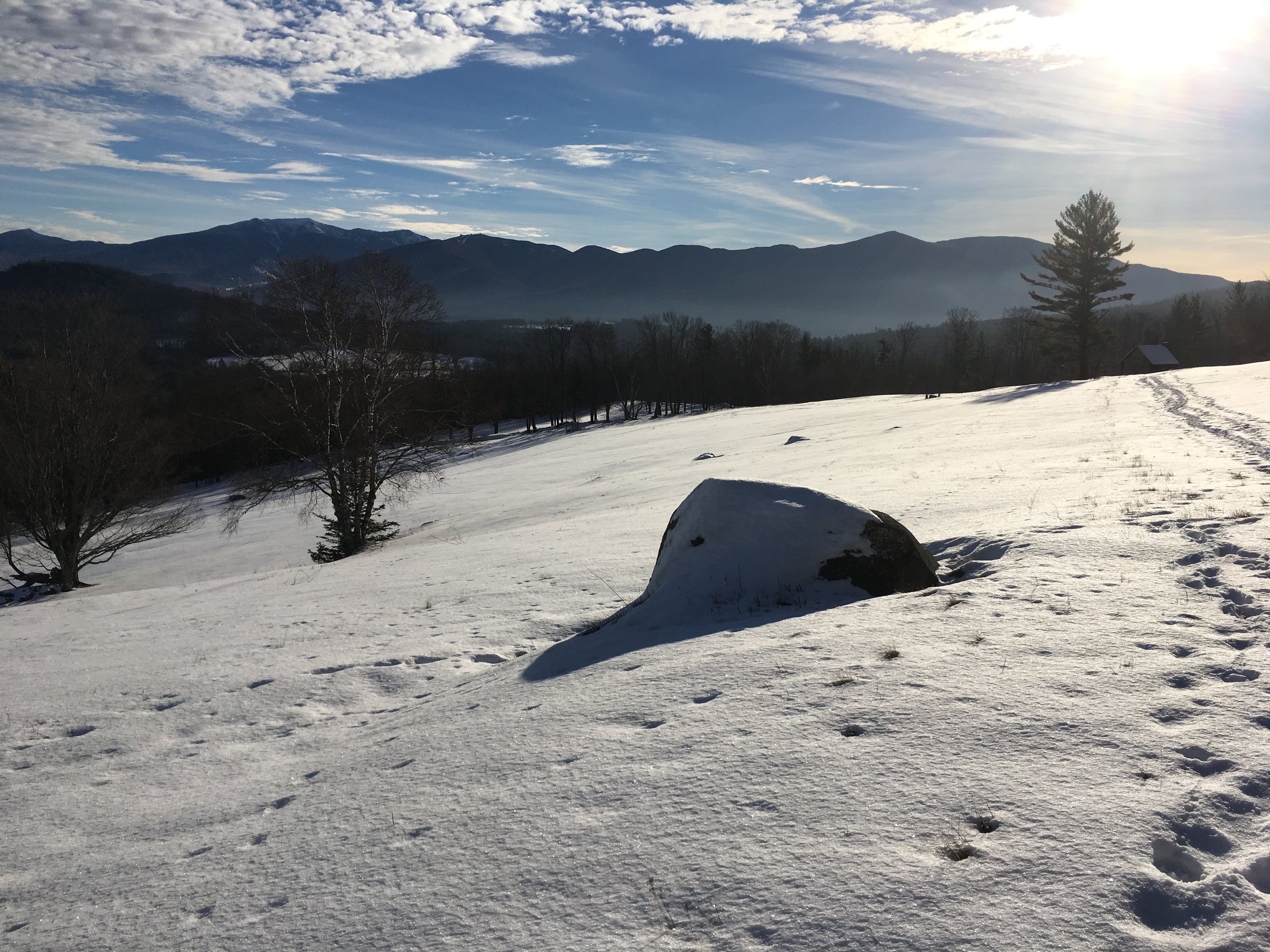
Scientists are now becoming very aware of what we who live in the North Country have known all along: being outside is good for you.
Not just for physical fitness (we knew that, too). But for mood, attention span, even kindness toward others.
A book published this week examines the research and reports that in numerous studies, peoples’ moods and sense of well-being was elevated by being outside. And they didn’t have to do anything epic – one study found that people who gazed up at tall trees for just one minute behaved more helpfully to others than people who looked at an unremarkable building.

The reason, explains author Florence Williams, is that people experience “momentary awe.” That feeling of being taken away from your own concerns, being part of something bigger, and the stately calm of big trees. All this has an effect on our brains.
The book is The Nature Fix: Why Nature Makes Us Happier, Healthier, and More Creative (Norton, 2017). Williams surveys a range of work that shows the effect of even small doses of nature on our moods and sense of self, but also “our ability to think – to remember things, plan, create, daydream, and focus.”
In general, Williams wrote in a recent essay in the Wall Street Journal, “the more time you spend in nature, the better you will do on measures of vitality, wellness, and restoration.”
However, not all the news is good. Researchers are also finding a vicious cycle of people spending less time outdoors and more on social media, shopping, etc., thus not feeling the positive effects of outdoor time, and thus valuing the outdoors and nature less and less. And presumably, becoming less kind, less attentive, and less creative.
We’re blessed here to have so many places we can enjoy outside. Let’s keep it that way!

Boys & Girls Club Partnership
Kids need time outdoors to explore, play, imagine, and engage all of their senses. When a child's curiosity is sparked, learning comes naturally. This year we have partnered with the Boys & Girls Club of the North Country to use ACT's protected lands as an outdoor classroom to connect young people with nature.
Children from the Boys & Girls Club have hiked to the ledges at Cooley-Jericho to enjoy the views; discovered signs of moose, bear, and coyotes on the trails; learned about monarch butterflies and milkweed at Whipple Field; explored beaver ponds; and studied water quality on the Gale River.
The Littleton Courier recently published a wonderful front-page article about our Stream Safari program. Click here to read the article, and check out our Facebook page for photos!
You can help support our programs for local kids by donating to ACT today!
In Memory of Harry Reid
Harry Reid of Sugar Hill, NH was one of the small group of friends and neighbors who created ACT. He was an incorporator of the Trust, one of the five people who legally created the organization in the year 2000.
Harry loved the White Mountains and knew the Franconia Notch area as few do. As a boy he hunted and fished and explored, and as an adult (after coming home from a 20-year career in the U.S. Army) he was the manager of Franconia Notch State Park, including the Cannon Mt. ski area.
Harry believed in the power of people working together, and the importance of protecting the land we love.